


January 19, 2026, marked a historic moment for RuneScape. On that day, developer Jagex officially removed the game’s long-running microtransaction system, including the controversial Treasure Hunter. The change represented the end of an era defined by purchasable experience boosts, loot chests and promotional events that blurred the line between gaming and gambling.
Now that we’re coming up on the two-month anniversary of one of the larger cases of addressing gambling mechanics and real money transactions in gaming, I decided to take a deeper look into what happened, how it’s going, and if gambling-like mechanics have truly been removed from the game.
Before I do that, however, let’s start with the basics for those unfamiliar.
What is Runescape, and What is MTX?
Chances are, if you have any familiarity with gaming (especially if that familiarity includes MMORPGs, or Massively Multiplayer Online Role Playing Games), you’ve heard of RuneScape. Developed by Jagex Limited, it’s a high fantasy, medieval world where players can talk, interact, train skills, fight monsters, and essentially live how they’d like to live. Since its launch at the beginning of 2001, it has successfully woven itself into internet history and the lives of many who have come across it. It is, for all intents and purposes, one of the most influential games ever made.
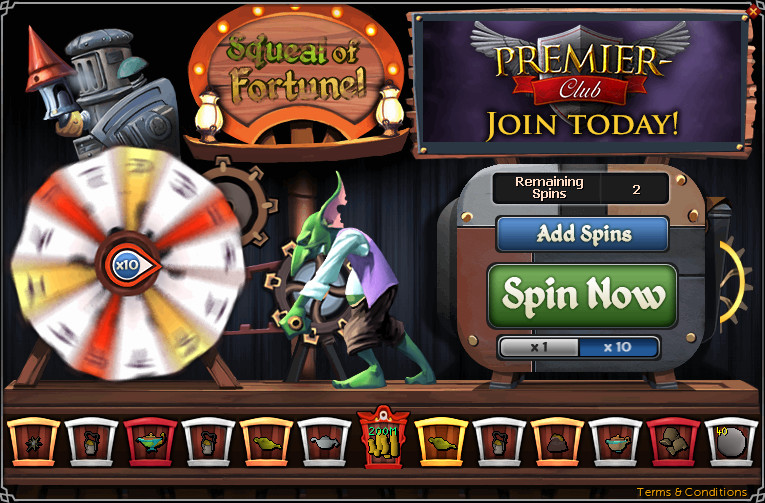
In 2012, the previously microtransaction-free game took a turn. This turn, many maintain, was for the worse, with the addition of a prize wheel known as the Squeal of Fortune. The Squeal of Fortune allowed players to take daily spins for a chance to win items, but more importantly, it allowed players to spend real money to purchase additional spins. For many players, the Squeal of Fortune represented more than an innocent new feature. It symbolized a philosophical shift in how RuneScape operated. Over time, the mechanic evolved into Treasure Hunter, where players purchased keys to open reward chests containing experience boosts, rare items, and other bonuses.
This implementation of real money purchases to obtain in-game items or benefits is quite literally the definition of microtransactions, and it didn’t stop there. Shortly after the release of the Squeal of Fortune came Solomon’s General Store, which allowed players to spend real money for in-game cosmetics.
The Problem With MTX
While some welcome MTX, it is often seen as a cash grab and an introduction of unfair mechanics by most. At its launch, many players felt betrayed, as former Jagex CEO Mark Gerhard previously branded microtransactions “a stealth tax.” Beyond that, there are multiple inherent problems with microtransactions.
First and foremost, microtransactions can be structured to resemble gambling, which may be all well and good for adults, but not necessarily so when introduced into a game accessible to children and those under 18.
Secondly, from a gameplay perspective, microtransactions introduce an uneven playing field. Players who have more money in real life can pay to win, while those who don’t have the means to dive into microtransactions will remain stuck in the grind. Achievements feel less satisfying and become less uniform. The effort one player puts into reaching max level does not necessarily equal the effort another player has put in. In terms of game integrity and balance, microtransactions can be a death knell.
During my deep dive into the implications of Runescape’s latest changes, I spoke with multiple players to hear what the greater community had to say. Dylan, a long-time player from the UK, described the issue as one of game integrity when speaking to CasinoBeats.
“The aspect of MTX that I didn’t like was the ability for players to spend less time than you on the game and have access to experience rates and end-game items that would otherwise have taken thousands of hours grinding to achieve. It felt like players with bigger wallets were devaluing your achievements.”
Thirdly, and perhaps most importantly, microtransactions that are structured as gambling introduce the same issues that come with traditional gambling. Primary amongst those is addiction. As a 20+ year Runescape player myself, I have witnessed players who have had to quit the game entirely after becoming addicted to buying spins, or what later became buying keys to open chests in “Treasure Hunter.” While talking to CasinoBeats, Dylan echoed the same concern, stating: “There are many cases where people who don’t have big wallets spend thousands (that they don’t have) on [experience] lamps and items because of the ‘fear of missing out’ on predatory promotions.”
Recently, microtransactions and loot boxes have become a growing concern for regulators and players worldwide. Authorities in countries including Belgium and the Netherlands have previously ruled that certain loot box mechanics constitute gambling when real-money purchases are involved. Although RuneScape’s systems were never formally classified this way, the debate surrounding monetization in games has increasingly overlapped with the gambling sector.
The MTX Removal
Taking all of the above issues into account, the general sentiment of players towards microtransactions and a dwindling player base, Jagex decided to run what they termed a poll for their removal. This poll, launched towards the end of 2025, was essentially a petition, where players could press a button to vote to remove, but could not vote to keep. Within days, it received over 100,000 votes to remove Treasure Hunter, and the wheels were set in motion.
On January 19, 2026, Treasure Hunter was officially removed from the game, along with other options to directly purchase experience with real money. This also marked the launch of a year-long “Integrity Roadmap” to address many issues that had crept into the game over time.
What Remains, and How It’s Going
Early signs suggest the changes are already reshaping gameplay. Without purchasable experience boosts, a player’s only choice is to grind to gain levels, a core mechanic of MMORPGs. There’s a lot more to be done as the Integrity Roadmap progresses, including removing previously purchasable items that provide advantages. With these removals, however, comes a delicate rebalancing of the game in all aspects.
Already, this has led to some pushback from the player base as Jagex works to get the balance of gameplay and power just right, often relying on beta releases along with live testing and tweaking. Most recently, Runescape has begun removing “auras”, which were previously purchasable with real money and gave various buffs for combat and skill training.
With these removals, refunds will be issued to those who used real money to purchase them, but only for purchases made within the last three months. This has left a sour taste for some who purchased these items earlier, but as we’ve learned countless times in modern gaming, purchasing something does not necessarily convey ownership.
Is Gambling Gone, or Is Everything Gambling?
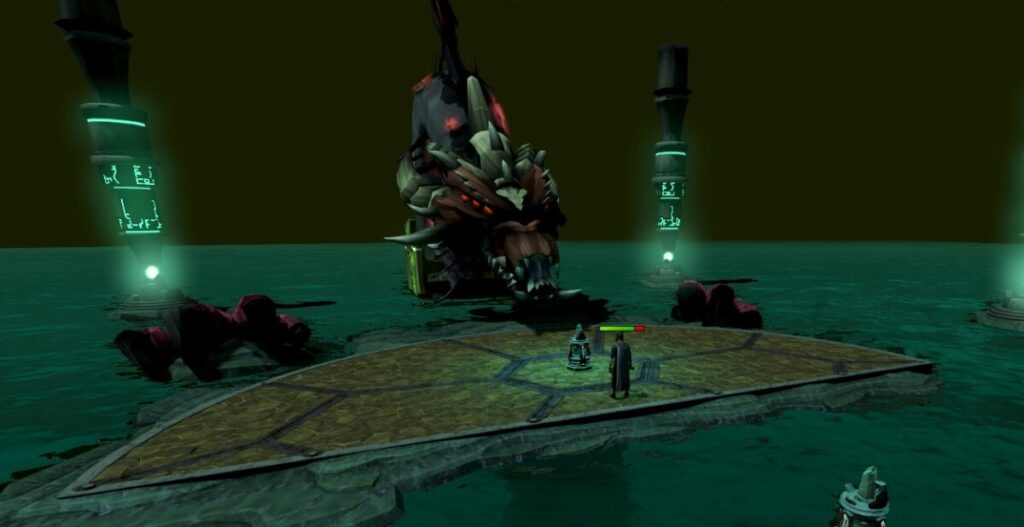
The truth is, gambling mechanics in games will never be gone. They are a part of the gaming loop itself and part of human nature. Take, for example, boss killing. Runescape has plenty of high-level “boss” monsters that can be killed, and those bosses have a chance to drop valuable loot.
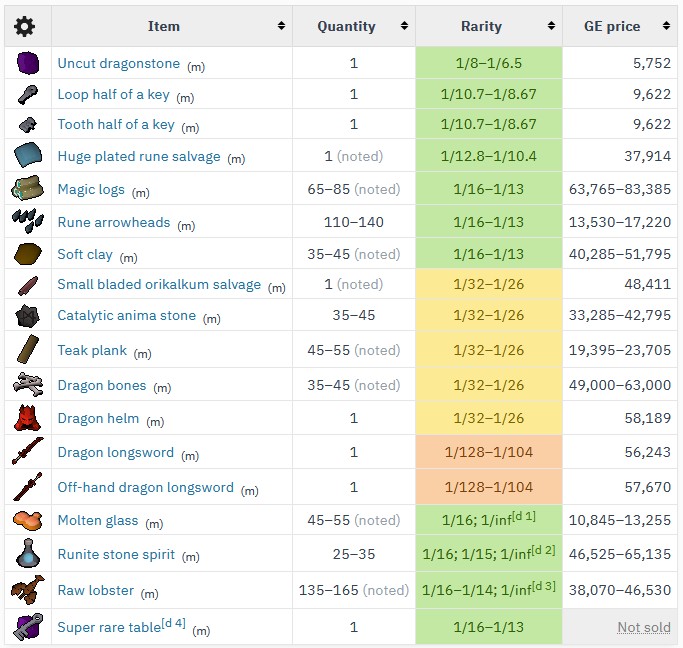
The chase of desirable loot is, in a way, gambling. As you can see above, loot tables greatly resemble paytables in many casino games, each item coming with drop odds. I have known players to spend nearly 20 hours at a time repeatedly killing a boss, chasing the dopamine hit of getting a big drop. One kill after another, one roll after another. The crucial difference, however, is that players are risking time rather than real money.
As Dylan explained:
“When you get unlucky through gameplay in RuneScape, there’s no actual harm to the player. But when you gamble on MTX to get an item, it leans into the realm of gambling addiction.”
However, the idea of gambling still clearly sits in the shadows.
Another example is PvP, or player-versus-player combat, where players stake valuables and duel each other for a chance at a winner-takes-all prize. Both PvP and boss killing enjoy large communities of players who almost solely focus on them, always chasing their chance to win big.
For the gambling industry, the RuneScape experiment offers a rare case study in what happens when a major game removes real-money chance mechanics entirely. The truth is, chasing chance is an inherent human desire. It is, by nature, ingrained in everything we do and everything we create.
Chance, risk, and reward have always been central to gaming and to the greater human experience. After all, as the famous quote says, “a ship in harbor is safe, but that is not what ships are built for.” For now, we will continue to see where our Runescape “ships” will take us, but one thing is for sure – the sails will be less full with the wind of real-money microtransactions.
Instead, the journey and pursuit of rare rewards will be driven less by credit cards and more by time, persistence, and a little bit of luck.
This article uses material from the RuneScape Wiki at Wikia and is licensed under the Creative Commons Attribution-Share Alike License.