


Compliance. Mandates. Standards. Regulatory expectations. Those are just a few of the words that come to mind when the gambling industry starts talking about responsible gaming. We often see it presented as a cautionary tale while being relegated to the fine print of marketing and product design.
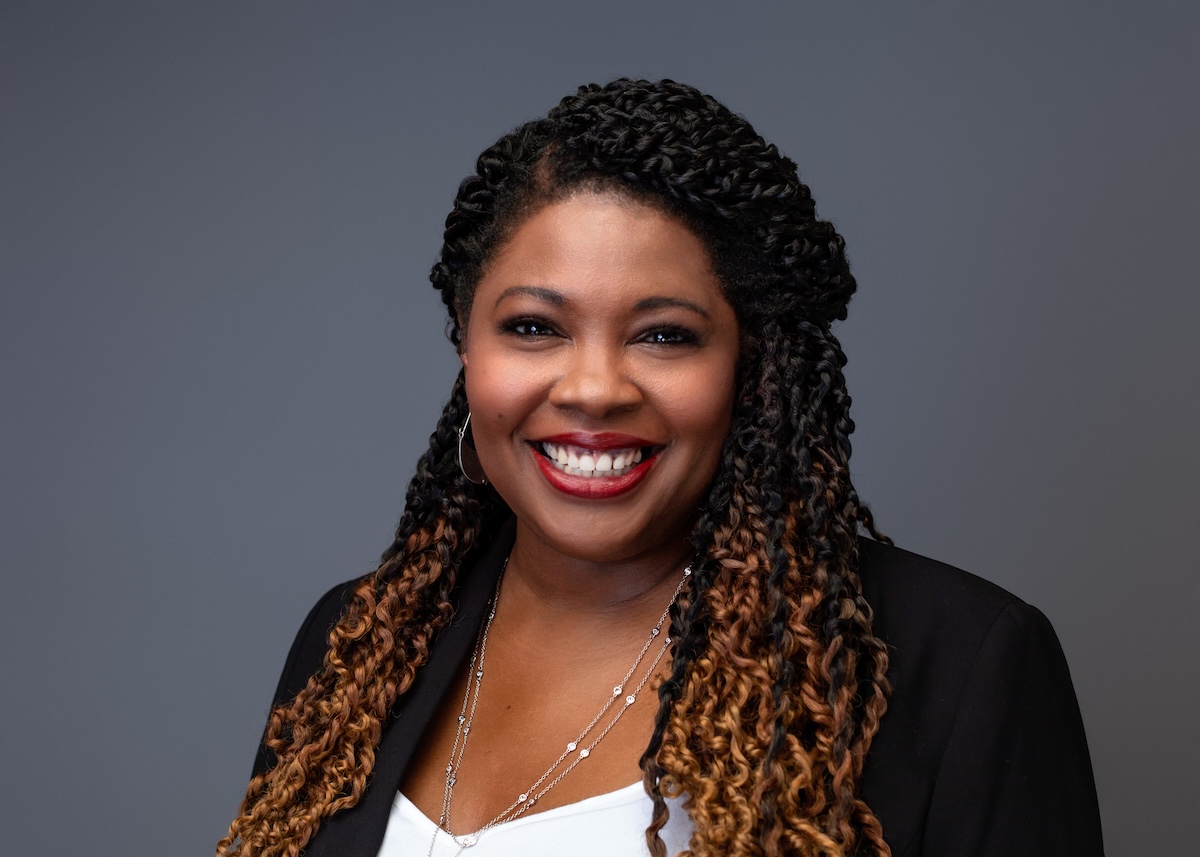
But Anika Howard, President and CEO of Wondr Nation, talks about it differently. She believes the industry sometimes treats its most important safety feature like a movie character written into the script, only to later be pushed into the background.
“I feel like with responsible gaming, it’s like, you’re putting baby in a corner,” she told CasinoBeats during a wide-ranging interview about what responsible gaming should look like at a time when the casino experience is increasingly digital, and we can carry a sportsbook in our pockets.
It’s an observation she makes with the confidence of someone who’s watched the industry evolve up close. Howard has spent more than 20 years in gaming, including as Vice President of Brand Marketing and Digital at Foxwoods Resort Casino and Head of Product Marketing at IGT, before taking the top job at Wondr Nation, the Mashantucket Pequot Tribal Nation’s digital gaming venture.
During that stretch, she’s seen the industry move from a largely floor-based, staff-mediated experience to an always-on digital product. It’s a product that leaves a trail of data behind with every session, bet, and deposit.
And with that shift, Howard argues, the “side project” era of player protection has to give way to something built for the reality of today’s players.
Responsible Gaming Isn’t the Opposite of Growth
When we talk about responsible gaming, it’s easy to default to thinking of it as a zero-sum game: guardrails equal friction, friction equals fewer deposits, and fewer deposits equal less revenue.
Howard doesn’t deny that responsible gaming can create these moments, like when a platform asks a user to take a break, set a limit, or rethink their behavior. However, she argues that treating those moments as “anti-growth” risks misunderstanding what sustainable growth actually looks like.
For Howard, the business case is straightforward: “I feel [that] responsibility [is] the growth strategy,” she said. “So if you have a player who trusts the platform, understands the product, stays in control, that’s a player that comes back.”
And if they don’t come back, it’s often because something went wrong before the player ever had the tools or understanding to stay in control. “When you look at churn,” Howard said, “churn, in many cases, is driven by harm, confusion, distress.”
When responsible gaming is viewed from that perspective, it changes how operators should think about it. If the goal is long-term retention, then it shouldn’t be treated as a separate, compliance-oriented project. Instead, it should be part of the core product strategy.
Responsible Gaming Starts at First Contact
Howard’s view of responsible gaming starts with a practical point: online gambling has changed what operators can see and what they can build. In a land-based casino, staff may be able to spot visible signs of distress.
But, Howard pointed out that online platforms bring something different to the table: “When you have a digital footprint of that experience online, you have that information a little bit more readily available,” she said. “You also can integrate some of those things into the experience.”
During our conversation, she described old-school casino training areas for new players, a “party pit” as she remembered them. Here, new players could learn a game in a low-risk environment.
“If a new player wanted to learn how to play a game, they could go in there,” she said. “And it could be a low-risk opportunity for a dealer to show them how to play.”
She believes that in online gaming, that moment has to happen at the very beginning by “meeting players at first contact.” To do that, operators need to build the equivalent of a party pit directly into the user journey.
“Are there onboarding flows that can be used to educate players?” Howard asked. “Can you embed how-to-play content, odds explanations, budgeting tools, and account setup so it’s not just an optional part of the journey?”
The goal here isn’t to lecture players on responsible gaming. It’s to make sure they understand the product, the tools available to them, and how to stay in control from the start.
“What are the things that you can do at the beginning to reduce player confusion and build confidence?” she said.
That’s why she sees responsible gaming changing from something that’s passive, “putting up signs and handing out pamphlets,” into something that “needs to be” an active part of the player experience.
She broke down the technology conversation in a way most operators could relate to, pointing out that they already use predictive thinking to identify high-value players.
“I remember very early on predicting if someone was going to be a VIP player or not,” she said. “And so you can use some of that same logic, changing the criteria, to identify some of those other things.”
In Howard’s view, responsible gaming shouldn’t begin with a warning label at the edge of the experience. It should begin with product design that includes “giving them the tools up front” to help them understand what they’re doing before confusion turns into harm.
The Industry’s ‘Online Gap’ Problem
Whether we’re paying our bills or ordering dinner on a Friday night, many of us manage a big part of our lives online and through apps. And that’s one of the gaps Howard has identified with the gaming industry’s current approach to responsible gaming.
While many players live their lives online, responsible gaming tools aren’t meeting them there; instead, they often exist in the analog world.
“What I’ve seen is a gap: in many cases, a lot of the tools that we have are not necessarily online tools,” she said. “And players are online.”
She offered a simple comparison: “If you’re banking online, if you’re paying all your bills online… It’s a little bit of a stark transition, and then you have to actually talk to someone, like, what’s going on.”
Howard said it’s important for operators to “meet players where they are.” And she said that’s exactly what they’re trying to do at Wondr Nation.
“So what we’ve been trying to do is figure out what are the things that you can do to help facilitate that online,” she said. “So I think there’s a gap, and there’s an opportunity there.”
One of those things is self-exclusion, but with an important caveat: it has to be “easy to enroll but a little bit hard to reverse prematurely,” she said.
Howard also mentioned aspects of responsible gaming we don’t always see, such as preventing self-excluded players from reentering, proactive outreach, targeted messaging, “safety checks” when red flags appear, and “cooling off periods before things escalate.”
Even the messaging matters, she said, especially when it’s tied to major betting moments. She talked about the flood of marketing that happens around March Madness and the Super Bowl, and suggested that platforms could build real-time reminders into that environment, tools that remind players, “this is for fun…this isn’t going to be my retirement plan.”
When Player Protections End at the Border
When we asked Howard about the state-by-state regulatory patchwork, she said, “So, I think it’s a mixed bag.” Her first example was self-exclusion and how limiting it can be when protections stop at state lines.
Howard has served on a couple of advisory boards that have looked at how self-exclusion protections work across jurisdictions. That work has raised an important question: “What is the benefit of having, either through tribes or through states, multi-state self-exclusion policies?” she said.
As the system is currently set up, she explained that “especially in border states,” a player can be excluded in one jurisdiction but then has to go through that process again “state by state by state. From a purely player perspective… It’s a challenge.”
Howard acknowledged the logic behind the current system. “From a regulatory standpoint, I understand it,” she said, because “everything is moving… state by state.” But she argued that’s exactly why stronger standards can’t rely on regulation alone. “This is where, in some cases, it’s going to have to be operator-led and driven,” she said, so that “we can self-police ourselves.”
That’s when she laid out what could be described as an accountability ladder. The first rung is “Regulatory Accountability,” which she described as “the most visible layer,” but also “reactive” and constrained by the fact that what operators can do is still “defined by their state.”
Next is “self accountability,” which she described as the “code of conduct,” “trade bodies,” and “trade organizations” that try to “fill some of those gaps.” “When it comes to self-regulation,” Howard said, “that’s something that we can do.”
The third rung is where she sees the biggest gap: what happens inside the company itself. “And then I think there’s just organizational accountability,” Howard said, “and so that’s where there is the widest gap.” She pointed to questions of “internal culture” and “leadership,” and how willing operators are to “lean into working with… other industry partners” and “collectively holding the industry accountable.”
Howard pointed to European markets as an example of what can happen when “there was not a lot of… self-regulation and reflection,” and “the regulator stepped in.”
She expects standards to tighten as the U.S. market grows and new “competitive threats” enter the space. “I feel like there’s going to be pressure from advocacy groups and from regulators,” she said, and that the industry will need to be “more stringent.”
Community Partnerships Show Operators What Data Misses
Howard stressed that operators can’t go it alone when building effective responsible gaming systems. Partnerships with advocacy and treatment groups, she said, provide the context that isn’t always obvious when looking at just the data.
When discussing Wondr Nation’s work with groups like the Connecticut Council on Problem Gaming and Bettor Choice Programs, Howard explained that the value of those partnerships lies in the context they provide, especially about how different communities experience gambling harm and respond to messaging.
“So I think when you look at these grassroots and advocacy groups, they are very important because they have the community ties,” Howard said. “And what they can do is really give you context.”
One of the clearest lessons from conversations with those groups is how much effective messaging depends on representation and audience awareness.
“Especially when it comes to communicating around responsible gaming, everything was really one size fits all,” she said. “People need to see people that look like them when they’re having the conversations, or it needs to be in their language, or it needs to be in other forms that are relevant to them.”
She expanded on that point by noting that different users don’t always arrive at harmful behavior in the same way.
“Different audiences and different segments have different reasons that are prompting people to abuse,” Howard said. “Sometimes it’s escapism. Sometimes it’s to be part of a group, you know, so really understanding the reason and the cause helps as well.”
And this is especially important now as the digital gambling audience continues to attract a different mix of players, she said.
“It helps you understand the shift in the type of players that are now self-reporting or expressing issues, online versus in the casino, because it’s a different audience,” Howard said. “It’s a younger audience. It’s a more male audience. It’s very interesting to understand who you’re actually talking to.”
Because of this shift, she believes, it’s become harder to rely on generic messaging and easier for operators to miss emerging risks if they’re only looking at their own data.
Tribal Perspective Adds Longer Time Horizon
Working within a tribal gaming framework brings a different perspective to these conversations, Howard explained. That’s because decisions aren’t evaluated solely in terms of short-term commercial outcomes. They’re also weighed against community responsibilities and long-term impact.
She said tribes are looking not just at immediate operational questions, but at how gaming affects the community over time.
“I think tribes also feel a sense of, when you bring gaming into the community, what impact does it have on the broader community?” Howard said. “What are the things that are rooted in prevention and treatment, and what are the more Indigenous-focused ways to approach them?”
It’s that community-centered mindset that also shapes the timeline behind those decisions.
“Really, for the tribes, a lot of the conversations, a lot of decisions that are made are not necessarily made for today, but it’s for seven generations beyond,” she explained. “So what are the things that you’re doing today to make sure that you are laying a solid foundation for the future?”
New Wagering Formats Raise New Protection Questions
Our conversation also turned to newer forms of real-money digital wagering, including prediction markets. Howard didn’t hedge when asked about the importance of these newer products incorporating the same responsible gaming safeguards as traditional operators.
“It is critically important because players don’t understand the difference…there’s absolutely an obligation to include [player protections] on those platforms,” she said.
Howard also pointed out where those products’ advertisements are appearing, saying she’d even seen them on major streaming platforms.
“I’m on Netflix and Amazon Prime Video, and prediction markets are heavily, heavily advertising in those channels and in places that traditional casinos normally do not,” Howard said. “So it’s reaching this entirely new streaming audience.”
That’s one reason Howard keeps returning to baseline protections. Looking at the issue from a consumer protection standpoint, it matters less what a company calls itself than whether users are risking their money on uncertain outcomes without adequate safeguards in place.
“It doesn’t matter,” she said. “At the core is having those protections.”
She also spoke about the reputational risk that comes with the very focused advertising many prediction markets engage in. “At the end of the day, someone’s not going to understand, someone’s going to lose a lot of money…and they’re going to talk about it.”
The fallout could invite even more scrutiny across the sector, as we’ve already seen, with state regulators issuing cease-and-desist orders and Kalshi being temporarily blocked from operating in Nevada after a judge issued a temporary restraining order on March 20.
Bringing Responsible Gaming Back to the Center
Ultimately, Howard believes the next phase of responsible gaming is as much about language as it is about tools and regulation.
“There’s a lot of focus on responsible gaming as a cautionary tale,” she said. “But how do you reframe that as something aspirational?”
For Howard, that shift in tone from restriction to empowerment is especially important as newer groups of players enter the market.
She argues that, for too long, responsible gaming has been treated as an obligation rather than as part of the product itself. In other words, it has too often been treated like “putting baby in a corner,” kept separate from the experience rather than built into it.
“If I could change one thing,” she said, “it would be to make responsible gaming central to the experience, not something that sits on the side.”