


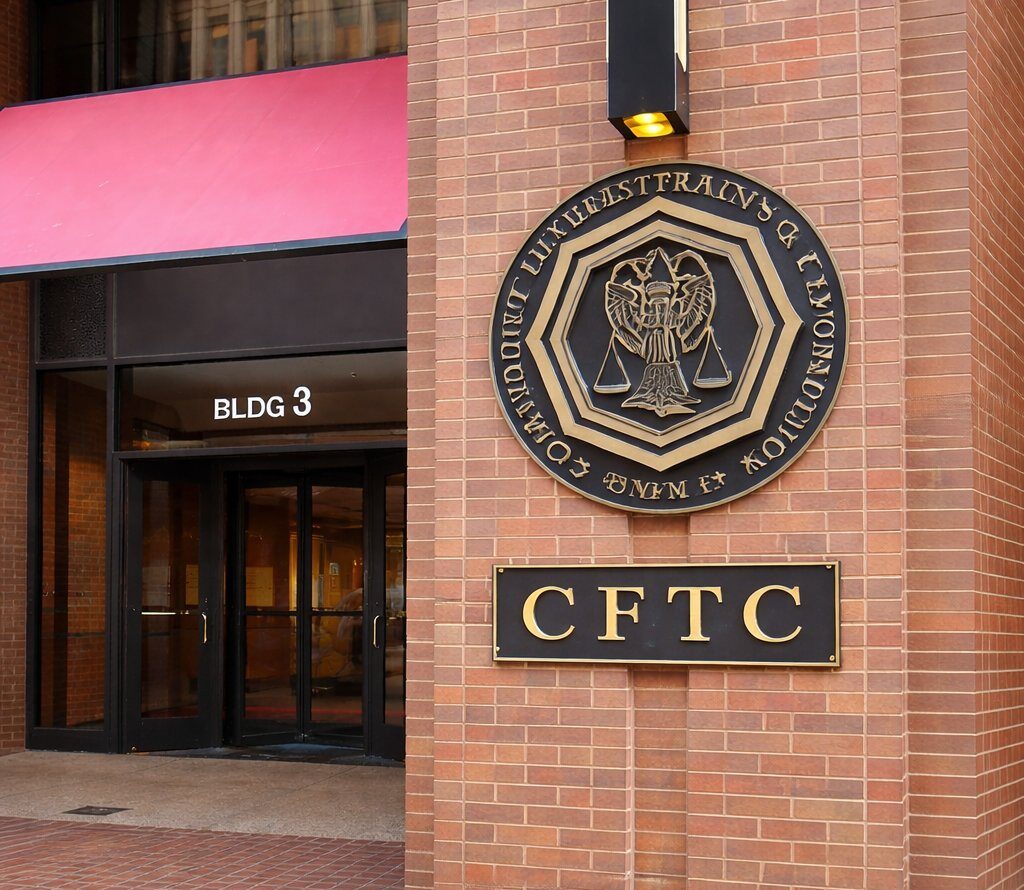
The battle lines between federal regulators and state governments were officially drawn on Thursday as the Commodity Futures Trading Commission (CFTC) launched an unprecedented multi-state legal offensive to stop local officials from treating prediction markets like unlicensed gambling operations.
All three lawsuits, filed in federal court in Arizona, Connecticut, and Illinois, challenge those states’ efforts to block event contracts, including those related to sports, on CFTC-regulated exchanges.
In the press release announcing the actions, CFTC Chairman Michael Selig made clear that the agency would continue to defend its turf, saying:
The CFTC will continue to safeguard its exclusive regulatory authority over these markets and defend market participants against overzealous state regulators. This is not the first time states have tried to impose inconsistent and contrary obligations on market participants, but Congress specifically rejected such a fragmented patchwork of state regulations because it resulted in poorer consumer protection and increased risk of fraud and manipulation.
The three lawsuits argue that the Commodity Exchange Act gives the CFTC exclusive jurisdiction over event contracts traded on federally regulated designated contract markets, and that Arizona, Connecticut, and Illinois are unlawfully trying to impose gambling rules on products the agency says fall under federal commodities law.
Selig also took to X to explain the agency’s action, saying the cases were filed to “reassert our statutory authority” after state officials imposed “inconsistent and contrary obligations” on CFTC-registered prediction markets.
The CFTC’s decision to take legal action against the states didn’t come out of the blue. In a video posted on X in February, Selig signaled that the agency would take a more assertive stance in the prediction market fight, saying:
To anyone seeking to challenge the Commission’s authority over these contracts, I want to make it clear: we’ll see you in court.
Arizona Case Centers on Criminal Charges
Arizona is the state that has come out most aggressively against prediction markets, filing criminal charges against Kalshi in March.
In the new federal lawsuit, the CFTC points to Arizona’s criminal case against Kalshi as evidence of how far the state has gone in trying to regulate prediction markets.
According to the complaint, Arizona first sent Kalshi a cease-and-desist letter in May 2025, then filed a 20-count criminal information in March, accusing the exchange of operating an illegal gambling business and engaging in election wagering.
The federal complaint says Arizona is attempting to “criminalize markets” that Congress placed under the CFTC’s exclusive jurisdiction. The lawsuit uses the specifics of the Arizona case against Kalshi to illustrate the direct conflict between state gambling laws and federal derivatives regulation.
In the filing, the CFTC highlights some of the most pointed allegations it takes issue with, including wagers tied to the 2028 presidential race, the 2026 Arizona governor’s race, player props, and even whether the SAVE Act would become law. In doing so, it argues that Arizona is trying to apply state gambling law to event contracts the agency says are governed by federal commodities law.
Connecticut & Illinois Cases Focus on Sports Wagering Claims
Connecticut and Illinois have taken a different approach in their attempts to rein in prediction markets than Arizona. Instead of filing criminal charges, the states have issued cease-and-desist letters to the CFTC-regulated entities.
However, the two states characterize the activity with slight variations: Connecticut describes it as “unlicensed online gambling, more specifically sports wagering,” while Illinois considers it unlawful “sports wagering” or “gambling” under the Illinois Sports Wagering Act, Criminal Code, and Administrative Code.
But in the new federal suits, the CFTC says both states are making the same basic move: treating event contracts listed on federally regulated exchanges as gambling products subject to state law.
The agency argues that this is exactly what the Commodity Exchange Act prohibits, giving the CFTC exclusive authority over those markets and preempting state-level enforcement.
In the complaints, it says state-by-state gambling enforcement would disrupt the nationally uniform system Congress created for derivatives markets.
The Connecticut complaint says that applying state gambling laws to federally regulated exchanges would create the very “patchwork” that Congress sought to prevent. Meanwhile, the Illinois filing says state enforcement would “undermine that uniformity, thwart Congress’s scheme, and intrude on Plaintiffs’ exclusive jurisdiction.”
Arizona Case Quickly Folded Into Existing Kalshi Fight
The CFTC’s case in Arizona is already moving onto a parallel track. Sports betting and gaming attorney Daniel Wallach reported on X that U.S. District Judge Michael T. Liburdi has entered an order consolidating the CFTC’s new lawsuit against Arizona officials with Kalshi’s pending case against the state.
The consolidated matter will proceed under Kalshi’s lead case number. That means one of the CFTC’s three new challenges is already being absorbed into the bigger court battle over whether states can treat federally regulated event contracts as gambling.
Liburdi said consolidation was appropriate because the two cases share a “common question of law or fact” about Arizona’s authority to regulate these markets.
The move sets Arizona up to become one of the first places where courts weigh the CFTC’s claim that federal law preempts state gambling enforcement of prediction markets.