









Emmanuella Oluwafemi is an iGaming expert with 12+ years creating casino, sweepstakes, and sportsbook content. She’s written 3,000+ articles, including guides on gambling laws and gambling ads policies. Aside from being a skilled writer, Emmanuella also...
Read Full Bio
Dina has over three years of experience in the iGaming industry as a Content Writer before moving into SEO Content Writing and later Editorial Project Management. Her work centers on online casino topics, including commercial...
Read Full BioSlots are the easiest casino games to play, even if it’s your first time in front of the reels. At the same time, what makes the difference between an enjoyable session and a confused stare at symbols is knowing how to read slot machine pay tables and use them to your advantage.
This guide breaks down what a slot paytable is, how to read it correctly, why players often skip it, and how to compare slots by volatility, RTP, bonuses, and common mistakes to avoid.
Key Beats
- A slot paytable enables you to quickly understand the basic mechanics of a slot game and how all the symbols function.
- Understanding how a particular slot game operates by reviewing the slot paytable can significantly enhance your enjoyment of the game.
- Reading the slot paytable will also help you manage your game strategy and become familiar with terms such as volatility and variance.
What Is a Slot Paytable?
A slot paytable is like a quick-start guide for every slot game. It shows you exactly how each part of the game works, all in one spot. When you open a paytable, you’ll see what each symbol is worth, so you know right away which ones pay the most and which are just fillers.
Most slot machine paytables also highlight the special features you’ll find. This includes bonus rounds, free spins, or unique mini-games. You’ll spot which symbols trigger those features and what you need to land on the reels to start them.
It also explains how special symbols, such as wilds symbols, scatters, and multipliers, work, often using simple visuals and clear numbers. These slot paytables allow players to understand the core elements of a slot game before they start playing.
How to Read an Online Slot Paytable
One of the best habits for Slot players to build is reading the paytable before placing any bet. This action takes less than a minute and helps you avoid surprises and wasted spins. Here’s a step-by-step way to read a paytable:
- Open the paytable before you spin
Always open the paytable first, before placing a single bet. This is where the game explains how it actually works; many players skip this section and assume all slots behave the same, which is not the case.
- Check the symbol values
Look for the highest-paying symbols and work your way down from there. This shows you what kind of wins the game is built around; either it’s the big symbols type or frequent small hits. A slot where the top symbol pays low usually relies on bonuses for big wins.
- Understand how paylines or ways to win work
Check out if the game uses fixed paylines, adjustable paylines, or “ways to win.” This affects how often you win and how combinations are counted. Many players believe that more lines always mean better odds of winning, but that’s not always the case.
- Read the rules for wilds and scatters
Wilds and scatters often behave differently than expected. Some expand, some multiply wins, and some only work in bonus rounds.
- Review bonus features and how they’re triggered
This is where most of the slot’s potential lies. Note how free spins, hold-and-win rounds, or special bonuses are activated. Furthermore, pay attention to how many symbols are required to trigger special features and whether these features can be retriggered.
- Look for RTP and volatility information
If shown, RTP tells you about long-term returns, while volatility hints at how wins are distributed. High volatility means fewer but bigger wins, while low volatility means more frequent, but smaller payouts.
- Check betting requirements and payout limits
Finally, confirm the minimum and maximum bet. Also, check out the maximum win as some slots cap wins at a low amount, even with flashy bonuses. A good knowledge of the limits helps you decide if the game is worth your time and budget.
Why You Should Read the Slot Machine Paytable
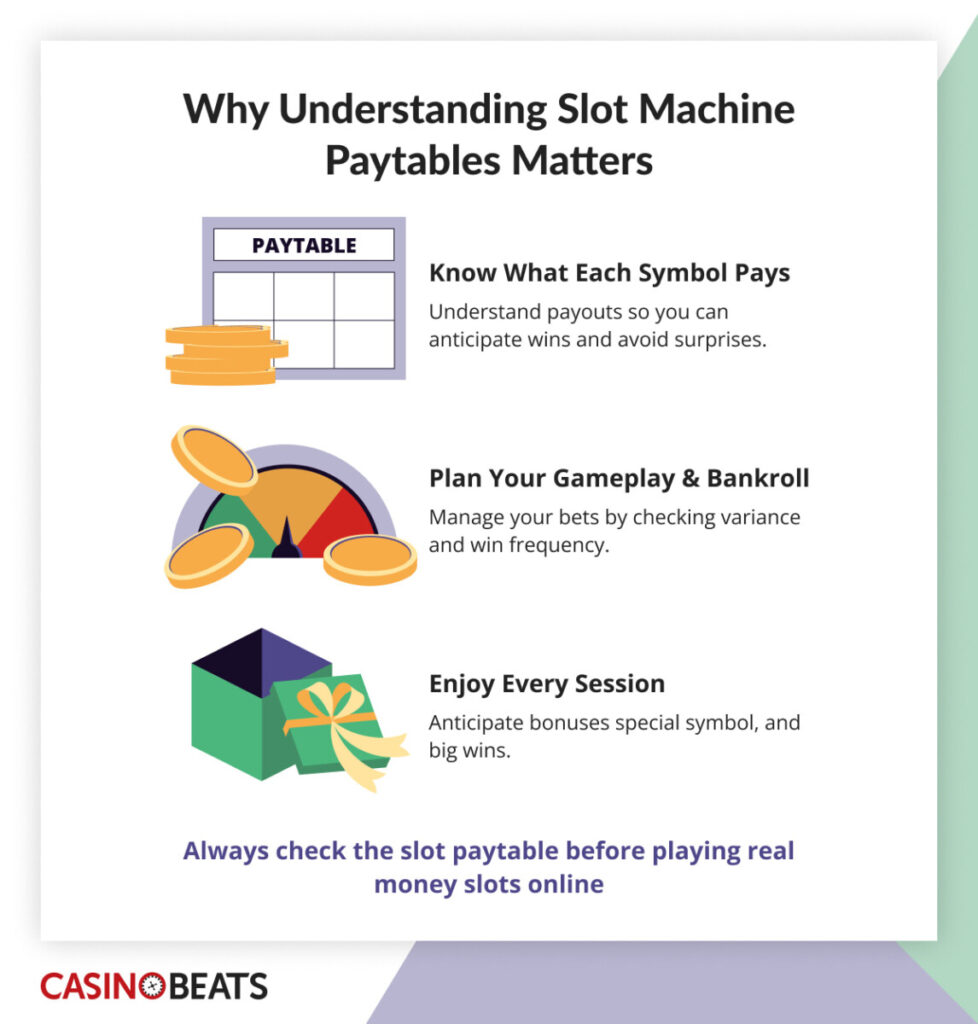
Aside from knowing what to expect for each symbol combination, understanding slot machine paytables can help you plan your gameplay effectively. You can control your bankroll by planning how much you should ideally spend per spin. This is great, especially if you understand a game’s variance and how long it may take to trigger a winning spin on average.
Once you have read the slot paytable and are equipped with all the necessary details, every session becomes an enjoyable one. You get excited as you look forward to triggering bonus features, anticipate the presence of special symbols, and even hope for high-paying ones. It’s always in your best interest to know how much those funky symbols pay out as you play on real money slots online.
Strategic Advantages of Reading the Paytable
Reading the slot paytable gives you absolute control over how you play.
- One key advantage is understanding volatility, which refers to the frequency and magnitude of payouts. High-volatility slots, like NetEnt’s Dead or Alive 2, pay out less frequently but with larger prizes. Low volatility slots, such as Play’n GO’s Fire Joker, give smaller, more frequent wins. You’ll find this information in the paytable or game rules section, often listed as volatility or variance.
- Symbol distribution also plays a role. The paytable displays the number of symbols required to trigger a payout and the corresponding payout amount for each combination. Slots with more high-paying symbols and wilds tend to have fewer but bigger wins, while games with more low-paying symbols offer frequent but smaller payouts.
- Bonus mechanics and triggers are spelled out in every paytable. You’ll see what it takes to activate free spins, pick features, or enter progressive jackpots.
For example, landing three scatter symbols on Starburst triggers free spins, while three or more bonus symbols on Book of Dead launch a bonus round. Some paytables display bonus frequency, providing clues on how often to expect features.
- There are also RTP (Return to Player) and payout structures, which are critical for comparing games. RTP, often displayed in the paytable or rules, indicates the percentage of money a slot machine returns to players over time.
For instance, Gonzo’s Quest lists a 95.97% RTP, while Bonanza from Big Time Gaming has 96%. Slots with higher RTPs typically return a higher percentage of the bet to players over time.
Slot Comparison by Volatility, RTP & Bonuses
This table highlights the differences in volatility, RTP, and bonus features among various games. Reading and understanding slot machine paytables helps you understand these differences and choose slots that suit your style and risk preference.
| Slot Game | Volatility | RTP (%) | Bonus Features |
|---|---|---|---|
| Dead or Alive 2 | High | 96.8 | Free Spins, Wild Multipliers |
| Fire Joker | Medium/High | 96.15 | Respins, Multipliers |
| Gonzo’s Quest | Low | 95.97 | Avalanche, Free Falls |
Slot Machine Paytable Example: How Skipping It Can Affect Gameplay
Skipping the slot paytable can lead to confusion, missed bonuses, and frustrated gameplay. Below are real slot machine paytable examples showing how bonus symbols, jackpots, and volatility can impact your session—and why taking a minute to read the paytable matters.
Example 1 – Bonus symbols confusion
• You land three bonus symbols and expect a feature to trigger.
• Nothing happens because the symbols only count on specific reels.
• A quick look at the slot paytable would have avoided the frustration.
Example 2 – Jackpot banner misunderstanding
• A game advertises a giant “jackpot” on the screen.
• You assume it’s a massive progressive prize.
• In reality, the slot machine pay table reveals that it’s just the top-paying symbol with a significantly lower payout.
Example 3 – Using the slot paytable to your advantage
• You study the slot machine pay table before playing and notice the slot is high volatility.
• Knowing that wins are less frequent but larger, you adjust your bet size and pace accordingly.
• This helps manage expectations and makes the session more enjoyable.
Why Players Often Skip Reading Slot Paytable
Players often skip reading the slot paytable for several reasons:
Eagerness to start spinning
Players want to jump straight into the action without checking the info button.
Hidden or small paytable buttons
On mobile devices especially, the paytable icons can blend into the screen.
Belief that slots are pure luck
Many assume that understanding the paytable won’t change outcomes.
Quick-spin and autoplay features
These encourage skipping menus and going directly to gameplay.
Observing symbols without context
Players may notice bonuses or wilds appearing but don’t understand how they function without the paytable.
Learning only after mistakes
Often, players realize what they missed after lost spins or accidentally triggering features.
Perceived time-saving
Skipping the paytable feels faster but keeps players unaware of important game mechanics and rewards.
6 Top Tips for Efficient Slot Paytable Reading
To maximize your enjoyment in every slot session, make the slot machine paytable your first stop.
- Look for volatility or variance ratings which are often displayed on the info page.
- Scan for bonus triggers and note which symbols unlock free spins or bonus rounds.
- Pay close attention to wilds and scatters, as they can significantly change gameplay.
- Check the maximum win potential and identify the symbols most worth chasing.
- Review the symbol hierarchy to understand which combinations yield the biggest payouts.
- Use demo mode (if available) to test your understanding of the slot machine paytable before playing for real.
3 Common Mistakes Players Make by Skipping the Slot Paytable
Skipping the slot paytable is generally harmless, but it often leads to simple mistakes that can hurt your experience and your bankroll. Here are the most common ones beginners make, and how the slots paytable helps you avoid them.
Misunderstanding Bonus Symbols
Players assume scatters or bonus symbols work the same in every game. As a result, they chase features that don’t trigger the way they expect. Reading the slot machine pay table clearly explains where these symbols appear and how bonuses are activated.
Misreading Jackpots or Maximum Payouts
Many players believe every big-looking slot can pay unlimited wins. In reality, most games have a maximum win cap. The slot paytable clearly displays the exact payout limits, ensuring no surprises later.
Ignoring RTP and Volatility
Without checking the paytable, players don’t realize whether a slot offers frequent small wins or rare big ones. The slots paytable helps you choose games that actually fit your budget and playing style.
Conclusion
A slot paytable is your roadmap to more imaginative, more enjoyable play. Taking a minute to check the details can save you from missed bonuses, wrong expectations, and costly surprises. Next time you try a new slot, make it a habit to read the slot paytable before you start playing. It’s a simple step that can turn every spin into a better, more confident experience.
FAQs
Sometimes, yes. Many paytables clearly label volatility as low, medium, or high, helping you understand how often wins are likely to land.
Absolutely. It shows payouts, bonuses, RTP, and betting rules so you can pick a slot that matches your budget and play style.
No, it won’t change randomness, but it helps you avoid misunderstandings and make better choices.
A paytable shows the value of every symbol, how many you need for a payout, and the rules for special features like wilds, scatters, and bonus rounds. Some also include volatility, RTP, and jackpot details.
To read a slot paytable, start at the top and look for the highest-paying symbols; then, move down to view the regular symbols. Check the special symbol section for wilds, scatters, or multipliers, and review the bonus rules so you know how to trigger features.
Reading the paytable means you know what to expect. It helps you spot the best features, understand what triggers bonuses, and avoid missing out on big wins or wasting spins on the wrong combinations.
A slot machine paytable is a built-in guide for every slot. It explains how the game pays, which symbols are most important, and what rules you need to follow for features or special rounds.