

The NCAA wants federal regulators to suspend college sports prediction markets, arguing that the rapidly growing event contract space operates in a manner similar to sports wagering, but without the guardrails that state-licensed sportsbooks are typically required to have in place.
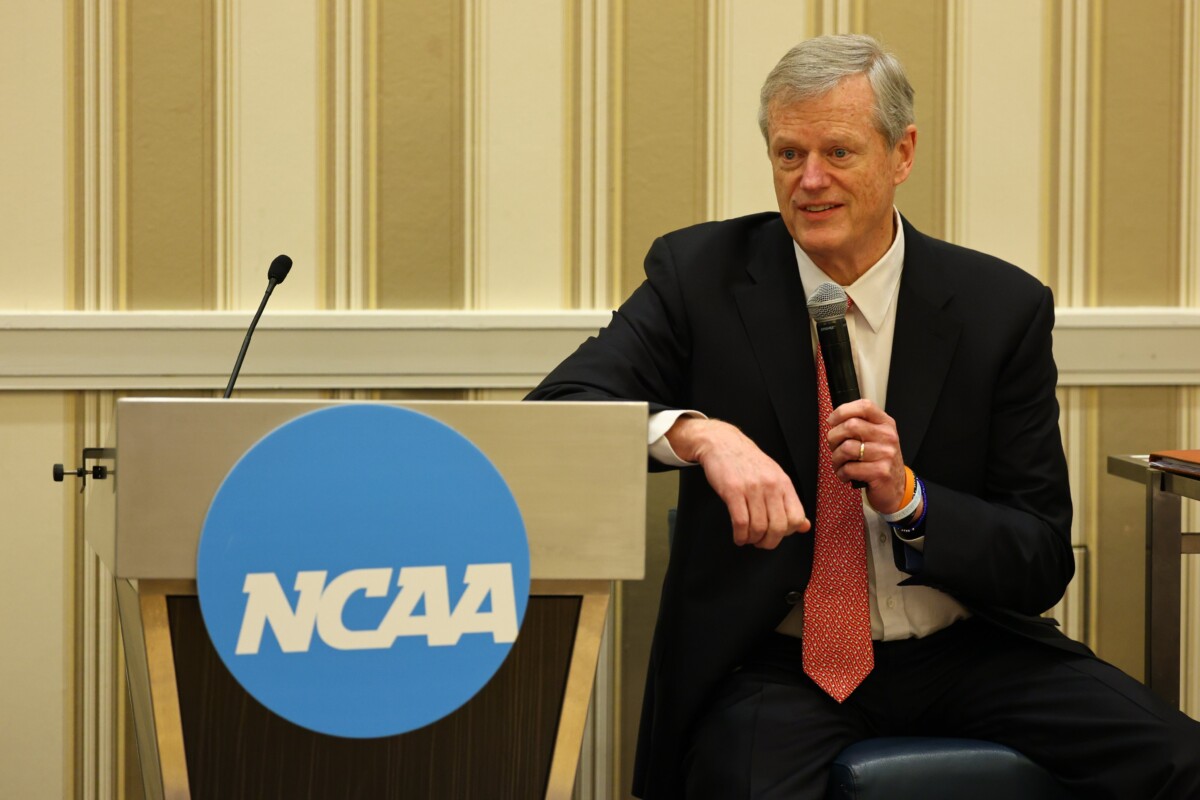
In a pointed three-page January 14 letter to Michael Selig, Chairman of the Commodity Futures Trading Commission (CFTC), NCAA President Charlie Baker wrote, “I implore you to suspend collegiate sport prediction markets until a more robust system with appropriate safeguards is in place.”
Baker said the NCAA is willing to work with the CFTC to create standards that would keep student-athletes and consumers safe. In the press release, he added that “the answer cannot be the status quo.”
The core argument in the NCAA’s letter is that under a broad definition of sports wagering, where money is staked on the outcome of a sports event, or “any portion thereof,” the contracts offered by prediction markets look and behave a lot like sports betting.
In the letter, the NCAA points out that these products already list moneyline, total, and spread markets on college sports, effectively recreating a sportsbook-style menu. It also notes that major sportsbook operators and daily fantasy companies are moving into the prediction marketplace.
What NCAA Wants Changed
The letter outlines several safeguards that Baker says are missing in prediction markets, including age and advertising restrictions, integrity monitoring, anti-harassment measures, and harm reduction resources. He argues that collegiate sport prediction markets should be suspended until these protections are in place.
Age restrictions are at the top of the list, with Baker noting that most states limit sports betting to customers who are 21 and older, while prediction markets “often allow participants as young as 18,” which creates a pathway for college and high school students to wager on sports.
He also called for restrictions on advertising, similar to those in place for sportsbook marketing on campuses. Baker warned that some students might mistakenly view prediction market trading as a form of financial investing, even though the outcomes of NCAA competitions are inherently unpredictable, which runs counter to how investment decisions should be made.
The NCAA is also requesting enhanced integrity monitoring of prediction markets, including tools such as geolocation checks and clearer reporting obligations across operators. These tools are standard in traditional sportsbooks but not consistently used in the prediction marketplace.
Baker also wants to see prediction markets coordinate with sports governing bodies on market approvals and integrity investigations in the same way traditional sportsbooks do. Harm-reduction resources on campuses, including problem-gambling education and screening and treatment support, are two things he’d also like to see.
Two other issues raised in the letter are themes Baker and the NCAA have been pushing for some time: prop market restrictions and anti-harassment measures. Baker says he has advocated for the elimination of prop betting due to its impact on athletes and the integrity of competition. He warns that even if prop-style prediction markets on student-athletes aren’t yet available, it’s “only a matter of time.”
Why NCAA Wants Pause Now
Baker doesn’t explicitly point to one event that prompted him to send the letter now; however, he does cite “recent actions” by prediction markets, including efforts by operators to pursue contracts tied to the NCAA’s transfer portal, which he said “would pose catastrophic risks to student-athletes and consumers alike.”
While he didn’t mention Kalshi by name, in December 2025, the company filed with the CFTC to self-certify markets related to NCAA Transfer Portal activity. At the time, Baker said he was “vehemently opposed” to the idea, calling it “absolutely unacceptable.”
Following widespread outrage, Kalshi appeared to walk back its plans to introduce contracts related to whether NCAA players would enter or withdraw from the portal, saying “we certify markets all the time that we do not end up listing; despite our competitors having these markets live, we have no immediate plans to list these contracts.”
The NCAA also anchors its argument in athlete well-being, especially when it comes to bettor abuse. In the NCAA Student-Athlete Needs, Aspirations and Perspectives study released last year, researchers found that 36% of Division I men’s basketball players reported experiencing sports betting-related social media abuse, and 29% said they had interacted on campus with a student who bet on their team.
While the January 14 letter focused exclusively on prediction markets, Baker has also raised the issue of college player prop bets with traditional sportsbooks, urging states with legal sports betting to ban wagers on individual college athlete performances. And during testimony before the Senate Judiciary Committee hearing on sports gambling in December 2024, Baker and lawmakers again highlighted athlete harassment and pressure on players, alongside calls to rein in prop betting and strengthen deterrents.