










Chavdar Vasilev Journalist
Chavdar Vasilev is a journalist covering the casino and sports betting market sectors for CasinoBeats. He joined CasinoBeats in May 2025 and reports on industry-shaping stories across the US and beyond, including legislative debates, market...
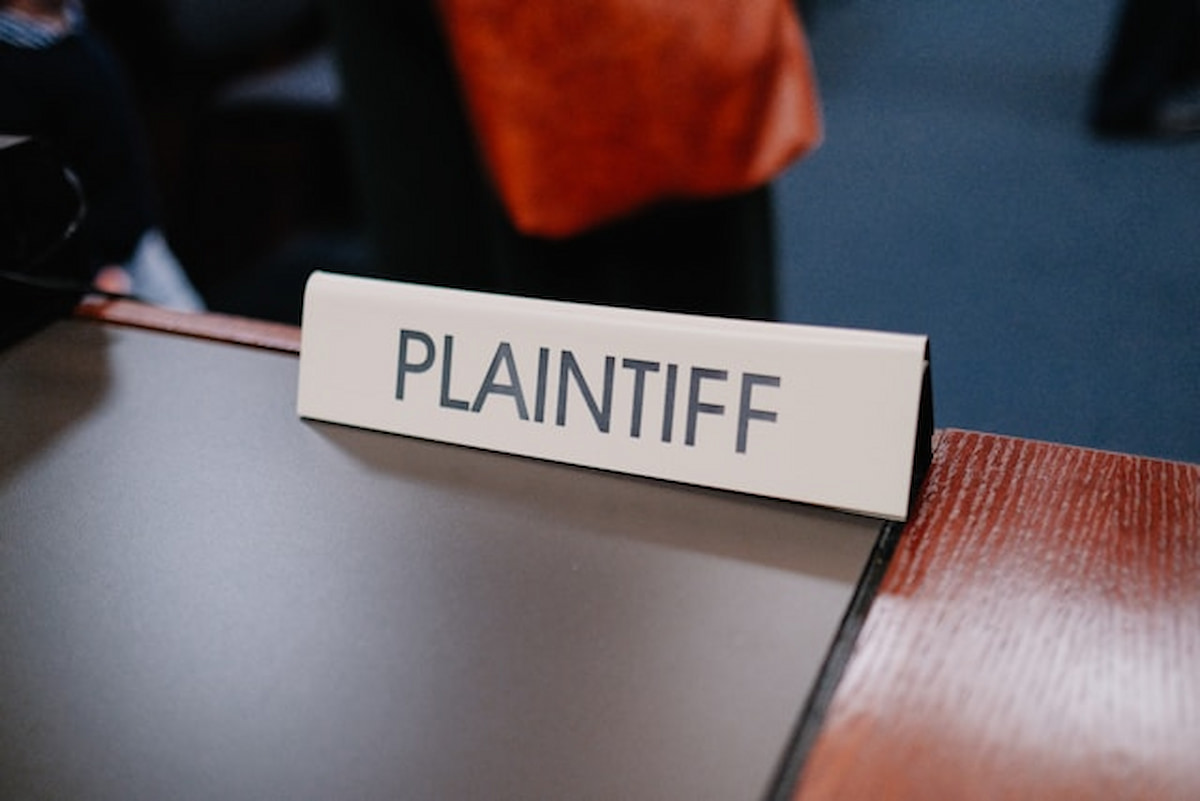
Read Full BioJeffrey Bertucci, a Cicero restaurant owner who once admitted to running video gaming terminals (VGTs) illegally and sharing profits with the mob, is suing the Illinois Gaming Board (IGB) after regulators voted to revoke it.
Bertucci filed the lawsuit on August 5 in Cook County court and asks the court to allow his Steak ‘N Egger diner, about 10 miles west of downtown Chicago, to keep its legal VGT license while the challenge to the IGB decision is pending.
Bertucci argues that the regulator’s revocation of his license violates state law due to his lack of a criminal conviction.
From Media Spotlight to Regulatory Crackdown
In 2010, Bertucci testified in a federal immunity deal as a witness against Casey Szaflarski, known as the mob’s “video poker king.” Bertucci said he would illegally obtain VGTs, which were not legal at the time, from Szaflarski and split the profits 70/30.
His testimony led to the conviction of Szaflarski. It also helped to convict Cisero mob street boss Michael “The Large Guy” Sarno and pawnshop owner Mark Polchan, a high-ranking member of the Outlaws Motorcycle Club (a significant bike gang).
As he received immunity, Bertucci was never convicted of a crime. In 2019, the IGB granted Firebird Enterprises Inc., his company, a VGT license to operate the machines legally.
He renewed his license multiple times until 2023, when the Chicago Sun-Times uncovered his checkered past. That prompted scrutiny on how the IGB issued him a permit.
The regulator then initiated revocation proceedings, citing misrepresentation of material information about his background in the licensing process.
Bertucci appealed, and Administrative Law Judge Michael Coveny sided with him at the end of July 2025.
While the judge recommended that he keep his license, the IGB overruled it, voting to revoke it anyway. The Board argued that had it known the full extent of his past, it would have never issued the license.
Lawsuit Argues IGB Exceeded Its Authority
Bertucci’s lawsuit contends that the Board’s actions are inconsistent with Illinois law.
The plaintiff leans heavily on Coveny’s findings. The judge’s decision relied on Section 45(a‑5) of the Illinois Video Gaming Act, which addresses applicants with past ties to “Grey Games”, unregulated VGTs operated before their 2012 legalization.
Coveny pointed out that Section 45(a‑5) explicitly limits IGB’s discretion to deny or revoke licensing to applicants who have “facilitated, enabled, or participated in the use of’ Grey Games by narrowly defining ‘facilitated, enabled, or participated in the use of’ to mean actually convicted [emphasis from lawsuit] of illegal gambling.”
Since Bertucci has never been convicted, the judge found that the IGB’s revocation effort lacked legal standing:
“Because it was undisputed that Plaintiff and Mr. Bertucci had not been convicted of any such crimes, Judge Coveny recommended” the complaint be tossed because “Plaintiff demonstrated by clear and ‘convincing evidence standard of proof’… that its owner ‘did not participate, enable or facilitate in the use of coin-operated machines for illegal gambling purposes, as a matter of law.'”
The lawsuit also points out Coveny’s rebuke of IGB’s effort to sidestep the statute’s language:
“The Board’s powers, extensive as they are, do not include ignoring a VGA amendment it apparently was strongly opposed to.”
Illinois VGT Market: A Billion-Dollar Engine
Bertucci’s legal battle highlights the growing profitability of VGTs in Illinois. At the end of 2024, the state was home to 48,706 VGTs operating in 8,662 licensed locations. They include bars, restaurants, truck stops, and private clubs.
According to IGB’s data, in FY2024, VGTs generated $2.93 billion in net revenue, representing a 3.9% year-over-year increase. In that period, the terminals generated nearly $1 billion in tax revenue ($147 million to local governments and $851 million to the state).
In comparison, the 16 commercial casinos in Illinois generated $1.69 billion in adjusted gross revenue in FY2024. They contributed $451 million in tax revenue ($345 million to the state and $106 million to municipalities).
Meanwhile, sports betting generated $1.1 billion in adjusted gross revenue, generating $190 million in taxes.
Chicago: The Last Holdout?
Under Illinois law, each municipality has the option to choose whether to allow VGTs. One notable holdout is Chicago, the largest municipality in the state. However, that could change soon.
The City Council and Mayor Brandon Johnson‘s administration have faced increasing pressure to allow VGTs to raise much-needed tax revenue.
Recently, aldermen Gilbert Villegas and Anthony Beale proposed two ordinances. One would allow VGTs at Chicago’s O’Hare and Midway airports, and another citywide.
However, Chicago CFO Jill Jaworski argued that the machines would generate at most $10 million annually, citing a consulting study. Jaworski claimed the benefit would not be worth it. That’s because the machines would cannibalize the slot revenue from the upcoming Bally’s Chicago casino, slated to open in 2026.
While he did not support the idea in the past, Mayor Johnson has recently indicated he would be open to legalizing VGTs amid frustration from state lawmakers.