

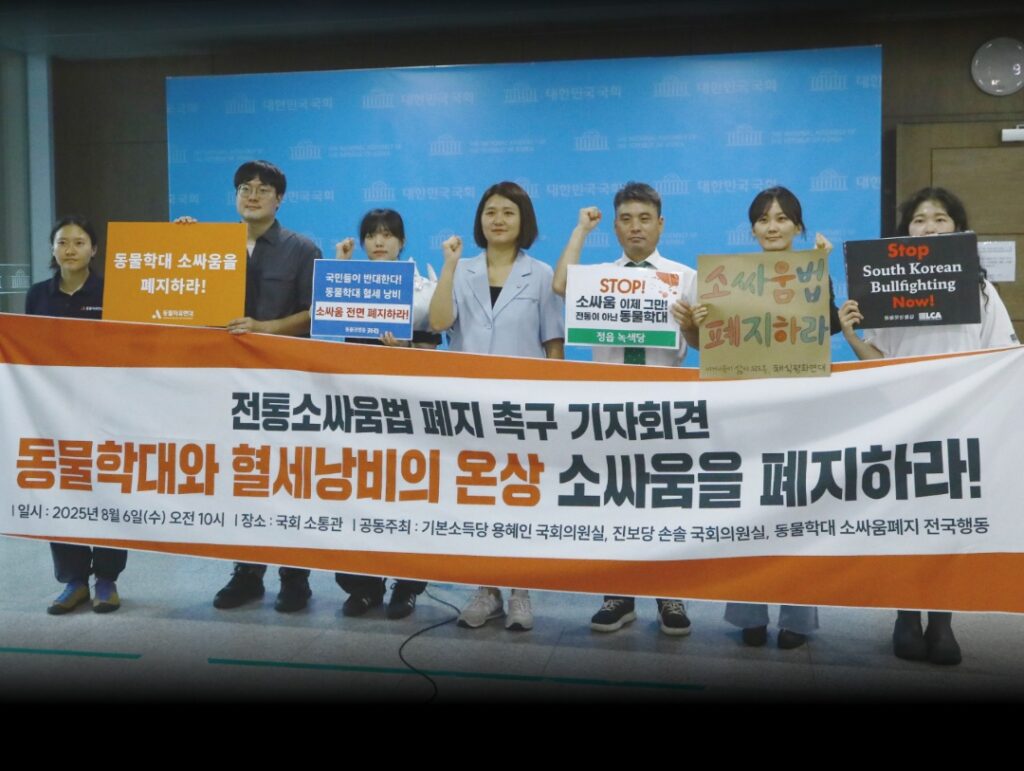
A petition calling for a ban on South Korean bullfighting has gathered over 52,000 signatures, with the matter now on the agenda at the National Assembly.
The South Korean newspaper Seoul Kyungjae reported that, according to South Korean law, lawmakers are required to table a discussion on the petition. The matter will first be considered by the National Assembly’s Agriculture, Food, Rural Affairs, Oceans, and Fisheries Committee.
The National Campaign to Abolish Animal Abuse and Bullfighting, a coalition of animal rights groups, has urged the National Assembly to expedite its deliberations on the proposed ban.
South Korean Bullfighting Ban Incoming?
The campaign’s masterminds say that citizens’ concerns about animal welfare are deepening. Advocates say that bullfighting is a traditional folk sport steeped in centuries-old tradition.
They claim the sport should be preserved. But others, including anti-gambling advocates, argue that it should be relegated to the past, reflecting life in modern South Korea.
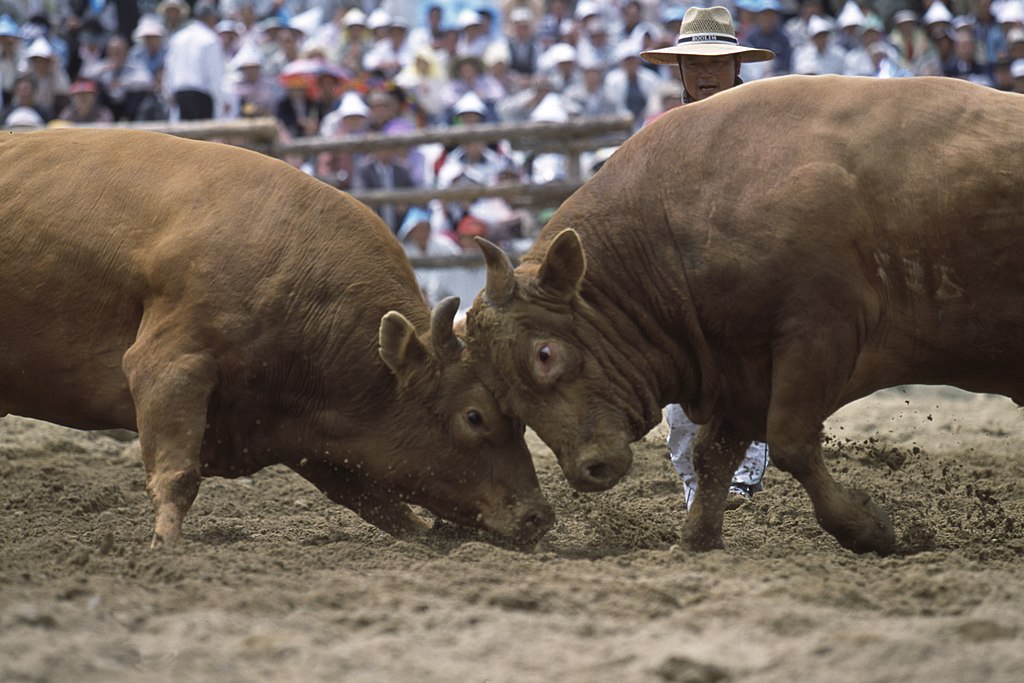
Unlike bullfighting in Spain, where matadors duel with bulls, South Korean bullfighting involves pitting two bulls against one another in a sandy arena.
Eleven South Korean regions have bullfighting arenas, with bulls fighting in three weight classes. The largest fighting animals weigh over 1,200 kilograms.
Bulls are not required to fight to the death: A winner is determined when one of the bulls backs down from the fight.
Supporters continue to claim that bullfighting is a long-standing tradition that reflects day-to-day life in South Korea’s agricultural past.
Many bullfighting arenas have become local tourist attractions. Proponents say that the atmosphere in these bullfighting arenas “is closer to sport than abuse.”
They add that bulls otherwise destined for slaughter are picked to become fighters. As such, they claim, abolishing bullfighting would result in more animal deaths.
However, opponents argue that bulls are peaceful herbivores. They say that forcing them into fights to entertain humans constitutes serious abuse.
Animals involved in the fights suffer extreme levels of stress and pain, they say. The petition’s chief author said: “The tradition we must uphold is not violence, but the respect for life.”
‘Taxpayers Footing Bullfighting Bill,’ Say Critics
Critics also point out that many bullfighting arenas are supported by billions of KRW in taxpayers’ money, in the form of tourism subsidies.
Cheongdo County, in North Gyeongsang Province, is the spiritual epicenter of Korean bullfighting and is home to the Cheongdo Bullfighting Arena.
The county reportedly receives approximately 6 billion won ($4.3 million) in annual budgetary support, but continues to run a deficit.
The Traditional Bullfighting Match Act of 2002 permits attendees at fights to bet on the results of single or multiple matches, as well as match durations.
Animal rights groups have proposed gradually phasing out bullfighting arenas, rather than abolishing them all at once.
Controversy over the fate of bullfighting in South Korea erupted early in 2024, when the Cultural Heritage Administration began considering the sport as a part of the nation’s cultural legacy.
This provoked an angry response from the Green Party and a collection of civic groups, who urged the administration to “strive to unearth genuine heritage that will leave a lasting legacy, rather than promoting bullfighting.”
In a statement, the collective said: “Bullfighting is nothing but animal abuse and gambling.”
Will Lawmakers Sidestep Debate?
Per the terms of the National Assembly Act, all public petitions must be reviewed within 150 days. However, many petitions are simply shuffled from committee to committee within this period.
Seoul Kyungjae said that there are “concerns that this petition may also disappear without proper discussion.”
South Korean animal rights activists and advocates for a gambling ban have also targeted the nation’s horse racing industry.
In June this year, the national horse racing regulator, the Korea Racing Authority, signed an agreement with the Busan Metropolitan Police Agency.
The parties have agreed to crack down on platforms that offer illegal online betting services on horse races.