


If you’ve ever watched a sporting event and felt like you were being bombarded with gambling ads, it wasn’t your imagination.
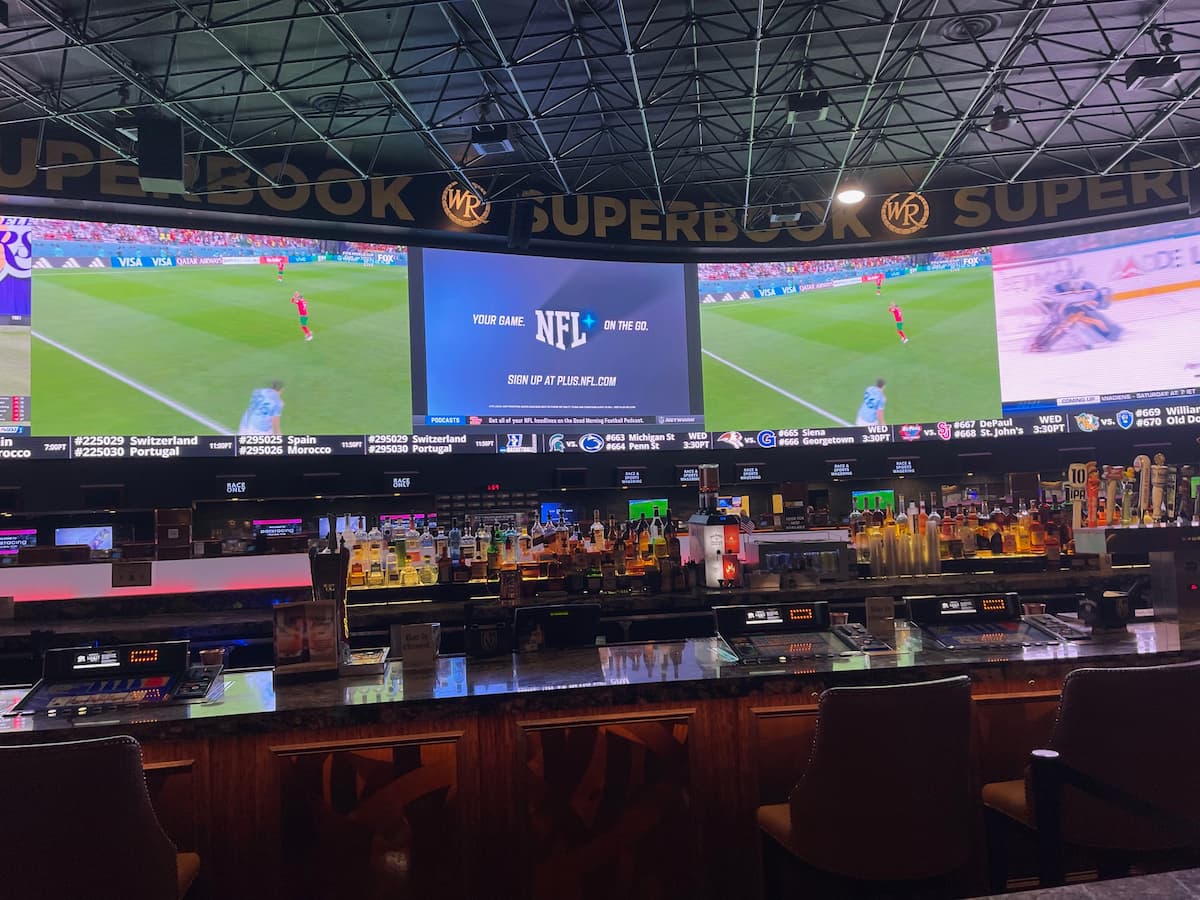
As odds flash across the ticker on your screen, commentators casually reference live betting lines, and every other ad break seems to feature a promo offering “risk-free” bets, you might feel like you’ve been dropped inside a sportsbook instead of tuning into a sports broadcast.
Ever since the U.S. Supreme Court struck down the Professional and Amateur Sports Protection Act (PASPA) in 2018, paving the way for states to legalize sports betting, gambling advertisements have become increasingly prevalent in the sports viewing experience.
In fact, according to a recent study from the University of Bristol, if you were among the millions of fans who watched the 2025 NBA and NHL Finals, you were exposed to 6,282 marketing messages related to gambling during just 13 games, with some broadcasts showing one every 13 seconds.
However, upon reviewing industry data, things aren’t so cut and dry. The American Gaming Association reports that sports betting ads accounted for less than half a percent of national TV ad volume in 2024, despite recent studies indicating that viewers are being inundated with gambling messages during major sporting events.
And new data shared with CasinoBeats by iSpot adds another wrinkle: sportsbook ad airings are declining in the NFL, while growing in the NBA and MLB, suggesting a shift in how operators target fans.
This leaves us to question: Is gambling really taking over sports, or does it just feel that way when the biggest games are on?
Are Gambling Ads Really Dominating Sports Broadcasts? Here’s What the Data Says
While it’s true that alcohol and pharmaceutical companies spend a lot more money on ads than sportsbooks, as you’re sitting in front of your TV watching ads for sign-up bonuses, parlay promotions, and sportsbook logos go by on the screen, it can feel like gambling has taken over the airwaves.
That’s because when you’re watching the Finals or a playoff series, you’re not just seeing TV spots; you also have a front row seat to rink signage, jersey logos, on-screen odds graphics, and even casual betting references from commentators.
When you add all of this up, kicking back and enjoying the game can feel more like sitting inside a sportsbook than watching a sporting event. And some of the numbers would support your claim. For example, the University of Bristol Study we mentioned earlier found that during the NHL Stanley Cup Finals, fans were exposed to almost 6,000 gambling-related messages. By comparison, the NBA Finals featured only 369 of those messages.
When you’re watching one of these marquee events, nobody would blame you for feeling like that’s a lot. However, if we dig deeper into the data, it tells another story. Many of us think of TV commercials when talking about advertisements during sporting events. Yet, only 2.86% of gambling messages during the NHL Finals and 3.5% during the NBA Finals were actually commercials, which hardly feels like an over-the-top number.
This is exactly the point Joe Maloney, SVP of Strategic Communications at the American Gaming Association, made in a statement to CasinoBeats: “Nielsen’s ad-tracking demonstrates the legal industry’s commitment to responsible advertising in partnership with professional leagues and broadcasters. A low single-digit percentage of ads during pro sports broadcasts from regulated operators sets the record straight against lazy narratives, and further shows how critical these ads are to platform legal sports wagering, and continues to shrink the size of predatory illegal operators.”
Turning to new data from iSpot shared with CasinoBeats, we get even more insight into sportsbook advertising trends, and it’s not equal across leagues. iSpot tracks national TV and streaming advertising, making its figures a useful barometer of where sportsbooks are putting their money.
During the 2024-2025 regular season, sportsbook ads during NFL games decreased by almost 8% compared to the previous year, with total impressions dropping by nearly 15%. However, the NBA went in the opposite direction, seeing a 23% increase in sportsbook ad airings and a 9% bump in impressions. The MLB landed somewhere in between, with ad frequency falling slightly while impressions rose 12% as brands tested new placements.
This data suggests that your ad experience may vary depending on the games and leagues you’re watching.
As far as whether the viewing experience really is changing, Tyler Bobin, Director, Brand Analyst Solutions at iSpot, told CasinoBeats that: “The betting ads themselves may not be impacting the fan viewing experience/how they watch major sporting events much, since these spots appear in traditional ad pod placements within a commercial break like any other ad would.”
However, he added, “That said, the way the games are broadcast and reported on has definitely seen a drastic change. Major networks promote betting lines next to ‘upcoming game’ icons, and even have their on-air talent pushing specific sportsbook parlays. So it’s a much larger part of the overall televised sports product.”
And if partnerships like Amazon Prime’s deal with FanDuel to integrate real-time NBA and WNBA betting updates into broadcasts and streaming are any indication, the sportsbook experience that comes with watching a big game isn’t likely to change anytime soon.
What Fans Say About Gambling Ads During Sports Broadcasts
Scrolling through social media, it becomes clear there are two camps when it comes to gambling ads during sports broadcasts: fans who love them and those who hate them.
While conducting a statistical analysis of what social media users have to say about the impact of gambling ads on the sports viewing experience is beyond the scope of this article, it is possible to gain an idea by examining what fans share online.
On X, users expressed strong opinions about how gambling ads had affected their sports viewing experience, with one person, whose post got 332 likes, said: “Sorry, but seeing ads for sports betting live during a game is f***** weird and not normal.”
Another X user argued: “Sports betting has to be banned because the ads annoy me when I’m watching [my] games.” A third pointed out the irony of gambling ads: “A betting company sponsors a sports journalist who gives you odds and u expect to win.”
Over on Reddit, many fans expressed similar sentiments, with a Redditor in the r/advertising subreddit asking: “Have you noticed the recent surge of sports gambling ads? They’re everywhere – during games, between plays, and even during commercial breaks. It’s hard to escape the constant bombardment of flashy commercials and catchy jingles.”
In the r/daddit, a Redditor asked for help avoiding gambling ads: “There’s a lot of advertising for online sports betting during all professional sports these days, it’s being normalized in a way that I would never have imagined ten years ago.” The Redditor went on to say that they thought it was “terrible for sports in general” and didn’t want their young kids exposed to the ads.
Of course, not all fans see gambling ads as intrusive or a nuisance. For many, gambling is part of the spectator experience when watching their favorite sports. It gives them a way to participate in the on-screen action in a way they weren’t able to before gambling was legalized in many states.
These fans don’t express strong feelings about gambling ads; instead, you’ll see them posting casually about their parlay or sharing memes about wins and losses. When you take a look at these conversations, sportsbook promotions aren’t treated as disruptions; to these users, they’re just another part of the game.
What Experts Say About the ‘Gamblification’ of Sports
If you follow gambling news closely, you know that a new study seems to pop up almost every week, whether it’s measuring how often fans are exposed to betting ads, the effect of these ads on young people, or how advertising shapes risk-taking. There’s a common theme to these studies: researchers raising alarms about the “gamblification” of sports.
When experts discuss this phenomenon, they generally refer to the way in which gambling culture and messaging have become integrated into the sports broadcasts themselves.
As researchers noted in a study published in the Sport Management Review Journal, the impact goes far beyond commercial ad breaks: “This exposure is particularly noticeable during live and broadcast sporting events, where betting logos are clearly displayed on player uniforms, scoreboards, stadium tiers, perimeter fencing, signage, and in matchday programs.”
Other studies have argued that exposure to gambling ads makes it more likely that viewers will place bets and wager more money than they’d planned to. An Australian study published in the National Library of Medicine found that: “Advertisements for wagering have predominated in commercial breaks during sports and racing broadcasts, promoting betting brands and products, as well as live betting odds and a wide range of inducements to bet.”
On the policy side, experts argue that ad restrictions could reduce some harm, although implementing and enforcing them, depending on the country and jurisdiction, could prove difficult. A doctor in Ontario recently criticized the use of sports stars in gambling ads and called on the government to implement measures like the whistle-to-whistle ban in the UK to minimize the chance that minors are exposed to gambling messaging during live broadcasts.
From an industry perspective, trade groups point to declines in ad volume and argue that sports betting ad spend remains a small fraction of overall media ad spend. As gambling messages continue to become a bigger part of the sports viewing experience, the question is whether regulation can keep up.
Where Sports Broadcasting Goes Next
If recent trends are any indication, sports leagues will continue to pursue partnerships with sportsbooks. What, at one time, looked like simple sponsorship deals are now increasingly being built into the broadcast itself, as betting content appears in live odds graphics, commentary, and on-screen promotions.
The FanDuel-Amazon Prime partnership and ESPN’s newly launched FanCenter for ESPN Bet give us a glimpse of what the future may hold, as more networks and streaming platforms look to enter the sports betting market.
Industry analysts say that the shift is only beginning. As Bobin told CasinoBeats: “One of the major changes we can expect to see in the near future is more ‘in-show’ promotions or content where advertisements can pop up outside of the traditional ad pods, and promote special parlays or featured bets.”
He added, “We have already seen this with smaller leagues (the XFL, before their merger with the USFL, was pushing all of their on-air broadcasters to actively talk about the spreads).”
As all of this unfolds, lawmakers are weighing their response. In the US, the proposed SAFE Bet Act would introduce federal standards on advertising and consumer protections. In contrast, countries like the UK and Australia already have stricter rules, such as whistle-to-whistle ad bans during live games.
The regulatory debate offers a glimpse into the growing tension: fans may already be accustomed to watching broadcasts that feature frequent sportsbook ads and promotions, but policymakers are still trying to determine how visible and acceptable gambling should be on our television screens.