









Chavdar Vasilev Journalist
Chavdar Vasilev is a journalist covering the casino and sports betting market sectors for CasinoBeats. He joined CasinoBeats in May 2025 and reports on industry-shaping stories across the US and beyond, including legislative debates, market...
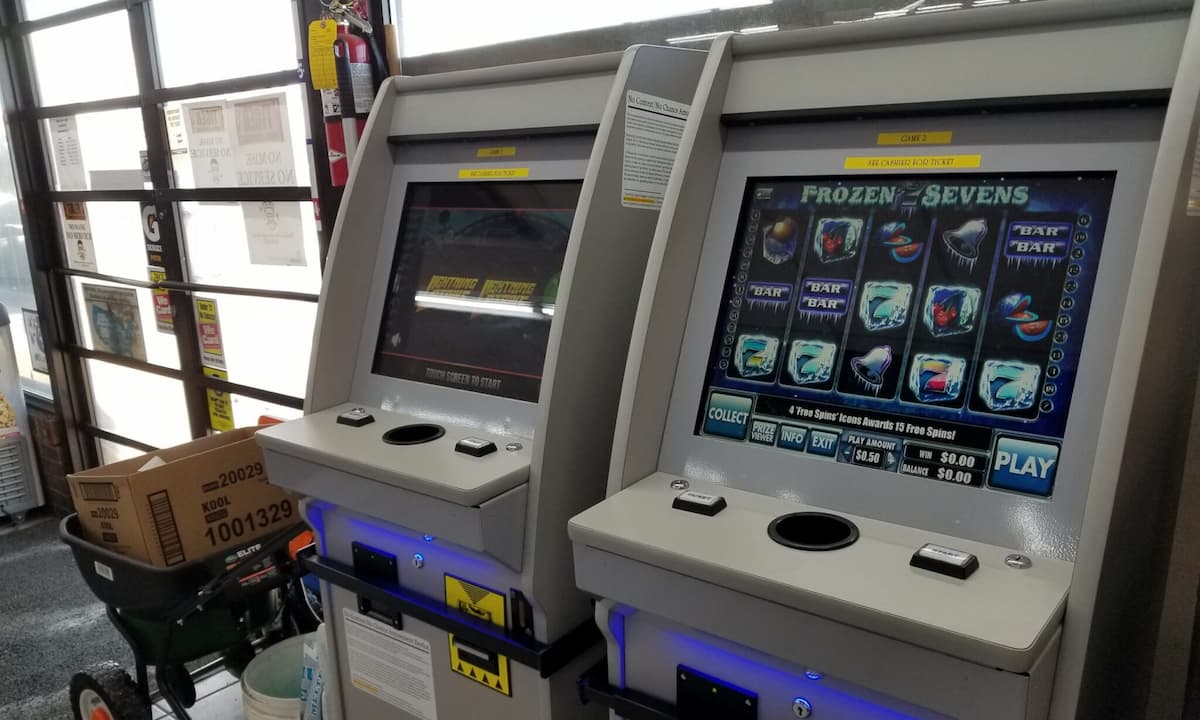
Read Full BioA federal jury in Missouri has ruled that Torch Electronics misrepresented the legality of its “no-chance” gaming devices, finding the machines to be in violation of state law and awarding $500,000 in damages to competitor TNT Amusements.
The ruling adds to mounting legal scrutiny of gray-market machines across the US.
Missouri Verdict: False Claims & Unfair Competition
Senior District Judge John Ross instructed jurors to consider whether Torch made false statements to obtain businesses. That includes that its machines “[do] not fit any definition of a ‘gambling device’ in the state of Missouri and [are] not prohibited for use.”
If the jurors had found that to be true, they would have sided with Torch. However, they rejected it, siding with TNT.
Torch began placing its games in locations such as convenience stores starting in 2017. Trial evidence showed that between 2017 and 2023, players wagered roughly $32 million at Torch’s machines in locations where TNT also had games. Out of that sum, the manufacturer shared approximately $11 million with retailers, retaining the remainder after making the payouts. Unlike regulated gambling, the company has not paid state tax.
Torch told the Missouri Independent that it will appeal, while TNT has signaled plans to seek further disgorgement of Torch’s profits.
Political Influence in Missouri
Torch has long invested in high-profile lobbying, making political donations, creating contacts with prosecutors, and filing lawsuits against enforcement agencies to protect its market in Missouri.
This year alone, it has donated nearly $600,000 to political action committees (PACs). In 2024, it donated $250,000 to American Dream PAC, which backed Gov. Mike Kehoe.
The Missouri Gaming Commission estimates there are roughly 15,000 Torch devices in the state. Regulators and prosecutors now face renewed pressure to determine whether the machines should be seized or outlawed following the jury’s verdict.
Tennessee Court Also Rejects Torch
The Missouri decision does not conclusively declare Torch’s machines as illegal statewide. However, the company suffered another defeat in Tennessee, where the court ruled so.
In July, a Tennessee Chancery Court declared Torch’s “No Chance Games” unlawful under state law. The three-judge panel rejected arguments by Torch that preview features or sequential prize structures removed chance from the games.
Shelby County prosecutors quickly warned retailers to remove the machines or face seizure.
Broader Context: Other States
The so-called “skill game” machines have been the subject of numerous court rulings in recent years.
Kentucky explicitly banned skill games in 2023. A year later, a county court judge confirmed the legislature’s decision. He stated that determining gambling policies, regardless of skill component, is part of the General Assembly’s fundamental role.
Virginia also outlawed the machines in 2020, with the state’s Supreme Court confirming the ban in 2023. Still, earlier this year, a county judge ruled that specific redesigned skill games are not illegal gambling devices. That has reignited the debate in the state.
Outside the US, an Ontario Superior Court judge ruled that specific skill games amount to gambling under the law.
There have also been contrasting decisions. In Pennsylvania, a lower court and an appellate court have ruled that some skill game devices do not meet the definition of gambling. The Pennsylvania Supreme Court has since agreed to hear the authorities’ appeal.
Elsewhere, in Texas, an appeals court reaffirmed a 2024 District Court decision that certain devices do not qualify as gambling machines under state law.
What’s Next in Missouri?
The Missouri ruling provides skill game opponents and regulators with a key precedent: Torch’s statements about the legality of its machines can be judged false and legally actionable.
The company’s appeal will determine whether this verdict becomes a foundation for broader enforcement. Coupled with rulings in Tennessee and beyond, it highlights mounting judicial pressure on gray-market machine manufacturers who argue their products fall outside traditional gambling definitions.