


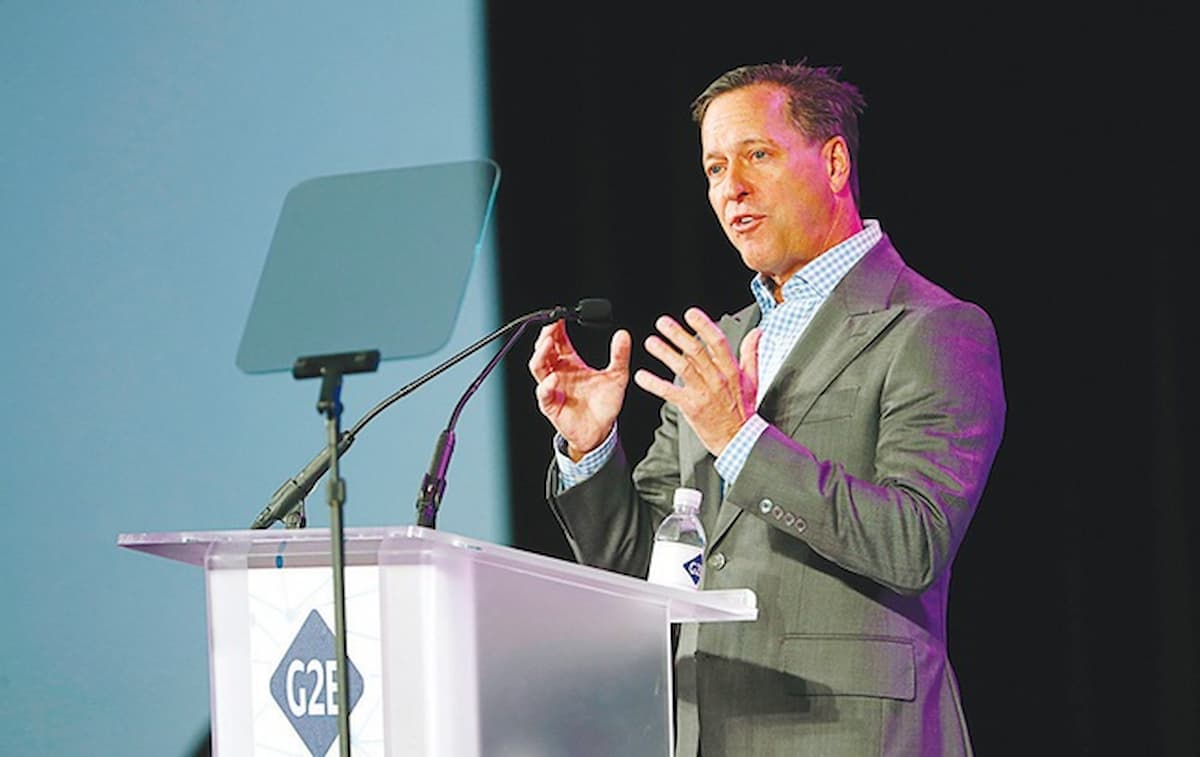
Prediction markets loomed large over the Global Gaming Expo 2025 in Las Vegas, where leading executives vowed to push back against the fast-growing platforms they see as a threat to regulated sports betting.
In Tuesday’s keynote speech, American Gaming Association CEO Bill Miller stated that his members were “mobilizing across every battlefield” to contest and contain the proliferation of prediction markets at the expense of traditional sportsbooks.
Gaming CEOs Blast Prediction Market ‘Deception’
Miller stated that the existing settlement with regulated sportsbooks was “founded on a regulatory approach that upholds the public interest and looks out for consumers while giving companies the license to operate, innovate and grow,” in contrast to “free riders” who “thumb their nose to this approach to gaming.”
“Why all this deception? It’s simple,” said Miller. “They want the opportunity, but they don’t want any of the regulatory compliance. And they really don’t care about their concern for the public good, but these illegal actors aren’t fooling anyone.”
A key advantage that prediction markets like Kalshi and Polymarket have over standard sportsbooks, such as DraftKings, is that their “contracts” are not legally classified as wagers. Instead, they are classified as derivative-style financial products (like a stock).
Regardless of that, even in states with no legal gambling, US residents can now log onto Kalshi and place bets on the outcomes of sporting events, with prop bets and parlays becoming available.
However, the regulatory picture is complex. Kalshi operates under federal approval from the Commodity Futures Trading Commission (CFTC). The agency, however, has not taken a significant role in its oversight. Meanwhile, offshore platforms like Polymarket operate outside US oversight.
As a result of escaping state-level oversight, prediction markets also do not need to comply with Know Your Customer (KYC) regulations, rules on preventing problem gambling, or any state taxes on gaming revenue.
“These operators have a word to describe what it means to ignore the rules, bypass the citizens, offer no community benefits, and tell customers it’s OK to lose your shirt,” said Miller. “They call it innovation. I call it something else. It’s greedy, it’s reckless, and it’s irresponsible.”
Pending Cases Could Spell Trouble for Prediction Markets
Kalshi CEO Tarek Mansour has consistently rejected arguments that the offerings on his site are akin to sports wagers. He has previously said Kalshi’s markets are “regulated derivatives approved by the CFTC.” Kalshi continues to claim its markets are not gambling products.
However, there are signs that the regulatory environment may be shifting. Several lawsuits are already pending, contesting the treatment of prediction markets differently from orthodox betting sites in several states. In one case in August, a Maryland judge ruled against Kalshi’s attempt to offer sports contracts in the state. The ruling could potentially become a landmark case if other states follow suit.
After the courts rejected a request from Crypto.com to continue offering sports contracts in Nevada while litigation was pending, a member of the Nevada Gaming Control Board, George Assad, praised the decision.
“The gig is up. A derivative contract, whatever you want to call it, is nothing more than a sports wager. Every bet made in this town is a contract,” said Assad.
“You can call it a derivative contract. You can call it a credit default swap, like they did during the housing bubble. Whatever you want to call it, it’s still a sports bet. It’s under the jurisdiction of the Nevada Gaming Control Board.”
Assad’s blunt analogy underscored the industry’s central argument: that the semantics of “contracts” versus “wagers” won’t shield prediction markets from gambling law scrutiny for much longer.