






Adam Roarty Editor
Adam Roarty is a journalist covering sports betting, regulation, and industry innovation for CasinoBeats. His coverage includes tax increases in the UK, covering breaking stories in the ever-evolving landscape of US betting such as the...
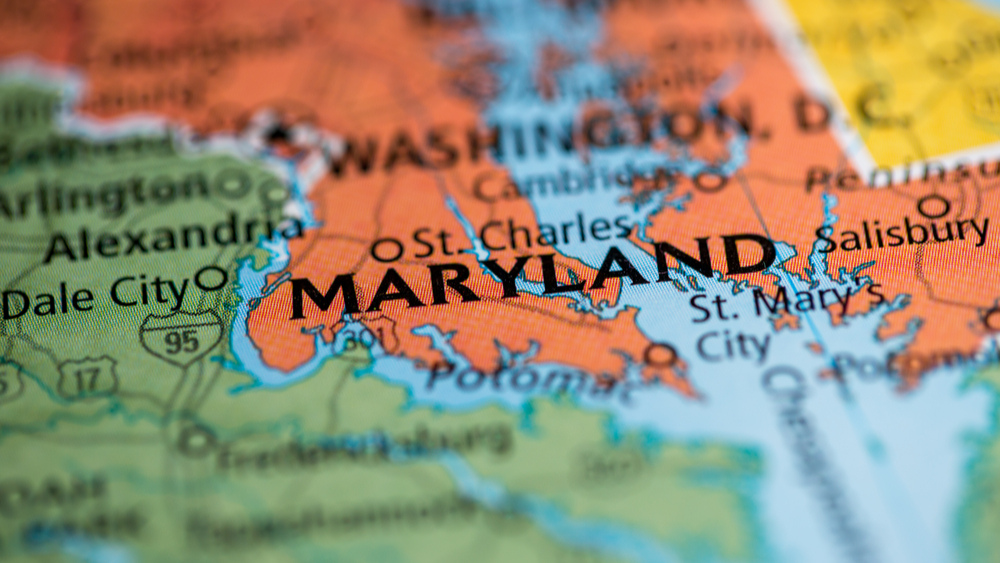
Read Full BioA new bill introduced in Maryland could lead to the prohibition of sweepstakes casinos in the state. The bill proposes tightening the state’s laws against online gaming, including platforms that utilize dual-currency systems.
SB112 has been assigned to the Senate Budget and Taxation Committee. It explicitly prohibits operating, conducting, or promoting interactive games in Maryland.
The bill defines interactive games as “a game, contest, or promotion that simulates:
a. casino-style gaming, such as slot machines, video poker, and table games, including blackjack, roulette, craps, and poker;
b. lottery games, including draw games, instant win games, keno, and bingo; or
c. sports wagering.”
In addition, it would include any platform that “utilizes multiple currency systems of payment allowing the player to exchange the currency for any prize or award or cash or cash equivalents”.
This would likely result in sweepstakes casinos being prohibited in the state. It excludes games that “solely award noncash prizes.” Offenders face criminal prosecution and may be punished with imprisonment for up to three years or fines of up to $5,000.
Legislation Could Finally Drive Out Operators
The bill is carried over from last year, when lawmakers first proposed a ban on sweepstakes operators. A companion bill has been filed in Maryland’s House of Representatives; HB295 has been assigned to the Ways and Means Committee. If both chambers pass the legislation, it will come into effect on July 1.
The state has already been fighting against sweepstakes operators. Last year, the Maryland Lottery and Gaming Control Commission (MLGCC) issued cease-and-desist letters to Chumba Casino and LuckyLand Slots.
However, the platforms, both operated by VGW, failed to comply with the orders. This prompted a second round of cease-and-desist letters in November.
The new legislation could give the state more power to force companies to shut down their platforms in Maryland.
Other states have passed similar legislation against dual-currency systems, including California and New York. In total, six states passed legislation banning sweepstakes casinos last year.
As a result, companies have largely exited those states, with over 20 companies withdrawing from California as the state’s new law took effect this month.
New Legislative Session Sees More Bills Targeting Sweeps
This year, states appear poised to continue the legal battle against operators offering casino-style games in states that have not officially legalized iGaming.
Lawmakers in Mississippi have again introduced legislation that seeks to prohibit the platforms. Efforts last year failed as the Senate rejected a bill due to its inclusion of online sports betting legalization.
Another bill has also been filed in Iowa, while multiple lawsuits have been filed against operators in Alabama.
Maryland Also Targets Prediction Markets
In addition to tackling sweepstakes casinos, Maryland has also been vocal in its opposition to prediction markets. The state was one of several to issue a cease-and-desist letter to Kalshi last year.
A judge declined to grant Kalshi a preliminary injunction to prevent Maryland from enforcing the order. However, the state agreed to delay any action while an appeal filed by Kalshi is pending. The appeal remains in court with no definitive ruling as yet.
Subsequently, Maryland warned licensed gambling companies about entering prediction markets. Several companies have failed to heed that warning, however. Fanatics, FanDuel, and DraftKings, all of which hold licenses in Maryland, have launched their own platforms.
The bill could conceivably result in companies being denied licenses based on this. It includes text that notes the Commission may deny a license to any company deemed to be offering illegal wagering in other jurisdictions. It does not, however, contain explicit text that would prohibit sports prediction markets in Maryland.
New York has filed a bill specifically targeting sports prediction markets, which remains in the Assembly Committee.