

In his first public remarks as Chairman of the Commodity Futures Trading Commission (CFTC), Michael Selig announced on Thursday that the agency would pull a proposal that would have prohibited political and sports-related event contracts.
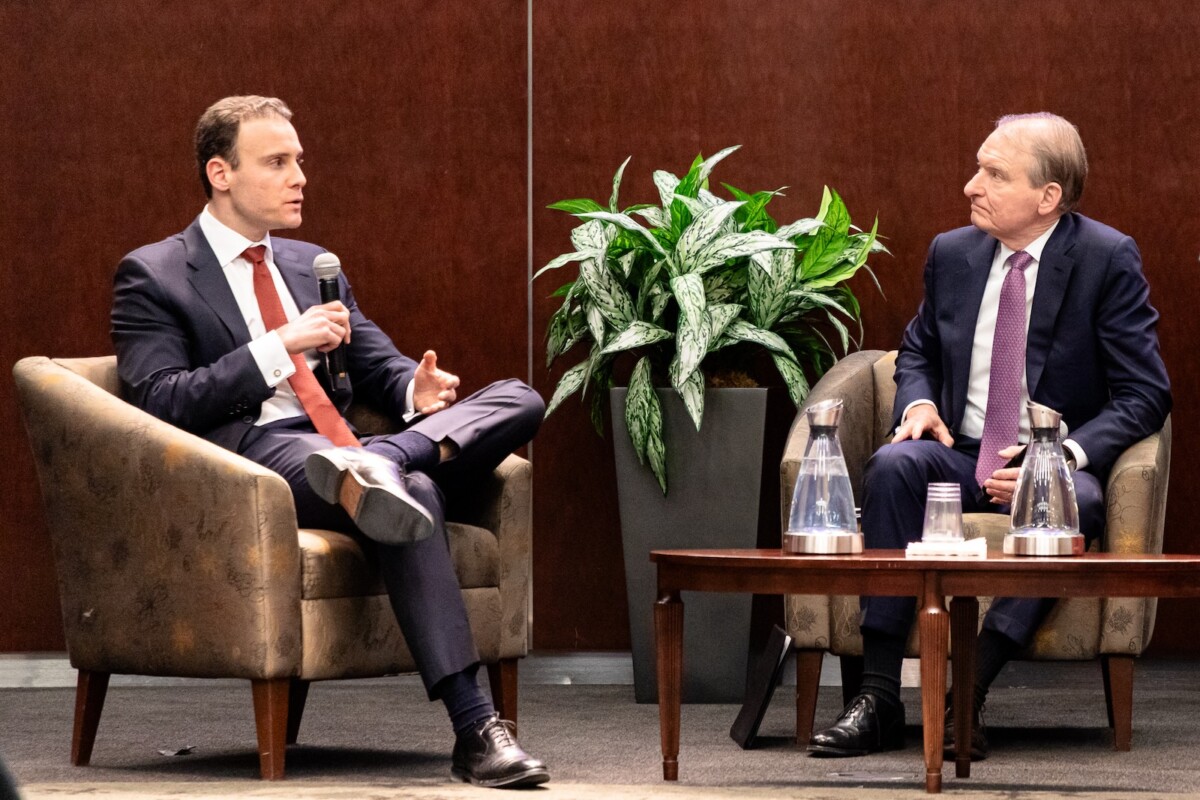
Speaking at a joint event with Securities & Exchange Commission (SEC) Chairman Paul Atkins, Selig said he had directed his staff to draft new rules to establish clear standards for prediction markets. He said the current regulatory framework for event contracts hasn’t provided the clarity operators in the prediction market space need, which is why the commission will now pursue a comprehensive rules-based approach.
“I have directed CFTC staff to withdraw the 2024 event contracts rule proposal that would prohibit political and sports-related event contracts,” Selig said.
The commission will also roll back its 2025 staff advisory that had warned registrants not to offer sports-related event contracts, as court cases continue.
According to Selig, the advisory was meant to alert the market to legal risks, but instead “contributed to uncertainty” and undermined the commission’s role as the primary regulator of event contracts.
Selig’s remarks were the clearest signal yet that the CFTC plans to revamp its approach to prediction markets after months of mixed messaging, litigation, and regulatory ambiguity. His stance represents a departure from his testimony during his confirmation hearing in November, when he indicated he would defer to the courts on issues related to sports event contracts.
Shift From Litigation to Rulemaking
Selig’s comments come as prediction markets face ongoing litigation, with state regulators arguing they are nothing more than unlicensed sports wagering operations that exploit a gambling loophole to sidestep state gaming laws and consumer protections.
In laying out the CFTC’s new approach, Selig placed the agency squarely at the center of the legal debate, putting the industry on notice that the commission plans to take a more active role in shaping the regulatory framework for prediction markets.
“For too long, the CFTC’s existing framework has proven difficult to apply and has failed our market participants,” Selig said. “That is something I intend to fix by establishing clear standards for event contracts that provide certainty to market participants.”
As part of that effort, he said the commission will begin drafting new event contract rules that reflect its view that prediction markets fall within its jurisdiction as commodity derivatives. He also said the agency will review its approach to ongoing federal cases that involve event contracts, positioning the CFTC to play a more active role in defending its authority.
“Where jurisdictional questions are at issue, the Commission has the expertise and responsibility to defend its exclusive jurisdiction over commodity derivatives,” Selig said.
Industry Applauds Move Toward Clarity
As one would expect, prediction market operators welcomed Selig’s remarks. The Coalition for Prediction Markets, a national advocacy group that represents CFTC-regulated prediction markets, including Kalshi, Crypto.com, Underdog, Coinbase, and Robinhood, framed the remarks as a critical step toward regulatory clarity and market stability.
In a statement issued Thursday, the coalition said it “applaud[s] Chairman Selig’s statements that the CFTC has ‘the expertise and responsibility to defend its exclusive jurisdiction’ over event contracts.”
The group also praised the decision to abandon guidance-driven oversight in favor of formal rulemaking. “By withdrawing uncertain guidance around sports-event contracts and committing to undertake comprehensive rule-making, the Commission takes a key step to foster market clarity, responsible innovation, and trust in American markets,” the coalition said.
While Selig didn’t provide a firm timeline for the new proposal, he made it clear that prediction markets would be a priority for the commission as it works with its SEC counterparts to “draw clearer lines between certain commodity and security options, CFTC-regulated swaps, and SEC-regulated security-based swaps.”