








Adam Roarty Editor
Adam Roarty is a journalist covering sports betting, regulation, and industry innovation for CasinoBeats. His coverage includes tax increases in the UK, covering breaking stories in the ever-evolving landscape of US betting such as the...
Read Full BioThe NCAA has been outspoken about its desire to see sportsbooks reduce the number of college sports betting markets. Yet, at the same time, the organization is allowing the “most dangerous and addictive form of online gambling” by selling data to gambling companies, claim state senators and a public health group.
Senators John Keenan (MA) and Paul Moriarty (NJ), together with the Public Health Advocacy Institute (PHAI), are raising concerns that the organization’s partnership with Genius Sports is “dangerous and short-sighted.”
The NCAA first partnered with Genius Sports, a sports data distributor, as far back as 2018, but extended the deal last year to allow it to provide data to sportsbooks. The company distributes official data to gambling partners, including DraftKings, FanDuel, BetMGM, and bet365.
In a press release timed to coincide with the biggest betting season in college sports, the two senators commented, “What is madness this March is to witness the NCAA prioritize profits over the well-being of its athletes and the public at large.”
“This agreement does nothing to improve the quality of college athletics but instead exposes the integrity of college sports and bettors to greater risk while allowing betting operators to profit enormously from student-athletes’ successes and failures.”
Sen. Keenan is pushing for widespread reform of the sports betting industry in Massachusetts, introducing a bill that would ban all in-play and prop bets.
In New Jersey, Sen. Moriarty has introduced legislation to ban micro bets, and a separate bill would prohibit college prop betting. The bills were carried over from last year, but have made little progress.
The Senators used the opportunity to reiterate the need for their bills, stating, “There is an urgent need for legislation in both of our states to hold sports betting operators and leagues accountable, ensuring the safety of sports and the protection of bettors.”
NCAA: Causing or Preventing Harm?
Dr. Harry Levant, Director of Gambling Policy at PHAI, said, “This dangerous and short-sighted partnership between the NCAA and Genius Sports enables the gambling industry to offer AI-driven in-game micro-betting on college sports.”
“Micro-betting allows wagers on specific moments within a game and is considered the most dangerous and addictive form of online gambling.”
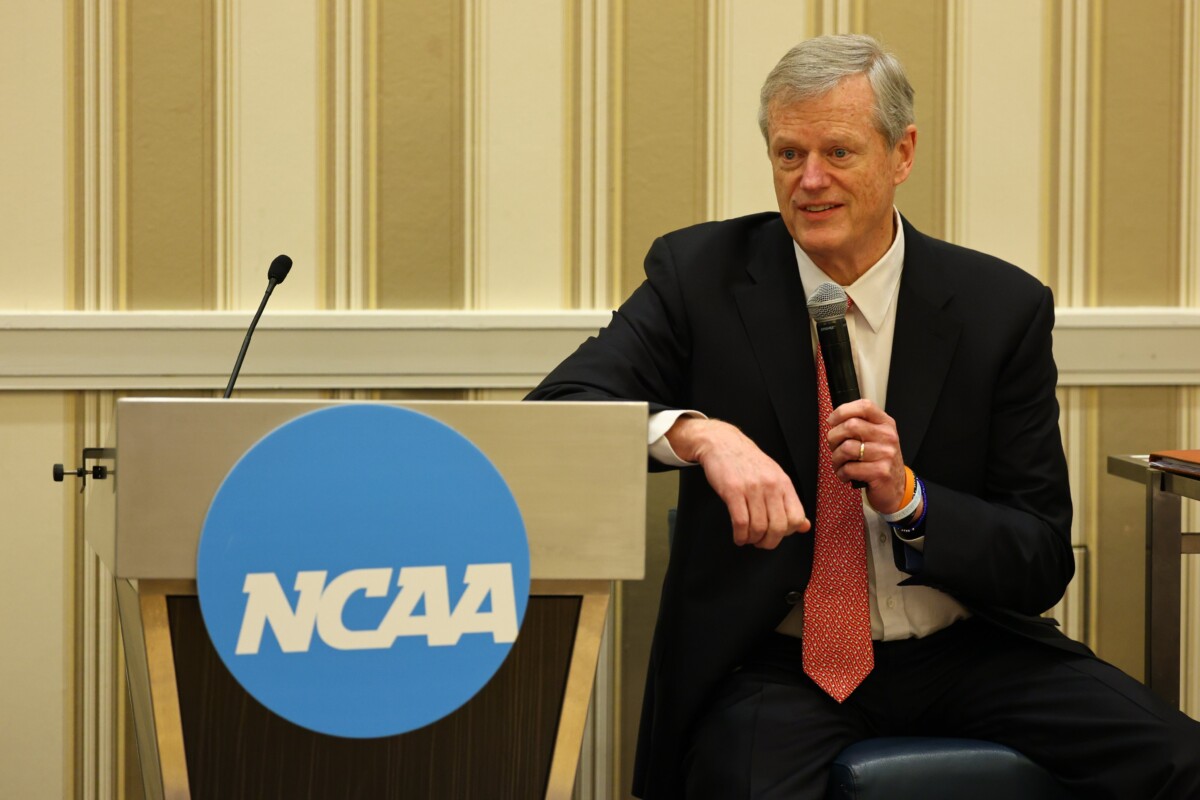
Publicly, the NCAA has called for such bets to be banned. In the wake of a college basketball betting scandal, NCAA President Charlie Baker sent a letter to state gambling commissions, requesting regulators amend laws to remove what the association describes as “high-risk” wagers, including individual player prop bets and certain game props such as first-half under markets.
Mark Gottlieb, Executive Director of PHAI, hinted that this is for show and the organization is actually profiting from expanded college sports betting. He accused the NCAA of prioritizing money ahead of student welfare, stating, “Unfortunately, the NCAA chose to take gambling industry money, which will result in increased high-intensity micro-betting, with it, addiction, and serious harm to players, their families, and the public.”
At the same time, the NCAA has released a new video as part of its Draw the Line campaign, which aims “to bring awareness to the harassment and hurdles that student-athletes face due to sports betting.”
“Student-athletes face enough pressure in their competitive environment without the additional burdens brought by the expectations of sports bettors. Real damaging mental health and well-being effects come from the immense amount of harassment they’re receiving from their peers and from social media,” said Clint Hangebrauck, NCAA managing director of enterprise risk management, in a press release.
NCAA & NFL Accused Of Hidden Intentions
Dr. Levant said the NFL is also guilty of acting in bad faith by hiding that it profits from sports betting. He said, “The NCAA fails to tell the public that this deal with Genius also enriches the National Football League (NFL). The NFL is the largest shareholder in Genius. Repeatedly, we’ve seen the gambling industry and its sports and media partners prioritize profits over public health.”
As part of their 2021 data-rights partnership, the NFL received equity warrants in Genius Sports. It increased its stake in the company to 8.7% in 2024, making it the largest shareholder.
At that time, its total stake, including both vested and unvested warrants, was worth more than $235 million. Genius’ stock price has declined recently, however, following the acquisition of the gaming media network Legend.
Financial details of the agreement between the NCAA and Genius Sports have not been revealed, but PHAI suggests it may be hindering the organization’s efforts to reduce gambling harm.
Dr. Levant added, “People will now wager on virtually everything that college players do in each game. To justify this, the NCAA claims the money from selling data will fund education programs. This is the equivalent of the tobacco industry offering the non-stop sale of cigarettes and then using the revenue to fund education programs. The justification offered by the NCAA is disingenuous at best.”
When first signing a deal with Genius Sports, an NCAA spokesperson commented, “This initiative will transform the way we collect, use, and distribute the vast amount of sports data being consumed across all sports at every level. It will allow our schools to upgrade to state-of-the-art technology.”