









Adam Roarty Editor
Adam Roarty is a journalist covering sports betting, regulation, and industry innovation for CasinoBeats. His coverage includes tax increases in the UK, covering breaking stories in the ever-evolving landscape of US betting such as the...
Read Full BioPrediction market platforms are facing increased legal scrutiny over their sports markets, and companies have been criticized for allowing users to wager on conflicts in the Middle East. Kalshi and Polymarket also offer markets on whether drug trials will be successful, and the industry regulator is encouraging people with medical conditions to bet.
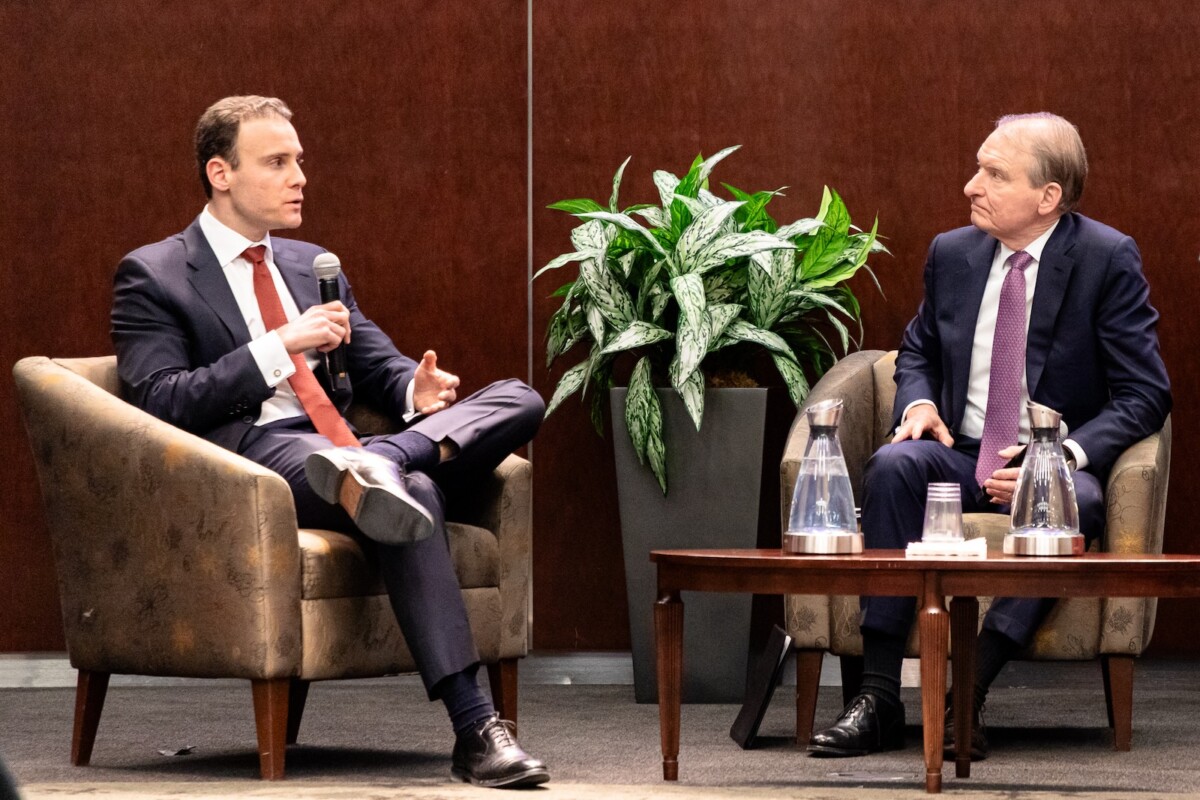
Michael Selig, chair of the Commodity Futures Trading Commission (CFTC), gave the example to demonstrate the worth of prediction markets.
In comments to Punchbowl News, he stated, “Say somebody has a condition. They want to be able to manage the potential risk of having a future treatment or medical costs. They can enter into a prediction market and place a bet on the likelihood of something passing a drug trial.”
It is unclear how this would help someone suffering from a medical condition if the drug failed and they had wagered on it passing the trial.
Theoretically, the individual could place a wager that the drug would fail. In that scenario, if the drug fails, then they can win some money, or if it passes, then they lose money, but have a new medicine available to treat their condition. Although after losing money, they may be less able to afford the costs of the newly approved drug.
Medical Markets Already Exist
Leading platforms Polymarket and Kalshi already have some markets related to FDA approvals and vaccines. For example, Polymarket has a market on whether the FDA will approve the drug Retatrutide this year.
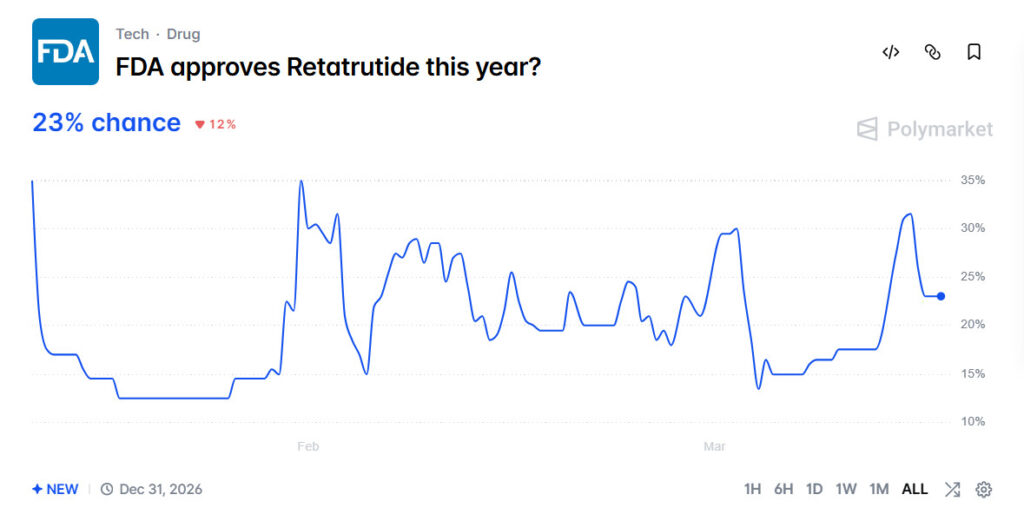
At the moment, no trades have been conducted on the market, which opened in January, although users have put up $3,300 in liquidity, offering it at a 23% chance.
Early trials suggest it could exceed the efficacy of current weight-loss drugs, with some participants losing up to 24.2% of their body weight over 48 weeks.
Last year, Polymarket and Kalshi also had markets on a range of potential drugs receiving FDA approval. The markets had fairly low volume, however, at just over $100,000 on Polymarket and around $9,000 on Kalshi. To put that in context, markets on Super Bowl Sunday saw well over $1 billion in trading.
Sports markets account for around 80% of all trading volume at Kalshi, but Selig believes it is the more obscure markets that are offering consumer value.
He stated, “This is a real opportunity for everyday Americans to be able to manage certain risk. I do view this as something that democratizes access to our derivatives market.”
While many states and sports leagues have urged the CFTC to take a more hands-on approach in regulating prediction markets, Selig appears reluctant to place any restrictions. Last week, the agency published an Advanced Notice of Proposed Rulemaking, allowing the public to comment on what they believe the industry’s rules should be.
When announcing the opening of the comment period, Selig reasserted that “the CFTC will exercise its exclusive jurisdiction over prediction markets.”
Risk Management, Not Gambling
Last month, Selig said he is ready to defend prediction markets against increasing legal challenges. As Kalshi has argued in court, he rejected the accusation that prediction markets are gambling.
“The most common allegation is that these contracts are a form of gambling and therefore subject to state laws,” said Selig. “The CFTC will no longer sit idly by while overzealous state governments undermine the agency’s exclusive jurisdiction over these markets by seeking to establish statewide prohibitions on these exciting products.”
Critics, however, argue that many markets are nothing more than gambling. In denying Kalshi’s motion for an injunction to prevent Ohio from enforcing a cease-and-desist order, a judge stated that markets are designed as “a system to deter market disruptions, ensure financial integrity, avoid systemic risk, protect market participants from fraud and abuse, and promote responsible innovation.”
It added, “Currency exchange rates, the weather, and energy costs all do that; the number of points scored in the Huskies-Bobcats game does not.”
Selig disagrees. He added, “Our markets aren’t designed for gambling. They’re designed for risk management. Hedgers, speculators, market makers, we’ve got all sorts of market participants. But these are financial markets, and we have really different standards than, of course, the casinos and all that.”