


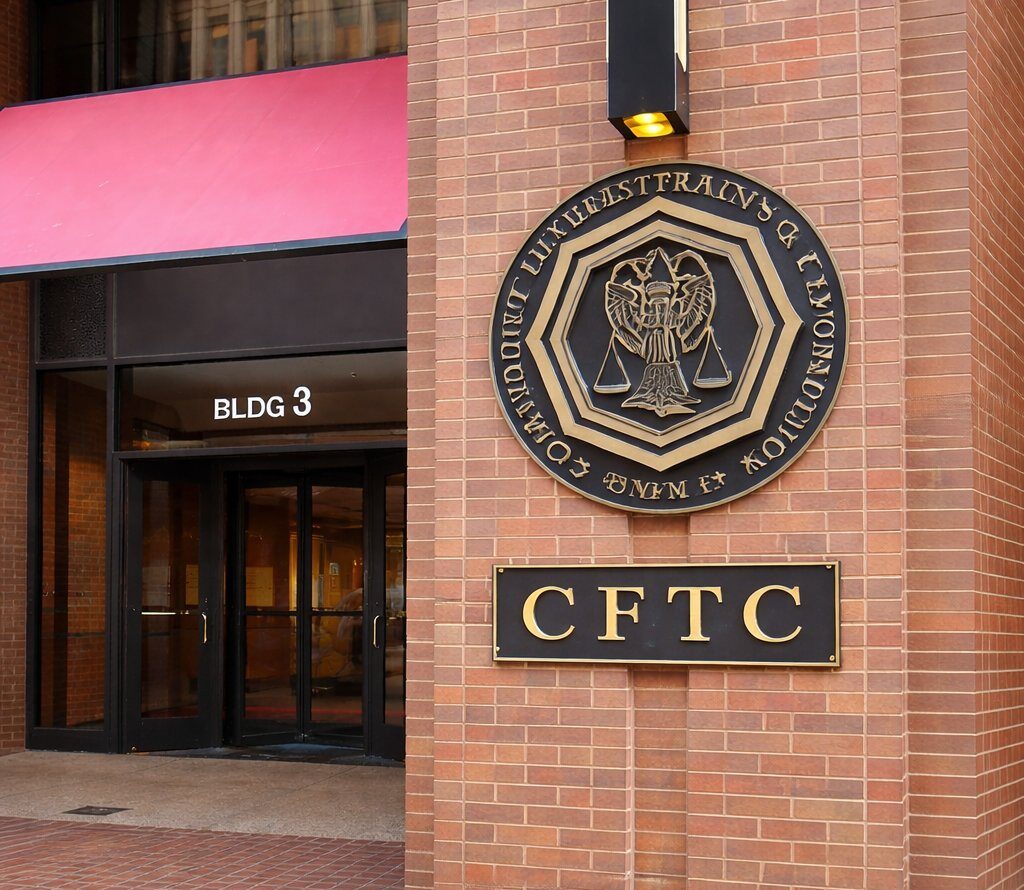
Congress started off the week with continued focus on insider trading in prediction markets, turning its attention to the regulator that oversees the event contract exchanges, as well as the government office responsible for ensuring federal employees comply with ethics rules and conflicts-of-interest standards.
On Monday, Sen. Elizabeth Warren (D-MA), joined by 41 other lawmakers, announced they had sent a letter to Commodity Futures Trading Commission (CFTC) Chairman Michael Selig and division directors at the U.S. Office of Government Ethics (OGE), urging action on what they described as “illegal insider trading in prediction markets by federal employees.”
In a letter dated March 29, the group asked the CFTC and OGE to issue government-wide guidance warning federal employees not to use inside information to trade on prediction markets.
The letter highlighted several examples of suspected insider trading to make their point, including the U.S. military intervention in Venezuela in January, which led to the capture of the country’s former leader, Nicolás Maduro, with traders making hundreds of thousands of dollars on well-timed bets.
They also cited a market on how long White House Press Secretary Karoline Leavitt would speak during a press conference, where traders profited when she cut short her remarks just 30 seconds before the 65-minute threshold.
The most recent examples they pointed to were the joint U.S.-Israeli strike on Iran, where suspected insiders netted over a million dollars, and speculation over the timing of Department of Homeland Security Secretary Kristi Noem’s firing.
Lawmakers have asked for a staff-level briefing and answers addressing the issues raised in the letter no later than April 13.
Lawmakers Demand Accountability & Clear Guidance
In the letter, lawmakers argue that the Commodity Exchange Act, as amended by the Stop Trading on Congressional Knowledge (STOCK) Act of 2012, already makes it illegal for federal employees to use inside information to trade on prediction markets.
The STOCK Act makes it unlawful for government employees to use nonpublic information they acquired while carrying out their duties for personal gain in futures, options, or swaps, categories that the CFTC says include event contracts.
Because those rules are already in place, they say the CFTC and OGE should circulate formal guidance reminding government employees that their obligations under the STOCK Act also apply to trading on prediction markets.
The letter ties the issue directly to the CFTC’s rulemaking on event contracts, which got underway on March 12, noting that the commission is actively seeking public comment on how insider-trading concerns should shape the future of prediction market regulation.
Lawmakers raised this issue because the CFTC’s advance notice explicitly asks how the use of nonpublic information by federal employees should inform the commission’s approach to prediction markets.
January Letter Raised Similar Insider Trading Questions
This isn’t the first time lawmakers have raised their concerns about insider trading with the CFTC. In January, Sen. Catherine Cortez Masto (D-NV) and a smaller group of senators sent a letter to Selig asking how the CFTC monitors suspicious event-contract trading and whether it had ever investigated insider trading in those markets.
Cortez Masto, Chris Van Hollen (D-MD), Jacky Rosen (D-NV), Andy Kim (D-NJ), Jeff Merkley (D-OR), Cory Booker (D-NJ), and John Hickenlooper (D-CO) signed both letters, suggesting the senators aren’t satisfied with the answers they’ve received from the CFTC to date.
Even if the senators succeed in getting the CFTC and OGE to act, it’s unclear how far enforcement will realistically go. In the most recent letter, lawmakers have used the STOCK Act as proof that the law already prohibits insider trading, but critics have long questioned how much bite the statute has in practice.
The STOCK Act has been in place for more than a decade, and there’s no public record of officials paying statutory fines for disclosure errors or of any successful criminal prosecutions under the statute.
That leaves one to wonder whether all the noise on Capitol Hill about insider trading is performative and a reaction to public outrage, or whether lawmakers truly see insider trading in prediction markets as a genuine threat.