



South Korean casino stocks hit a one-year low last week, despite sky-high tourist numbers and rocketing KOSPI performance figures.
The KOSPI, an index of all 800+ of the common stocks listed on the Korea Exchange, has boomed in recent weeks amid an influx of domestic and overseas investment.
So far this year, domestic traders have bought $68.4 billion worth of KOSPI shares, despite recent reports of a foreign investor sell-off. But casino stocks, it seems, have not come along for the ride.
Despite an early-year rally that peaked in mid-February, South Korean casino share prices have trended downward for several consecutive months.
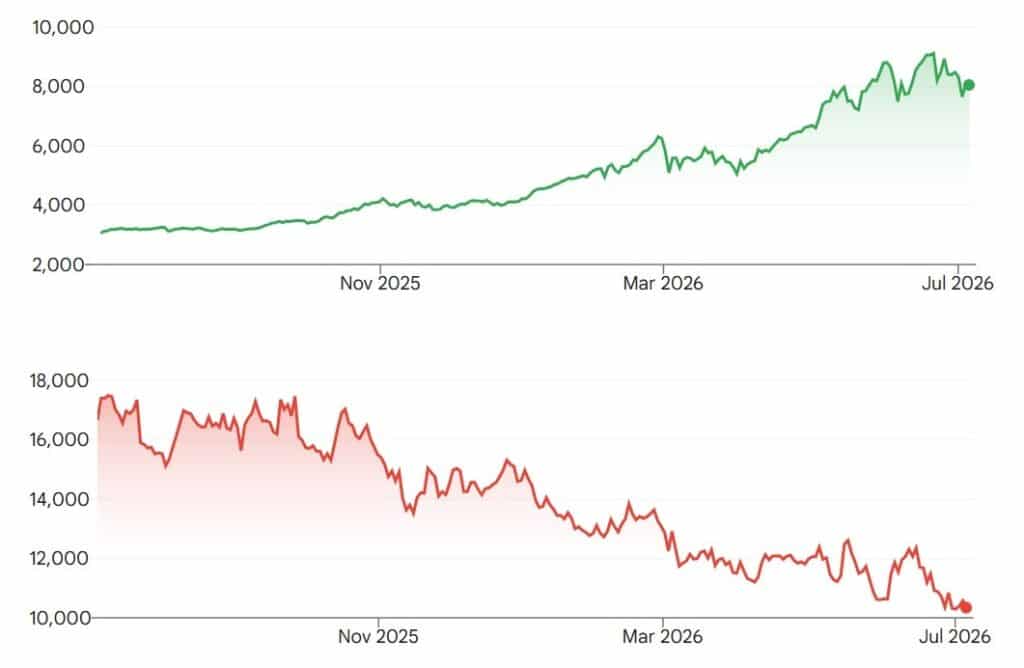
South Korean Casino Stocks: No Invite to KOSPI Party
Share prices in the Seven Luck operator Grand Korea Leisure closed just above 10,300 KRW ($6.80) on July 6, days after setting a new all-time low.
The picture for rival operators was no rosier. Kangwon Land, the operator of the only casino in South Korea that admits domestic passport holders, saw its shares tumble to their lowest prices since mid-2024.
The two other major operators have also missed out on the KOSPI price boom party. Paradise stock has dropped over 45% from their 52-week high.
And the downturn was felt at Lotte Tour Development, despite the operator’s record-breaking year. Lotte share prices are down over 9% this month, while the KOSPI has surged by almost 8%.
Tourist Arrivals Soar
The slump comes amid a huge spike in overseas tourism numbers, with over 10 million international arrivals in the first half of 2026. Mainland Chinese tourists accounted for over 50% of that figure, according to data from the Ministry of Culture, Sports and Tourism.
Monthly tourist spending rates have also ballooned to over 2 trillion won for the first time since records began.
But, somehow, this is not translating into casino revenues. GKL casino sales dropped 14% month-on-month in June. Table game sales slumped by almost 40% at Paradise.

Casino Recovery Incoming, Says Expert
However, South Korean analysts said they expected a different picture to emerge in the second half of 2026.
Lee Hye-in, an analyst at Samsung Securities, told the South Korean media outlet Newsis that domestic casino share prices will rebound in H2 as tourist numbers climb even higher during the upcoming East Asian holiday periods.
“Chinese tourists are choosing Korea as an alternative travel destination due to deteriorating [diplomatic] relations between China and Japan,” said Lee.
The analyst said that while Macao casinos have recently experienced a slowdown in demand, the outlook for South Korea is different.
South Korea is on a trajectory of structural growth across its entire tourism industry, Lee explained.
“We forecast that the relative performance advantage of domestic companies compared to Macao operators will continue in the second half of the year,” said the analyst.
Macao casinos have also experienced sales drops in recent weeks, despite a sharp uptick in tourist numbers.