


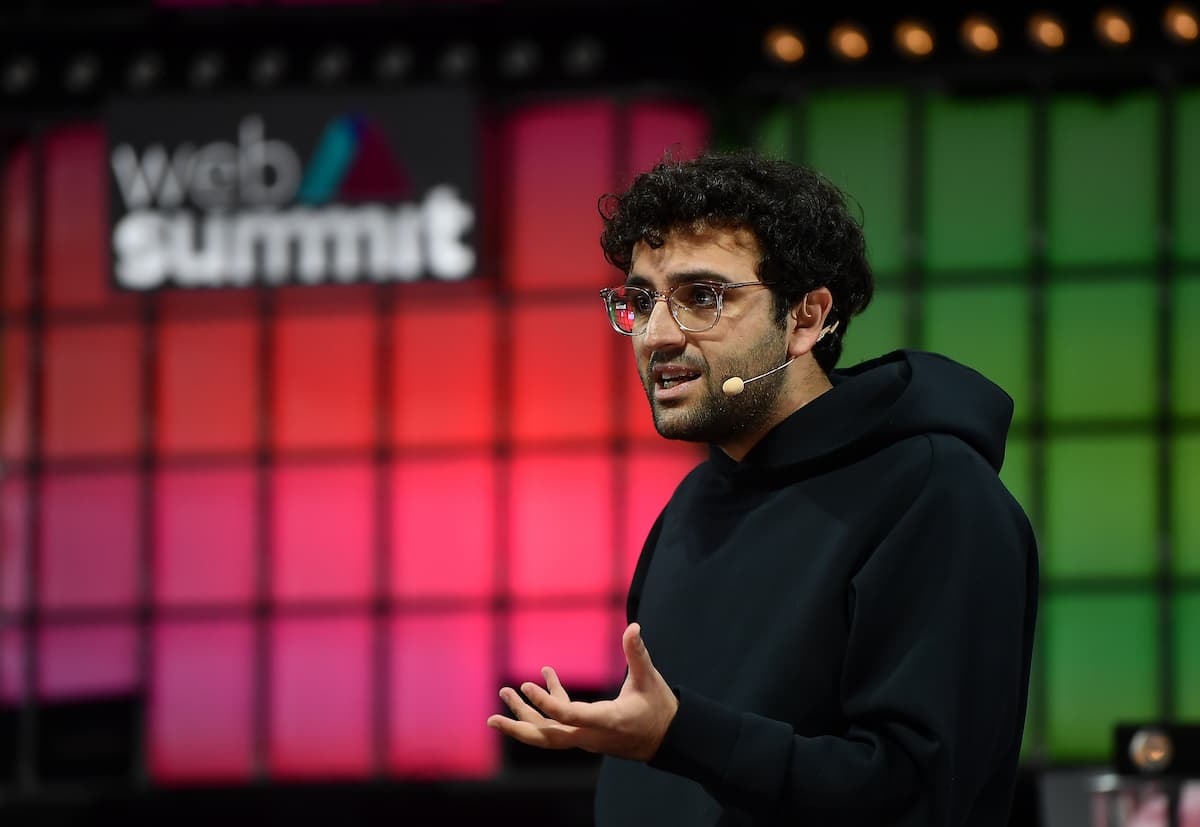
Last week, lawmakers introduced the Facial Recognition to Protect Children Act alongside Kalshi CEO Tarek Mansour. While promoting the legislation as a way to protect children, accusations have surfaced that the bill could allow prediction markets to expand further into sports and gaming.
Congressman Josh Gottheimer introduced the legislation, which would require prediction markets and online sportsbooks to use facial recognition technology to verify a user’s age before they can place a bet or trade.
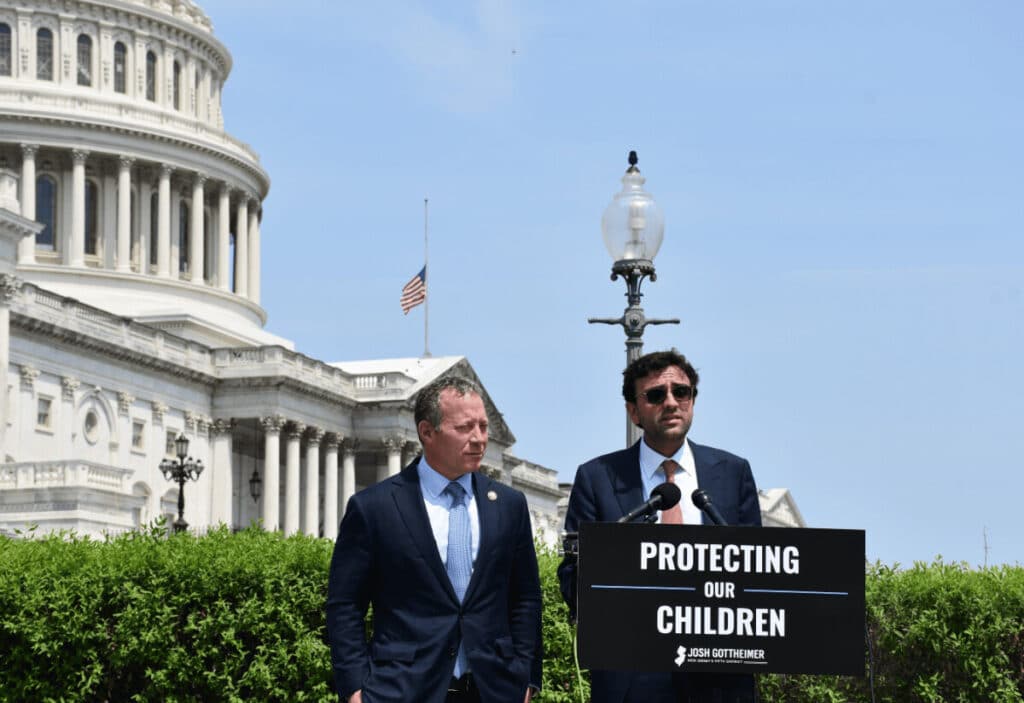
In a press release, he is pictured next to Mansour with the caption “Gottheimer introduces legislation to protect children.”
Advocates Say Bill Will Protect Kids
“Protecting kids should be a no-brainer and is a top priority at Kalshi,” said Mansour. “Beyond what’s required of us, we already self-regulate and have a suite of measures in place to keep minors off our platform. But this can’t just be one company’s responsibility — it has to be an industry standard. I am grateful to Congressman Gottheimer and Congressman Van Drew for driving it forward.”
ParentsRISE, a nonprofit that aims to protect children from the harms of technology, praised Kalshi for taking steps to protect children. The bill’s co-sponsors, Congressman Jeff Van Drew, Ritchie Torres, and Congresswoman Kristen McDonald Rivet, added that the legislation would protect minors from gambling.
The bill appears to fit with increased scrutiny on the effect of legalizing gambling for minors. It cites data from Common Sense Media showing that 36% of boys aged 11 to 17 have gambled in the past year, rising to 40% for boys aged 14 to 17.
Hidden Text Could Allow Gaming Contracts
The main text of the bill says that betting platforms and prediction markets may not accept wagers from users if they have not verified they are over 18 years old, “using commercially available facial recognition technology.”
However, gaming lawyer Daniel Wallach highlighted a section of the legislation that he says “provides an easy backdoor for the CFTC to approve both sports-event contracts AND casino gambling event contracts by equating ‘contrary to the public interest’ with ‘materially encouraging violence or similar unlawful activity.'”
The text in question revises the Commodity Exchange Act (CEA), which governs prediction markets. Currently, the text states that the CFTC can restrict markets related to terrorism, assassination, war, violence, unlawful activity, and gaming.
The bill would amend the text to state that “the Commission, on a case-by-case basis, may determine that an event contract is contrary to the public interest if the event contract is based on” those categories.
The inclusion of “based on,” rather than the current text, which says “involving,” could also be key, according to Wallach. He says this ensures “that it only captures event contracts whose underlier is ‘gaming’ (i.e., World Series of Poker).”
“For a bill that’s titled ‘Facial Recognition to Protect Children Act,’ seems odd that the word ‘facial’ appears only one time in the body of the 27-page bill. The ‘for others purposes’ language in the bill’s preamble is doing an awful lot of heavy lifting. Burying the lede,” Wallach added.
Bill Sponsors Received Donations From Kalshi
He also noted that the bill’s sponsors have received donations from Kalshi. Tech Influence Watch shows that Mansour donated $7,000 to Gottheimer, Rivet, and two other bill sponsors, Jimmy Panetta and Thomas Suozzi. Kalshi co-founder Luana Lopes Lara, meanwhile, donated $7,000 to another sponsor, Congressman Darren Soto.
Kalshi has increasingly invested in lobbying politicians. Last year, the company spent over $1 million. Only two gambling groups, the American Gaming Association (AGA) and the Gila River Indian Community, spent more.
Kalshi did not respond when contacted for comment on Wallach’s allegations.