

In a landmark step for military mental health, the Senate Appropriations Committee has approved a key provision in the FY26 Senate Defense Appropriations Bill that will designate gambling addiction as an eligible research topic under the Department of Defense’s Peer-Reviewed Medical Research Program.
If enacted into law, the move could unlock about $5 million to $7 million annually in federal funding to support research on gambling addiction among active military and veterans.
Derek Longmeier, President of the National Council on Problem Gambling’s (NCPG) Board of Directors, praised the Committee’s action. He says it will empower researchers, local VA clinicians, and military health officials to “better understand and address gambling addiction among those who serve.”
Senator Ben Ray Luján (D‑N.M.), a chief sponsor, emphasized that servicemembers and Veterans “facing gambling addiction deserve the same level of support and understanding we’ve worked to build around PTSD, depression, and other behavioral health challenges.”
A Crisis Hidden in Plain Sight
NCPG’s National Survey on Gambling Attitudes and Gambling Experiences estimates that nearly 20 million US adults experienced at least one problematic gambling behavior “many times” in the past year.
Although the data suggested that the risk of problem gambling is stabilizing, there’s a severe overrepresentation among military communities.
Servicemembers have twice the rate of gambling addiction as the civilian population. Young male military personnel (ages 18–29) are at the highest risk of developing a gambling problem.
Military-related risk factors include high-risk decision-making, PTSD, depression, and chronic stress. Without treatment, gambling addiction could lead to severe consequences in financial and personal matters.
The suicide rate among those with a gambling addiction is as high as 15 times higher than that of those without the condition. NCPG estimates that 40% of Veterans and servicemembers who seek treatment for gambling addiction have attempted suicide. Furthermore, veterans with gambling problems are six times more likely to become homeless in their lifetime.
Congress mandated annual screenings for gambling disorders in the FY2019 National Defense Authorization Act. However, the lack of federal research funding prevents military and local VA clinicians from accessing data and the necessary tools to implement early intervention or provide evidence-based care.
The FY 2026 Defense Appropriations Bill could provide the much-needed funding. If enacted, it could significantly help the Department of Defense and VA understand, prevent, and treat this behavioral health crisis.
Spotlight: High Stakes of On‑Base Slot Machines
The Senate action comes at a time of increasing concern about how the military’s on-base gambling could be contributing to the problem.
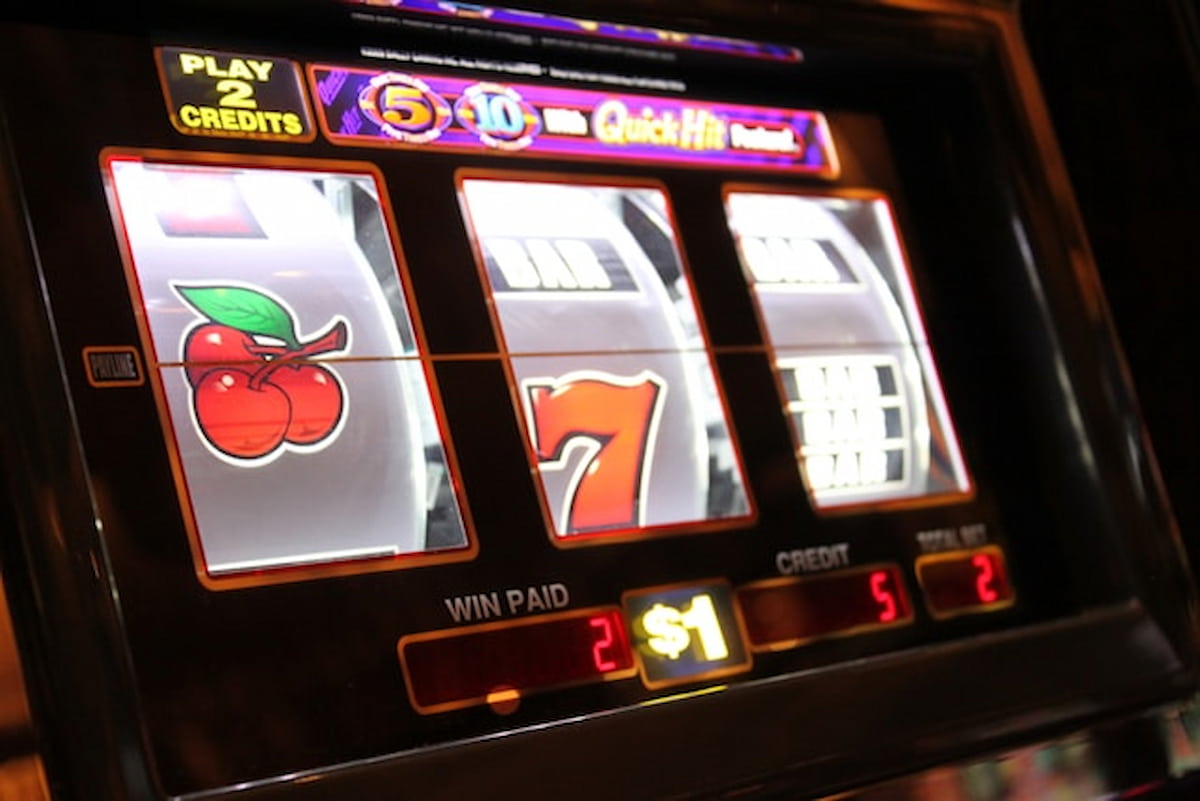
A recent investigation by WIRED revealed that the US military’s Army Recreation Machine Program (ARMP) generated $70.9 million in revenue and $53 million in net proceeds in 2024.
ARMP installs slot machines across overseas on Army, Navy, and Marine bases. The Air Force also has its version of the program.
The program supports morale, welfare, and recreation programs. It also aims to prevent servicemembers from leaving the base to gamble outside. Proceeds pay for things like entertainment on bases, including golf courses, bowling alleys, and libraries.
US Congress banned slot machines from military bases in the US in 1951. In the 1970s, the military pulled them from overseas bases only to reintroduce them in the 1980s.
According to WIRED, ARMP currently operates 1,889 slot machines on 79 overseas bases, including Korea, Japan, and Germany.
ARMP revenue grew from $63.1 million in 2022 to $64.8 million in 2023, and then surged to $70.9 million in 2024—a more than 12% increase over two years. The latest data shows that from October 2024 to May 2025, ARMP generated $47.7 million.
At its height, the program generated over $100 million in revenue, but this revenue declined substantially from 2010 to 2020. However, factors such as the COVID-19 pandemic and boredom contributed to a renewed growth.
Notably, not all of ARMP revenue comes from servicemembers. Local civilians, retirees, veterans, and military base contractors are also permitted to gamble.
Many agree that ARMP shouldn’t be abolished. However, critics argue that too little of the proceeds go towards research and treatment programs, along with adding responsible gambling tools and information. That’s especially true for veterans and active-duty personnel, who face elevated risks.