


Pachinko vs Plinko. It’s like Godzilla vs. King Kong, but with bouncing balls and less urban destruction. One is a Japanese obsession, the other a daytime television cult classic. Both rely on luck, noise, and the law of gravity. Are you ready for the drop?
Key Beats
- Pachinko is Japan’s flashing, ball-firing gambling giant, while Plinko is the TV pegboard that made The Price Is Right iconic.
- Both come from the same bagatelle roots, but pachinko packs parlors with jackpots, and Plinko now powers online crash games.
- Pachinko is all about nonstop streams of tiny wins; Plinko is one puck, one drop, and pure edge-of-your-seat suspense.
Pachinko vs Plinko – East Meets West
At 3:00 PM ET on Monday, January 3, 1983, the giant board game Plinko appeared for the first time on the popular daytime game show The Price is Right. The game was an instant hit.
Meanwhile, in Japan, Pachinko, another gravity-based gambling game, was generating more money than the annual gambling revenue of Las Vegas.
Today, the games born of bagatelle are back, with the unstoppable growth of online crash gambling games.
The Birth of Bagatelle
Unsurprisingly, the human fascination with bouncing balls originated in 18th-century France with the game of Bagatelle.
Early bagatelle games resembled a miniature billiards table, featuring pin nails hammered into a wooden surface. Players rolled balls down the board, hoping to ricochet them into a scoring cup.
In the 1800s, Corinthian Bagatelle emerged, a portable version of the game featuring a spring-loaded lever that enabled players to launch their balls into the board. This early analogue version of pinball was a huge hit, played in pubs and parlour rooms across the UK and America. The game laid the foundations for two divergent paths: pinball in the US, and pachinko in Japan.
Pachinko – From Kids’ Toy to Adult Obsession
Pachinko first appeared in 1920s Japan as a novelty toy for children. Based on the Corinthian Bagatelle, it was called pachinko because of the pachi-pachi noise the balls made.
After World War II, the game exploded. Pachinko parlors bloomed across Japan. The games mesmerized a nation: part slot machine, part vertical pinball, all sensory overload.
By the 1960s, it had become a national obsession. Housewives, salarymen, retirees – everyone had their favourite spot in the pachinko parlour. By 1997, 18,244 pachinko parlors were operating in Japan.
Today, they are technological marvels of digital design, with LED screens, 3D effects, immersive sound, and a variety of play modes.
A Pachinko Timeline:
1920s – The Corinth Game
Imported from the West as a children’s toy, the vertical cousin of bagatelle.
1930s – Early Pachinko Machines
Handmade wooden machines appear in candy shops; kids win sweets instead of cash.
Post-1945 – Pachinko Boom
After World War II, the adults took over. Parlours appear across Japan, offering escapism, prizes, and a booming black-market gambling economy.
1960s–70s – Industrialisation
Mass-produced machines replace handmade ones; steel balls, flashing lights, and sound effects draw in the serene Japanese public.
1980s–90s – Digital Fusion
Electronics, themed machines (such as anime and pop culture), and slot-style reels are introduced. Pachinko becomes part pinball, part slot, part fever dream.
2000s – Peak Addiction
Parlours dominate Japanese leisure time; some streets in Osaka and Tokyo glow with nothing but pachinko neon. Revenues top Las Vegas casinos.
2020s – Decline and Reinvention
Player numbers fall as younger generations turn to online and mobile games. Hybrid pachislot and even online pachinko aim to keep the tradition alive.
Plinko – TV Game Show Icon
It was game show producer and host Frank Wayne who invented the game of Plinko. He distilled bouncing-ball chaos into its purest form: the puck, the board, and the suspense.
After its debut on The Price is Right, Plinko evolved, finding new fans as it bounced and bopped its way into our collective subconscious.
In 2016, a new NBC game show called The Wall featured a giant Plinko board, spawning imitators globally. Today, crash gambling has introduced the game to a new generation of online casino fans.
A Plinko Timeline:
1983 – Debut on The Price Is Right
Plinko arrives: one board, one puck, $25,000 up for grabs. Instantly, the show’s most iconic game.
1990s – Bigger. Brighter. Louder
There’s no stopping the Plinko revolution. The audience chants like they’re at a ball game.
2008 – Drew Carey Era
Bob Barker retires, Drew Carey takes over. Some games change, but Plinko is untouchable, the TV quiz show mini-game crown jewel.
2013 – $1 Million Plinko
A special anniversary version lets contestants shoot for a million dollars, turning a humble pegboard into prime-time drama.
2010s – Plinko Clones
The Wall (2016, NBC; 2021, BBC) is a giant Plinko-style board hosted by Danny Dyer in the UK, Dwyane Wade in the US—the same bouncing drama, but with life-changing money at stake.
The Mechanics of Pachinko and Plinko
Who knew that the chaos theory could be so entertaining? When Edward Lorenz published his 1963 paper about the butterfly effect, he probably never considered that millions of people would be seduced by the subtle deviations and divergence of tumbling pucks and bouncing balls.
Pachinko is vertical pinball on steroids. You buy your steel balls, load up, twist the firing knob, and launch. Some balls gutter out and die, others trigger jackpots and unleash endless cascades of winning balls.
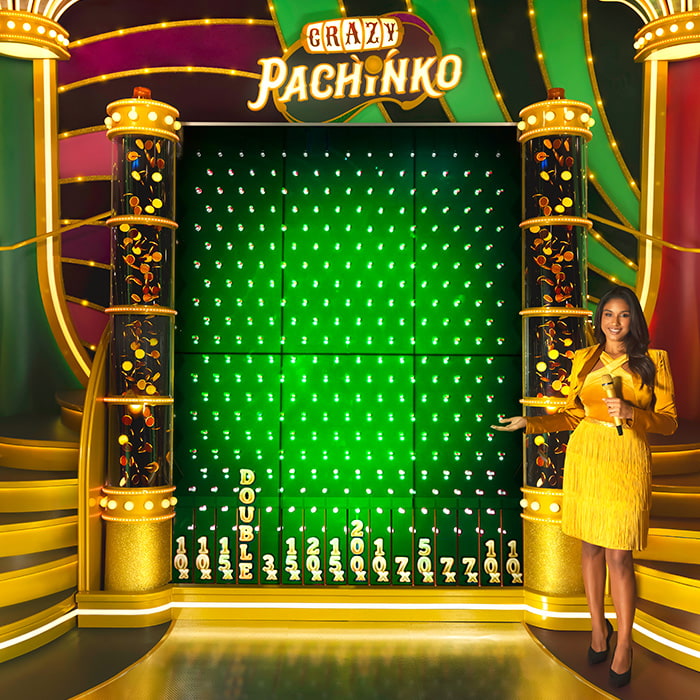
The remaining balls can then be redeemed for tokens or prizes. Alternatively, players can take their spoils to the shop next door and exchange them for cash. It’s a universally acknowledged Japanese tax dodge that no one bothers to close.
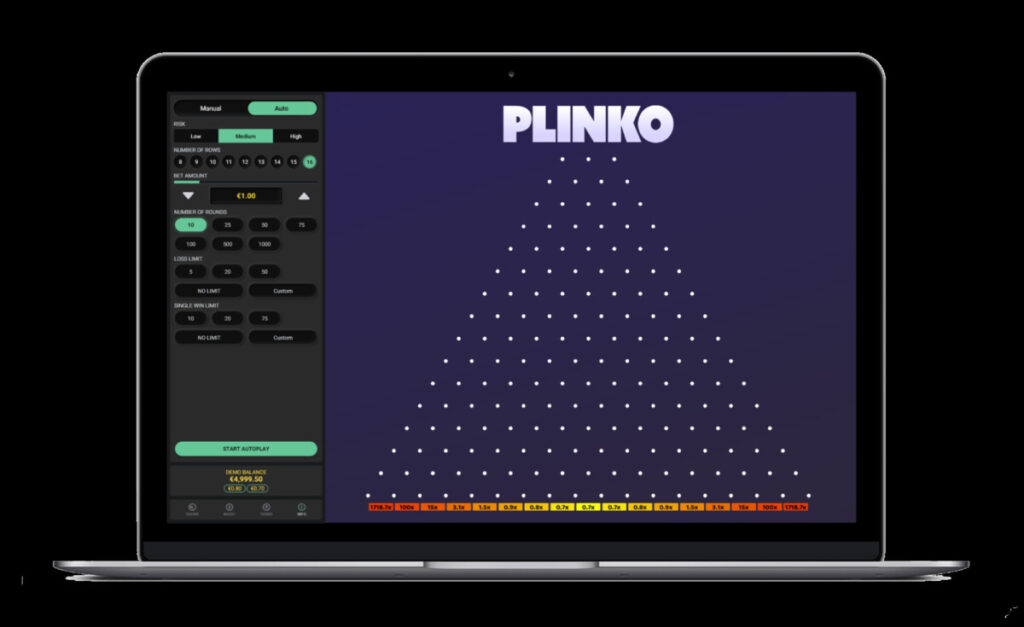
Plinko, by contrast, is a meditative take on gravity-based gaming. Instead of batches of balls, a single puck is dropped from the top of the board. Do you release it to the side and hope that it will bounce its way to the centre, or do you play it safe and drop it in the middle? It’s physics meets light entertainment.
The Difference Between Pachinko and Plinko Mechanics
| Feature | Pachinko | Plinko |
|---|---|---|
| Playfield | Vertical wall with hundreds of pins | Pegboard with evenly spaced pegs |
| Balls/Pucks | Hundreds of steel balls per session | One puck at a time |
| Player Input | Adjust firing strength & angle | Choose the drop point at the top |
| Pace | Continuous, high-volume, rapid-fire play | Slow, singular suspense |
| Rewards | Ball payouts converted into tokens/prizes | Cash prizes or goods (TV game show) |
| Experience | Sensory overload: kinetic chaos | Focused tension: where will it land? |
Plinko vs Pachinko Odds
Pachinko delivers a steady stream of small wins that gradually accumulate into tokens and prizes. Plinko is a hopeful handful of dramatic drops. It’s all-or-nothing suspense that makes every bounce matter.
| Feature | Plinko | Pachinko |
|---|---|---|
| Game Type | Pure chance (TV/game show or crypto casino) | Hybrid of chance and skill (Japanese gambling) |
| Player Control | None – drop point only | Partial – launch angle and speed can be adjusted |
| Typical RTP | 95%–98% (crypto casino versions) | 85%–90% (varies by machine and parlor) |
| Payout Structure | Fixed prize slots at the bottom | Win more balls → exchange for prizes |
| Odds Transparency | High (especially in digital Plinko) | Low odds are often opaque in physical parlors |
| Volatility | Medium to high (depends on board layout) | High – many balls lost before hitting the pockets |
| Regulatory Status | Regulated in online casinos | Loosely regulated in Japan (not classified as gambling) |
Pachinko vs Plinko Strategy
While fans sometimes debate pachinko vs plinko strategy, the truth is there isn’t much to talk about. Pachinko gives you a tiny slice of control with the firing knob, but once the ball hits the pins, luck takes over. Plinko? No strategy at all – just gravity, hope, and chaos.
Cultural Symbolism of Pachinko and Plinko
Japan is famed for its orderly chaos and its cultural eccentricity. This is the land where tightly packed trains run like clockwork, vending machines sell every conceivable consumable, and you can drink coffee with cats, owls, and robots.
When it comes to pop culture and the celebration of the inane, few countries can hold a Gwyneth Paltrow-scented candle to the U.S. This is the land where daytime TV is sacred, capitalism is revered, and a cheering game show mob loses its mind when Candice from Queens wins a lifetime’s supply of pet food.
The Economics of Luck
At its peak in the 1990s and early 2000s, pachinko was a $200 billion juggernaut, bigger than the global music industry, and even out-earning Japan’s auto sector. Today, Japan is no longer a pachinko paradise, although it is still a considerable revenue generator.
According to the latest numbers from Statista, pachinko parlors generated net sales worth 8.2 trillion Japanese yen in 2023 ($55.2 billion). Compare this to the U.S., where Las Vegas made $8.2 billion and Atlantic City $2.8 billion in the same year.
Plinko, on the other hand, was never about direct cash flow. On The Price Is Right, the real money was in TV advertising – not the prizes.
But in the digital age, Plinko has found a new revenue stream. Online casinos now run Plinko-style crash games where players drop virtual chips down virtual pegboards in the quest for real money. It’s simple, fast, addictive, and great for streamers and socials. While it’s nowhere near pachinko’s juggernaut scale, it’s carving out an ever-growing niche in the instant-win crash game gambling vertical.
The difference between pachinko and Plinko is clear. Pachinko could bankroll a city, while Plinko is the driving force behind a new wave of online gaming.
The Future of Pachinko and Plinko
Pachinko is facing an existential problem. The younger generation gazes at their cell phones, while the older generation dreams of Plinko casinos. Many parlors have shuttered, and revenue has slumped, compared to its peak in the mid-1990s.
Plinko, meanwhile, is enjoying a renaissance, with a second life online and in crash games, where players can determine their financial fate one drop at a time: drop a ball (or virtual puck) down a peg-filled grid, hit the multipliers at the bottom to win. It’s simple, fast, and perfect for streamers and crypto casinos.
Who Wins the Culture Wars?
Is there really a winner? In the modern era, the perception is that attention spans have never been shorter; social media is fuelling an endless desire for engagement.
Pachinko is still a national obsession. Plinko remains an evergreen crowd pleaser. Gravity – and chaos – will never go out of fashion. Whichever you choose, remember to gamble responsibly.
FAQs
-
What’s the difference between Plinko and pachinko?
Plinko is a TV game where one puck bounces down a pegboard for prizes. Pachinko is Japan’s vertical pinball-slot hybrid played with thousands of steel balls in neon parlors.
-
Does Plinko pay real money?
On The Price Is Right, prizes are real. Online Plinko games can also pay out, but remember to keep playing for fun.
-
Are Plinko and pachinko the same?
No, they are not the same. Both use bouncing balls, but pachinko is industrialized gambling while Plinko is pure TV spectacle. Think neon chaos versus pastel nostalgia.
-
Is pachinko a skill or luck?
It’s mostly luck. You can tweak ball speed, but once it hits the pins, chaos theory takes over. Precision helps, but there’s no guarantee.
-
Which is more popular: pachinko or Plinko?
By scale, pachinko wins hands down, peaking at more than $200 billion a year, surpassing Vegas. Plinko is iconic on US TV, but pachinko dominates the numbers.