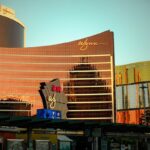



The Avenir proposal, one of eight bids competing for just three downstate New York casino licenses, opened the second round of Community Advisory Committee (CAC) hearings on September 8, with testimonies delivering a more divided stance than those presented at the first hearing last month.
Where the initial session leaned supportive—unions, nonprofits, and local businesses essentially touting jobs, housing, and cultural benefits—the second exposed a sharper neighborhood split.
Over the course of five hours and 171 speakers, the tone remained civil. Still, the polite delivery belied the sharp substance: neighbors warned of “blood on your hands” over traffic concerns, while others insisted “there’s nothing inherently bad about gambling.”
Opposition: ‘Blood on Your Hands’ and ‘12% Too Much’
Manhattan Plaza residents led the opposition, portraying the project as a direct threat to safety.
One speaker, Luigi Scorcher, warned committee members: “If this casino goes up, there will be blood on your hands when emergency vehicles cannot get through.”
Another, named Jeanie, criticized Silverstein’s framing that gaming is only a small slice of the development: “You want to do 12% of a building for a casino? That’s 12% too much.”
Christine Gorman, president of the West 55th Street Block Association, said: “The residents of Hell’s Kitchen don’t need either the Avenir or the transportation chaos that it will bring to the Lincoln Tunnel … What we need is a lot more affordable housing, real affordable housing.”
Traffic fears were a recurring theme. One resident, Robbie Fion, scoffed at the idea that high rollers would take public transit: “High rollers on city buses? … There will be more taxis, limousines, and private cars. And they do not even have parking facilities. This is insane.”
In her heated testimony, Jeanie also accused Silverstein of chasing profits at the neighborhood’s expense: “Silverstein has owned that lot for years, and nothing has happened. I am tired of all this pie-in-the-sky BS … The west side is not a garbage pit. It is not a sewer.”
Supporters: Jobs, Security, and a Hotel for Javits Center
Supporters focused on jobs, public safety, and the long-delayed need for a major hotel adjacent to the Javits Center.
Brian Sloan, a 23-year Chelsea resident and community board member, noted: “Chicago’s McCormack Place has nearly 3,000 hotel rooms physically connected to its campus. Orlando’s convention center has over 10,000 … Las Vegas has 7,500 … And the Javits Center? We have 895 within a short walk … This project is the solution we’ve been waiting for.”
Union voices were emphatic. Local 94’s Mike Etalleta said the project would mean “5,000 permanent jobs, union jobs [that] will generate income and opportunity … The additional police presence that will be generated will be greatly appreciated in our much-needed district.”
Residents stressed safety benefits, too. DeMar Busby, a security guard, testified: “I’ve walked children to school … and it’s very hard to feel safe and comfortable when you have several people on your back or just people just lying around. Having this entertainment center … would be a great help.”
Others pushed back against the idea that gambling itself was inherently harmful. Brian Bice told the room: “There’s nothing inherently bad about gambling, which is just another form of entertainment. After all, how many of us recently purchased a Powerball ticket?”
Locals vs. Non-Locals: The Fault Line in Hell’s Kitchen
The testimony underscored a sharp geographic divide. According to local news outlet W42ST, out of the 171 speakers, 129 supported the project (82 non-local, 37 local, and 10 employees), while 41 opposed (38 local and 3 non-local), and one remained undecided. Within Hell’s Kitchen itself, River Place and Silver Towers residents leaned supportive, while Manhattan Plaza stood firmly against.
That divide even cut into Silverstein’s own buildings—five tenants from River Place and Silver Towers spoke against their landlord’s plan, highlighting that loyalties are anything but unanimous.
A recurring theme was also frustration with testimonies by people who don’t live in the neighborhood.
One resident, named Daniel, a Manhattan Plaza resident, was blunt: “If you don’t live in the neighborhood, you have no voice in this.”
Jake, an eight-year resident of 10036, went further: “Any non-resident’s testimony today is irrelevant. They have no skin in the game other than a hoped-for profit at the locals’ expense.”
Steven Fenning, another Manhattan Plaza resident, added: “Anyone that’s coming up to speak to you directly should be from this neighborhood. If you’re not from this neighborhood, you do not understand, and you are really doing a disservice to Hell’s Kitchen, to you, and actually to themselves.”
Quieter Compared With Other Divided CAC Hearings
While divided, the second Avenir hearing didn’t include fireworks, in contrast to a few other bids’ CAC hearings, where passions spilled visibly into the room.
At the Caesars Times Square hearing, the conflict was loud. While supporters touted jobs, Broadway stood firmly against, enraged over cultural and safety risks. One critic called the hearing “rigged,” while a Broadway leader called the project an “existential threat” to the theater district.
In Brooklyn, during The Coney hearing, the tone escalated almost into chaos. In what was more like an overtime playoff game than a civic meeting, the room was rowdy and riven. Security stepped in to restore order, microphones were cut off, and slogans went up on signs lining the split audience.
Meanwhile, the Bally’s Bronx hearing was no less intense. Testimony overflowed with conviction. Residents alternated between “transformational” pleas for revitalization of the Bronx and fiery rebukes of displacement and concerns over parkland, forming a sharp divide across the room.
Unlike those, The Avenir’s second hearing was calmer on the surface. The chair reminded the room to keep booing and sideline comments to a minimum; applause followed thoughtful testimony. Yet the division remained strong—neighbors turned on neighbors, and friction lay thick.
What’s Next
As the two required public hearings have already been held, the six-member CAC has until September 30 to vote on whether to advance The Avenir to the state Gaming Facility Location Board.
The application requires approval from two-thirds of the committee, which will consider the public comments in its decision.