

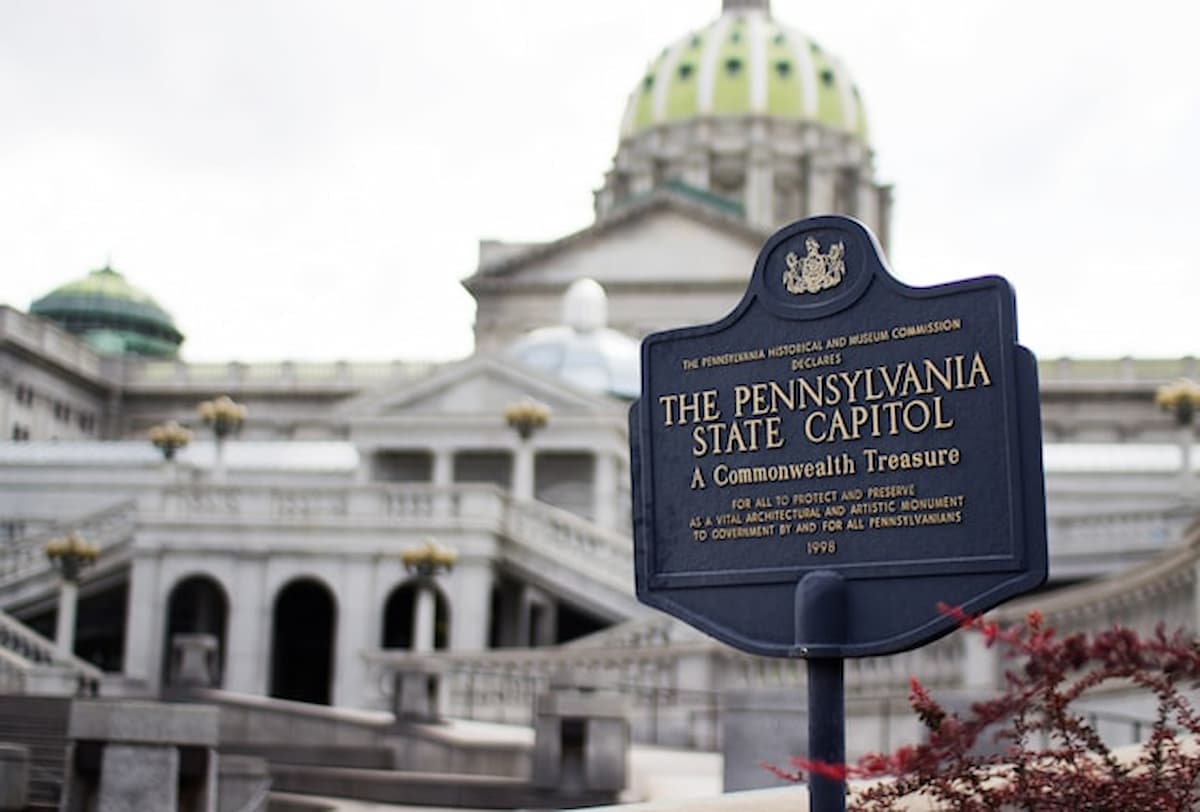
Kevin O’Toole, Executive Director of the Pennsylvania Gaming Control Board (PGCB), has issued a sharp warning to the state’s two senators and 17 congressmembers that sports prediction markets risk undermining state sovereignty, consumer protections, and the integrity of regulated gambling.
O’Toole Rings Alarm on ‘Wild West’ Prediction Markets
In a letter sent on October 3, O’Toole argued that prediction markets are exploiting regulatory ambiguity by claiming oversight from the federal Commodity Futures Trading Commission (CFTC).
He warns that this approach creates “a backdoor to legalized sports betting, operating parallel to, but outside of, the state-regulated system, and without strict oversight.”
Pennsylvania legalized sports betting following the Supreme Court’s 2018 decision in Murphy v. NCAA, which struck down the Professional and Amateur Sports Protection Act of 1992. This decision established a framework under state law and PGCB regulations.
O’Toole stressed that licensed operators are subject to “thorough background investigations, licensing fees, state taxation on gross gaming revenue for the benefit of the Commonwealth’s citizens, and mandatory compliance with detailed rules providing consumer protections, responsible gaming provisions, and integrity monitoring.”
Prediction markets, he warned, are attempting to sidestep all of that.
“Perhaps most troubling,” O’Toole wrote, “the CFTC regulates a system that also allows wagers on events that a single person can control — something the PGCB would never allow for fear of manipulation of the market and a cascading loss of confidence in the integrity of the betting system.”
He cautioned that consumers may be confused into believing these markets are as tightly regulated as traditional gaming. At the same time, in reality, they are “more akin to the ‘wild west.'”
Other Regulators Raise Alarms
Pennsylvania is not alone in its concern.
In August, the Ohio Casino Control Commission (OCCC) issued warnings to licensed sportsbooks. It stated that offering sports prediction contracts, or associating with platforms that do, could impact their licenses.
OCCC concluded its letter by stating, “The Commission will consider a licensee’s choices to associate with a company operating illegally in this State and may take administrative action against any licensee that does.”
Prediction market operator Kalshi has since filed a lawsuit against Ohio, claiming regulatory overreach.
In September and October, Arizona and Michigan, respectively, sent similar letters to licensed operators. They made it clear that any involvement or association with event contracts could threaten the operators’ licenses.
The Arizona Department of Gaming has already sent a letter to the CFTC. It states concerns that sports event contracts are a form of illegal gambling. It also issued cease-and-desist orders to Kalshi, Crypto.com, and Robinhood for offering unlicensed event wagering.
Elsewhere, Nevada regulators voiced skepticism around FanDuel’s planned entry into prediction markets. At an August 2025 meeting, commissioners probed FanDuel’s announcement of working with CME Group on sports event contracts. They warned that those activities risked conflict with the state’s gaming laws.
Commissioner Brian Krolicki emphasized that reconciling federal and state compliance “is not possible today.” He reminded FanDuel that Nevada law views prediction markets outside of “legal wagering.”
Together, these state moves indicate a growing resistance to prediction markets. Meanwhile, regulators force a confrontation over which rules will govern these novel products.
Senators Question CFTC Oversight
Some lawmakers on Capitol Hill are also raising questions over prediction markets. A bipartisan group of US senators is pressing the CFTC on why it has allowed sports event contracts to proliferate in ways critics say blur the line between financial derivatives and gambling.
At the center of the letter is CFTC’s Regulation 40.11. The provision prohibits event contracts “involving gaming” and other activities that are contrary to the public interest. Critics argue that the CFTC has failed to enforce the rule consistently.
The senators demanded answers to 11 specific questions by October 30. That includes how the agency distinguishes between gambling and futures trading. Also, how it intends to enforce consumer protections and respect state authority.
Growing Regulatory Clash
PGCB joining other state gaming regulators highlights a broader clash between them and federal financial authorities. In his letter, O’Toole says that the CFTC itself acknowledged the uncertainty in a September 30, 2025, industry guidance document:
“The Commission has not, to date, been requested to take or taken any official action to approve the listing for trading of sports-related event contracts … All sports-related event contracts that are currently listed for trading on DCMs have been listed pursuant to self-certifications filed by relevant DCM… and the Commission has not, to date, made a determination regarding whether any such contracts involve an activity enumerated or prohibited under (the) CEA.”
For O’Toole, the lack of clarity is unacceptable. In his letter, he warned: “With all due respect to the CFTC, it would take years for them to create the regulatory system and oversight that state gaming authorities have in place.”
Platforms like Polymarket and Kalshi continue to attract new investment and expand their reach. At the same time, regulators argue that the argument of whether these products fall under financial market rules or state gambling laws must soon be resolved.