


The government of Macao announced that the gambling revenue of its casino industry increased by 3.3% year-over-year.
The media outlet Macau Shimbun reported that, according to the Macao Government Financial Bureau, the cumulative revenue of the casino sector from January to October this year rose to 93 billion patacas ($11.6 billion).
Macao Gambling Revenue: On the Rise
This led to another boost for the government’s coffers. The bureau explained that Macao gaming tax revenue had increased by 6.1% to 77.5 billion patacas ($9.7 billion).
The casino industry is the special administrative region’s biggest and most important industry. The sector’s tax revenue accounted for 83.3% of Macao’s total revenue in the same period.
Cumulative casino sales from January to October rose by 8% on the same period last year to reach 205.427 billion patacas ($25.7 billion). These figures exceeded the government’s revised target by 8.1% and outperformed its initial target by 2.7%.
However, the same media outlet reported in a separate article that Hong Kong exchange-listed SJM Holdings experienced a year-on-year net revenue drop of 6.2% in Q3.

It also reported casino sector gross revenue figures of HKD 6.537 billion ($840.5 million), a 6.5% decline from Q3 2024.
The company published its unaudited financial results for the third quarter on November 12. SJM operates the landmark Grand Lisboa hotel and casino.
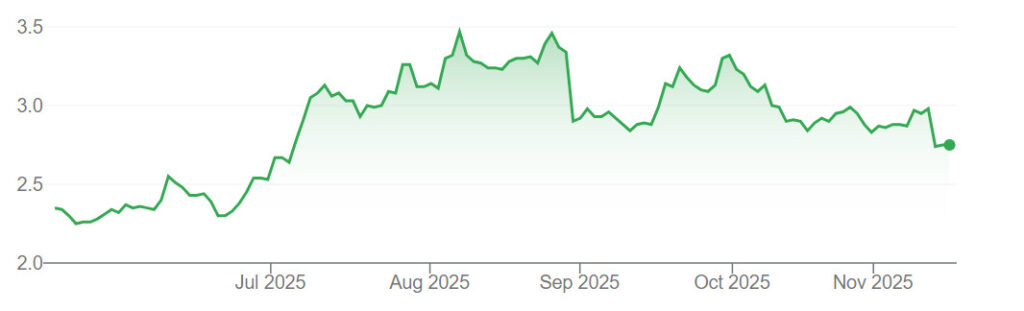
Share prices in SJM have also fallen slightly from their August-September highs.
Storm Disruption Yet to Show up in Figures
Other Macao casino operators have seen shares grow on the Hong Kong Exchange in recent weeks. Galaxy Entertainment Group’s share prices have risen by over 6% since late last week, with the operator MGM China experiencing a more modest 0.81% growth over the same period.
Despite the relatively positive tax figures and stock market picture, Macao operators suffered a blow in early October, when Typhoon Matmo disrupted gamblers’ travel plans during Golden Week.
Golden Week is a holiday period that includes the Chinese National Day holiday and the Mid-Autumn Festival. It typically begins on October 1, and often sees a large influx of tourists traveling to Macao from Mainland China.
Last month, Macao’s Social Welfare Bureau reported that the region’s residents are spending less in casinos.
The Macao-based media outlet TDM also reported that 4.6% of teenagers in Macao now “exhibit gambling disorder behaviors,” in the form of “gambling-like activities including claw machines.”