


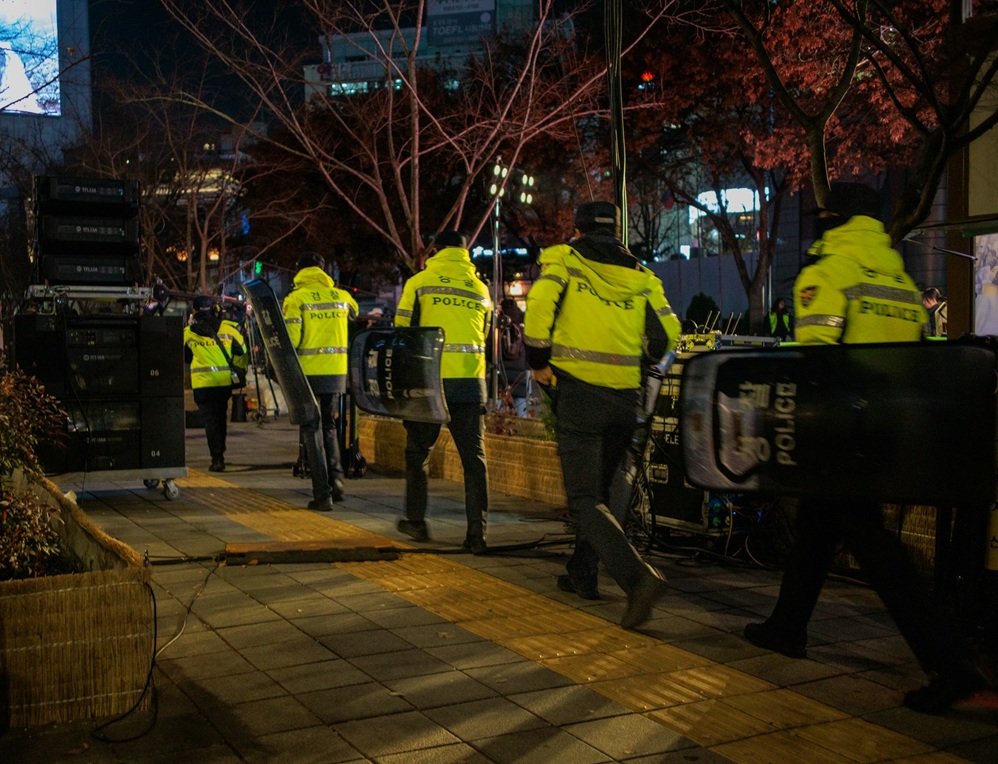
Police in Gyeonggi Province, South Korea, have arrested 59 people in raids on a gang of suspected money launderers that catered to illegal gambling site operators.
Per the South Korean media outlets Maeil Kyungjae and MBN, the group includes an employee at a major domestic bank’s call center.
Officers have remanded seven individuals in custody, including a man in his 30s who police claim is the gang’s mastermind.
The mastermind allegedly spearheaded a scheme that centered on distributing bank books and processing funds for online gambling networks.
South Korean Police Arrest 59, Confiscate Cash & Cars
Gyeonggi police raided several properties in connection with the arrests, confiscating “high-priced vehicles.”
These included a Rolls-Royce worth 640 million won ($438,300), as well as precious metals. Courts have also approved a request to freeze bank accounts containing over 1.752 billion won ($1.2 million).

Officers have charged the suspects with organized crime and violations of the Electronic Financial Transactions Act and the Telecommunications and Financial Fraud Victim Prevention Act.
Police said the gang operated open chat rooms on Telegram and other messaging apps, where they recruited money mules.
Would-be mules were told to open bank accounts under their own names and then hand over their bank books to the gang.
In exchange, officers said, the gang told the mules they would receive 1 million won (just over $684) in “monthly loan” fees.
Gang Started Recruiting Mules in 2023
Police think the gang began recruiting money mules in June 2023 and operated the network until investigators intervened last month.
The gang allegedly offered its services to gambling and prostitution ring operators. It also worked with voice-phishing call centers, police said.
The mastermind charged gambling platforms a fee of 3 million won ($2,055) per account, as well as a “daily usage fee of 130,000 won ($89),” said police.
Police stated that the gang’s hierarchy was highly sophisticated, comprising management, consulting, and recruitment teams.
Officers also think the gang used coercive and violent methods to ensure account holders did not withdraw the funds deposited into accounts.
They believe the gang collected personal information, such as ID cards, family relationship certificates, and account numbers of family members, to use as a form of collateral.
Escapee Beaten With Steel Pipe
Investigators said that in November 2024, a man (either a mule or a rogue member of the gang) withdrew over 22 million won ($15,070) from an account and tried to flee.
The mastermind allegedly responded by sending a “task force” to find the man. After a two-month manhunt, they found the runaway.
Police said the task force then took the runaway “to a remote mountain area, beat him with a steel pipe, and made him shave his own head with clippers.”
The gang filmed this and uploaded a video to one of their Telegram channels. They stated that this was a “warning” to other members of the network.
The mastermind also threatened to send mules’ details to the police if they tried to pass information about the network to police investigators.
The bank employee was described as a “woman in her twenties” who was “in charge of handling telephone fraud victims” at a center.
Earlier this month, the South Korean neobanking giant Kakao Bank launched an anti-gambling drive for middle and high school students in the Seoul metropolitan area.