


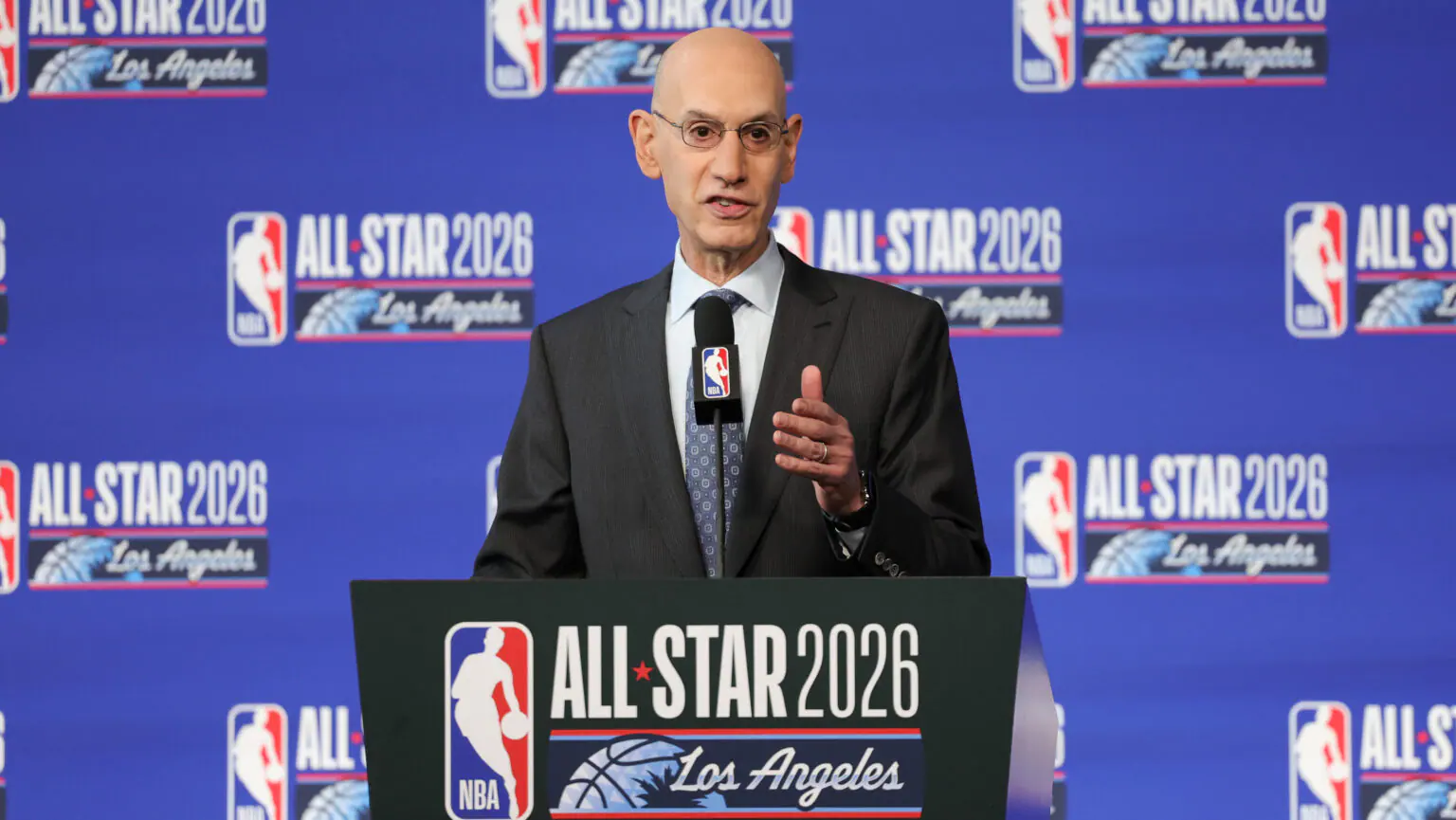
The NBA views prediction markets the same way it views traditional sports betting, Commissioner Adam Silver said during a wide-ranging question-and-answer session at his All-Star Weekend media availability on February 14.
In response to a reporter’s question about how the NBA views prediction markets compared to traditional sportsbooks, Silver said the league doesn’t draw a distinction between the two categories. “We currently are looking at prediction markets essentially in the same way that we’re looking at sports betting markets or sports betting companies.”
Silver’s remarks come as prediction markets continue to make inroads into sports betting, with Kalshi reaching $1 billion in trading volume on Super Bowl Sunday. He noted that, even though these platforms often argue they provide “event contracts,” not wagers, the league treats them as part of the broader gambling ecosystem.
“It’s rapidly evolving. Prediction markets have now come on the scene fairly recently as, I don’t know how else to say it, major sports betting marketplaces. Whether prediction markets are allowed to go forward in the form they’re in now will, I think, be ultimately an issue for the courts and for Congress,” Silver added.
Giannis-Kalshi Partnership & League Regulations
The question posed to Silver about prediction markets was prompted by last week’s announcement that NBA superstar Giannis Antetokounmpo had taken an ownership stake in Kalshi through his company, Ante Inc.
On February 6, the two-time MVP made his new role public in a post on X, where he said, “We all on Kalshi now.” As part of the deal, Antetokounmpo will participate in live events and marketing for the platform. Despite the optics, Silver defended the legality of the investment under the league’s current rules during the All-Star Weekend press conference.
“We have a rule that was collectively bargained with the Players Association that players can make, I will call them, de minimis investments in sports betting companies, and we’re applying the same rule to prediction markets,” Silver explained.
Under the current Collective Bargaining Agreement, players can have a passive stake of less than 1% in gambling-related entities. Speaking about Antetokounmpo’s situation specifically, the Commissioner added, “In the case of Giannis, from what I understand, it’s a minuscule investment. Much smaller than 1%, so that does not violate the rules.”
While Silver supported Antetokounmpo’s ownership stake in Kalshi, the timing of the deal has drawn sharp criticism online, with many fans and industry observers noting it was announced just one day after the NBA’s February trade deadline.
Leading up to the deadline, there was widespread speculation that Antetokounmpo would be traded from the Milwaukee Bucks. Kalshi users traded over $23 million on that very question ahead of the trade deadline. On social media, many alleged that Antetokounmpo had started those rumors to increase trading volume, even though he was staying put in Milwaukee.
Critics argued that a player holding equity in a company that profits from rumors about his career moves represents a clear conflict of interest, even if the player is barred from trading on NBA-related markets.
League Integrity Concerns Continue to Shape Debate
Based on the Commissioner’s comments, the NBA is essentially lumping prediction markets and traditional sportsbooks into the same bucket because it’s worried about the “big picture” of global gambling.
Since betting on NBA games is now legal in nearly 40 U.S. states and an estimated 80 countries, the league wants to keep its eyes on all corners of the market, Silver explained. Their goal is to protect the game’s integrity and fight the growing perception that betting might influence how games are played or officiated.
“It concerns me, in the totality of all this betting, that we need a better handle, no pun intended, on all the different activity that’s happening out there,” Silver said. To combat these risks, the league relies on data-sharing partnerships and advanced monitoring tools to identify suspicious behavior across both legal and illegal channels.
While the NBA continues to monitor prediction markets, Silver’s message is clear: any platform facilitating trades on league outcomes will be subject to the same integrity standards and oversight as traditional gambling operators.