


The prediction market operator Polymarket has deepened its presence in US sports by striking another baseball partnership deal, this time with the New York Yankees.
The agreement will see Polymarket become the Yankees’ “official prediction market partner,” Polymarket wrote in a press release.
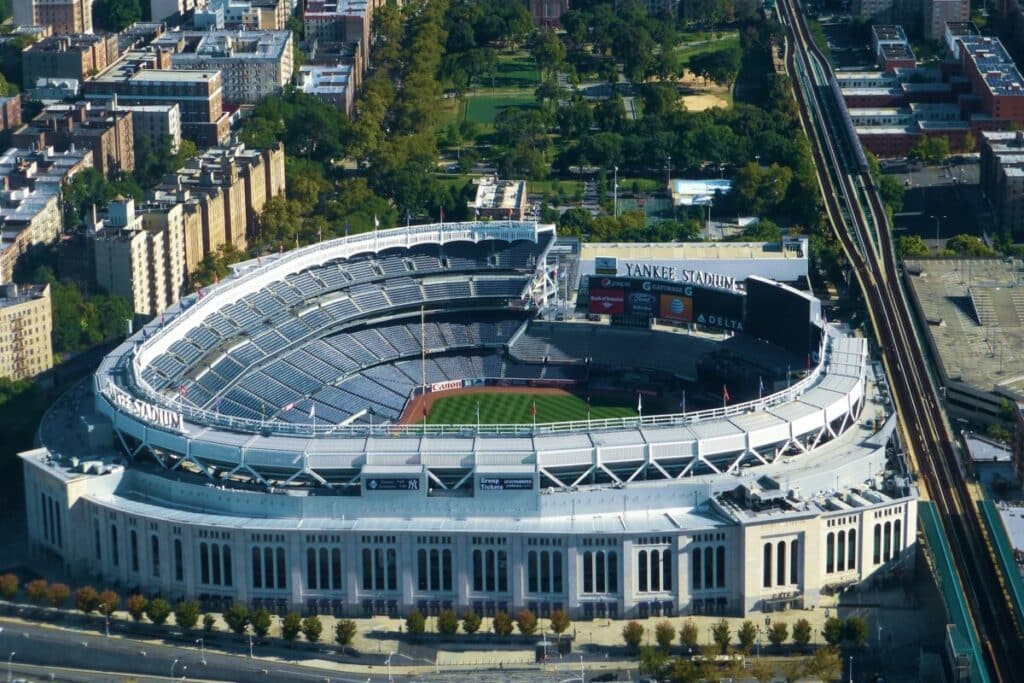
The agreement means Yankee Stadium will display Polymarket’s logos and branding on its LED signage during Yankees games for the rest of the 2026 Major League Baseball season.
“We are proud to become a partner of one of the most iconic teams, not just in baseball, but in all of sports,” said Ari Borod, Polymarket’s President of Sports Business Development.
The deal is Polymarket’s second major sporting deal in the space of three days. Earlier this week, the predictions market operator wrapped up a streaming and contracts-related agreement with the ATP Tour, the top governing association of men’s pro tennis.
Polymarket: New York Yankees Deal Builds on MLB Contract
The Yankees partnership gives Polymarket another key foothold in US baseball. In March, the firm announced an agreement with MLB.
The March deal gave the prediction market operator exclusive access to MLB branding. This means that Polymarket can make specific reference to the MLB, use official team names like the “Boston Red Sox” and team logos on its site.
By contrast, competitors cannot; instead, they must refer to “Pro Baseball Championships” and to the Yankees using names like “New York Y.”
MLB games and championships are attracting millions of dollars’ worth of trades on the Polymarket platform, with almost $500,000 riding on the outcome of August 7’s three MLB games.
Polymarket users have traded almost $38.5 million on contracts pertaining to the World Series.
The March deal has also seen MLB use Polymarket branding in its media channels and during official events.
The Yankees deal, meanwhile, will also see the parties collaborate to “give Yankees fans unique opportunities to engage with Polymarket throughout the season.”

Sports Deals Galore
“We are excited to begin a relationship with Polymarket, MLB’s prediction market partner,” said Michael Tusiani, the New York Yankees’ Senior Vice President of Partnerships. “Through signage and fan experience opportunities, we look forward to elevating Polymarket’s brand awareness both at Yankee Stadium and across our fanbase.”
This year has also seen Polymarket sign an exclusive deal with Major League Soccer, the biggest pro soccer league in North America.
Last month, Polymarket also penned a contract with Mexico’s biggest soccer league, Liga MX.
And in June, the firm took a tentative step into soccer’s most lucrative market: Europe. The prediction market operator and the broker Relevent Sports inked a deal with the German Bundesliga.
The agreement will allow Polymarket’s US-based customers to trade Bundesliga match contracts starting in the 2026-27 season, which kicks off later this month.
Polymarket said its deals were “relationships” that reflect its “continued investment in expanding its presence across some of the world’s most recognizable sports leagues and franchises.”
Both Polymarket and its rival Kalshi have also sealed multi-year partnership deals with the National Hockey League.
And in recent weeks, Kalshi has even dipped its toes into less prominent sports, including padel.
Pushback Continues
Prediction markets and their sporting operations have faced waves of pushback, both from sports leagues and elsewhere.
In recent weeks, the NFL and NBA have both written to the Commodity Futures Trading Commission, the body that claims exclusive jurisdiction over the prediction markets sector.
The NFL and NBA want the commission to impose new rules on prediction markets, similar to those states use to regulate sports betting.
The CFTC is yet to respond, but has repeatedly claimed that prediction market exchanges provide financial services, not gambling.
CFTC Chairman Michael Selig this week hit out at states that have tried to police prediction markets using their gambling laws. Selig accused state attorneys general of trying to “nullify federal law.”
Some states, however, have enjoyed no shortage of success in their bitter struggle with the CFTC and Kalshi.
A federal judge in Utah recently ruled that the Beehive State’s AG can force Kalshi to adhere to Utah’s strict gambling laws.