

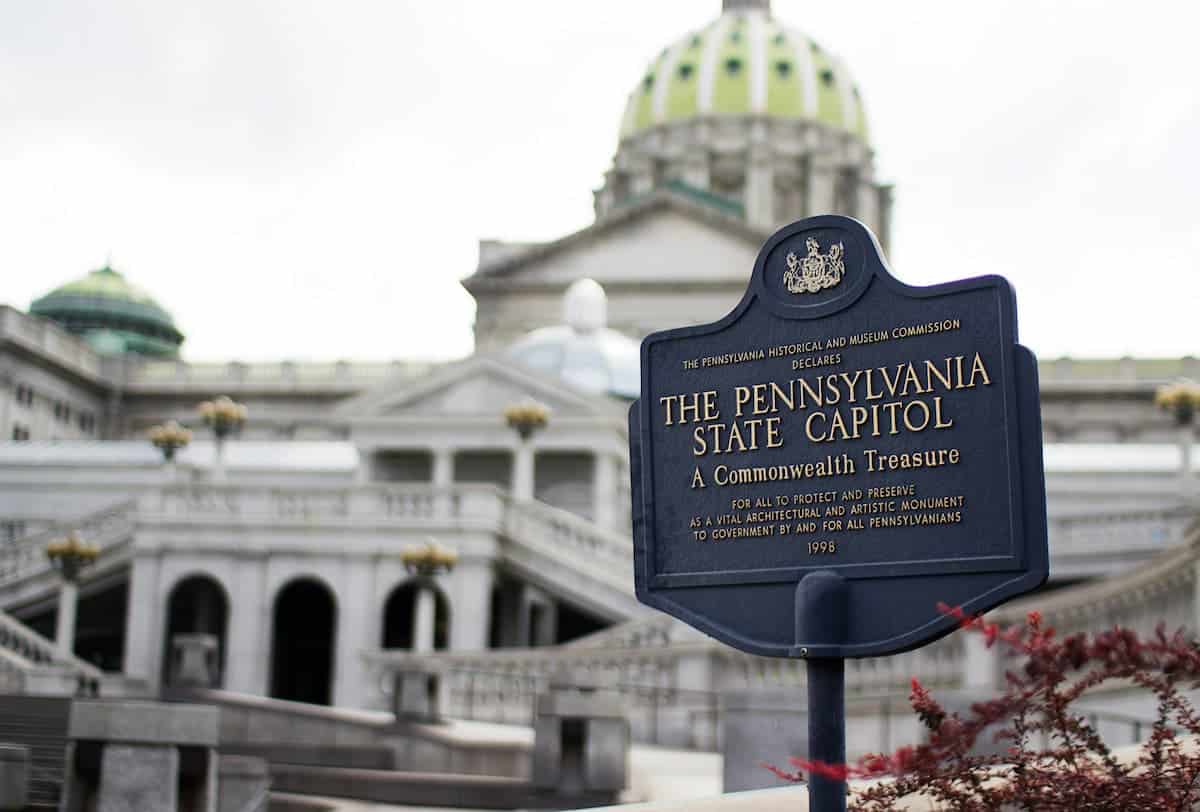
Pennsylvania is taking a different tack from most states by attempting to create a regulatory framework for prediction markets rather than banning them outright.
Rep. Tarik Khan introduced House Bill 2711 on July 22 with more than 20 co-sponsors. CasinoBeats spoke with attorney Doug Mishkin, a partner in BCLP’s Sports, Entertainment & Media practice, about how things might evolve in the Keystone State.
Daily fantasy sports and online sports betting once languished in legal uncertainty before the state legalized and regulated them. Will prediction markets follow?
Pennsylvania Charts a Different Course
There seems to be a new lawsuit involving prediction markets every passing day. You have to wonder if Pennsylvania has simply taken a different path towards litigation.
“Well, it is setting itself up for another lawsuit insofar as this is the core issue of the litigation around the country, right?” Mishkin said. “Prediction markets are and have taken the position that they are not subject to state law because they’re subject to the exclusive jurisdiction of federal law.”
He added, “What’s interesting about this bill is that it’s not seeking to outright ban or level civil or criminal penalties against prediction markets. So in that sense, prediction markets would be less likely to push back, but it is still looking to regulate them and limit them in certain ways.”
Unlike other states, Pennsylvania isn’t aiming to prohibit most sports-related markets. Asked if Pennsylvania’s approach is a smarter alternative to banning prediction markets, Mishkin noted that DFS and sports betting were ultimately legalized and regulated in the state.
“I think it is indicative of where we end up ultimately,” he said. “Historically, we’ve had daily fantasy sports. They were widespread with enormous customer interest. They were growing rapidly, and they faced challenges in many states from attorneys general claiming that they were engaged in illegal gambling, so that dynamic isn’t new.
“And those litigations would have gone on forever, but for the settlements that they reached that ultimately yielded licensing and regulation in most states. And, of course, we’ve seen it with sports betting.”
Many industry observers have suggested that prediction markets have become too big to fail. For his part, it’s difficult for Mishkin to envision a day when sports-event contracts cease to exist altogether.
“Risking money based on sports-related predictions, whether you call it sports betting or whatever it might be, that activity has such insatiable demand in this country that it seems unlikely we end up with an outright ban as the final place where we land,” Mishkin said.
Key Provisions of HB 2711
There are a handful of key provisions in HB 2711. These include:
- Users must be 21 years old
- No “death markets” or markets involving an individual’s health
- No trading on high school sports or competitions involving minors
- Operators must prevent trading on material nonpublic information
- Operators must implement consumer protection measures including self-exclusion
On that final provision, Mishkin echoed those sentiments.
“I’m a proponent of, at least as it relates to sportsbook regulations, that there is some attempt to address problem gambling behaviors,” he said. “Prediction markets need to make some effort to ensure they’re not serving self-excluded individuals.”
He added, “I don’t know that there’s a distinction as far as someone who might be susceptible to addiction or problem gambling behavior between the sportsbook and the prediction market.”