


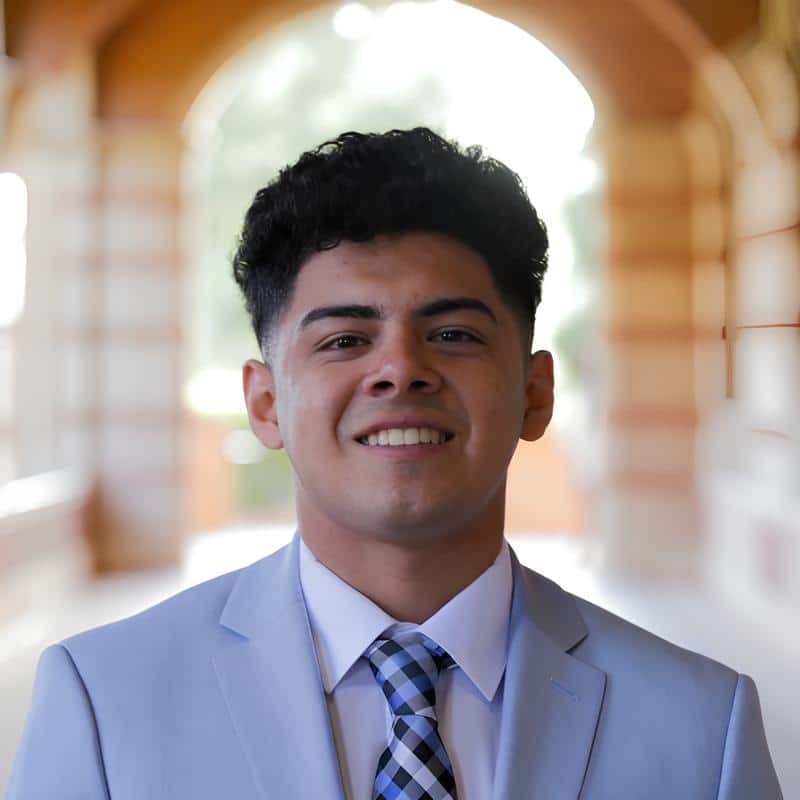
ParlayX was originally going to be focused, as the name suggests, on parlays. Founder Andrew Gonzalez said the company was building its own prediction market platform, focusing on combos.
Parlays have become an increasingly large driver of revenue at prediction markets. Kalshi first self-certified combo markets in September last year, and they now account for over 40% of all volume. In July, over $15 billion was traded on parlays, a huge rise from just over $1 billion at the start of the year.
But if prediction markets are supposedly peer-to-peer with no house, how can parlays be such a key driver of volume?
The answer: market makers.
Market makers are the key drivers of prediction markets, providing liquidity so users can trade on anything from sports to politics to the weather. They are particularly key to parlays, as average users are not in a position to put up the money for the other side of a long-shot parlay wager.
Instead, large-scale financial institutions, such as Susquehanna, Jump, or Wintermute, accept the potential liability but, more often than not, profit from the losing wager. A lawsuit against Kalshi alleges that the operator effectively dupes users into believing they are not wagering against the house, even though the market maker is often connected to the company.
ParlayX Makes Market Making Easy
To get ParlayX started, Gonzalez would need to secure market makers’ support for the project. When he approached companies, he realized they had another problem: a lack of organization to facilitate trades on prediction markets.
It was then that the business pivoted. Earlier this month, it launched the “first institutional order routing, custody, and capital management layer for prediction markets.”
ParlayX combines “fragmented backends into a single, seamless execution layer. For the first time, trading desks can fund just one consolidated balance and deploy algorithmic strategies across the entire prediction market ecosystem,” the company stated in its press release.
“Kalshi, Polymarket, and pretty much every prediction market all work off of a single account. You have one login without SSO or organizational login options. That means if you’re part of a team, there’s no way to delegate or control who has access to what,” Gonzalez told CasinoBeats in an interview this week.
“We provide permissioning by allowing market makers to set up multiple accounts and create trader-specific API keys. We also offer ‘pods’—segregated containers of capital. For instance, a firm with a million dollars can restrict two specific traders to a $100,000 pod. We offer this permissioning and containerization across Polymarket and Kalshi, with integrations underway for platforms like Limitless, ProphetX, and eventually Novig.”
The company has already signed up five market makers, with ambitions to increase that figure to between 15 and 20 by the end of next month. Gonzalez could not reveal which companies have signed on, but said the better rebates secured through using ParlayX would be particularly meaningful for small to medium-sized institutions.
Gonzalez Rising Quickly in Trading World
Gonzalez serves as the CEO of the company, and although only 23 years old, has been trading for years. “I joined a venture firm and was doing some venture investing at a couple of different funds, while I was in school at UCLA,” he said.
He then moved to New York to join Flowdesk, a large institutional market maker backed by the investment company BlackRock.
“We handled a lot of the rebalancing of Bitcoin ETFs, DATs, and other execution related trading” he said. “I also worked on the derivatives and market making. I worked on pretty much all the desks. That’s kind of how I initially got this whole idea of what institutions needed.”
Prediction markets have exploded over the last 18 months with the launch of sports-event contracts, but Gonzalez says he has been interested in the industry since its early days.
“I’ve always just had an interest in prediction markets. I’ve been trading on Polymarket since pretty early on, around 2022 or 2023. I ended up with this idea to start my own company, and it was keeping me awake all the time, so I quit my job in January and took a pretty big leap of faith.”
Building From Scratch
“Honestly, it was hard. For three or four months, I tried to raise money, and it was very difficult. Ultimately, we did end up raising some funding—which we’ll probably announce in September—but it hasn’t been easy,” said Gonzalez.
He could only say that the company secured seven-figure funding, largely from one of Europe’s largest sports affiliates.
“It’s been a lot of ups and downs and a lot of roller coasters, but it’s been fun so far. I have a background in crypto and trading, and I decided to leave that behind to spin this up myself,” he said.

While securing funding was challenging, the main challenge has been the lack of structure in place with prediction markets, Gonzalez says.
“In prediction markets, there is zero pre-existing infrastructure—everyone is building from scratch. If you want market mappings or cross-venue connectivity, you have to build those yourself,” he adds.
“To minimize latency, we had to solve a complex networking challenge by geolocating servers and building a high-speed router. A Kalshi order routes to a US East server, a Polymarket order goes to an EU West server, and every new integration requires a dedicated server setup. We also had to build a custom cross-venue search, which meant mapping different identifiers across every exchange, as well as designing the UI.”
“There are so many different verticals to attack because there is zero existing infrastructure for prediction markets. If you build a sportsbook, everything is already built for you—you have odds providers and managed trading services. But here, none of that exists yet.”
Sports Event Contracts Here to Stay
Prediction markets have often been compared to sportsbooks. Washington became the latest state to order Kalshi to stop allowing users to wager on its sports markets this week, following Nevada and Michigan. Several other states are threatening similar actions that could quickly curtail growth in the industry.
“I’m not too concerned,” says Gonzalez. “Ultimately, I think this will become a Supreme Court issue, which is likely a year or two away at the earliest.”
“I believe sports event contracts are here to stay. While the sector will definitely face increased regulation—with clearer rules established on what is and isn’t permitted—these contracts are fundamentally here to stay.”
Several legal experts predict that the Supreme Court will eventually side with prediction markets and the CFTC. Gonzalez believes that prediction markets are fundamentally different from sports betting.
“I don’t think regulators understand that building an exchange is fundamentally different from building a sportsbook. They’re trying to put prediction markets in the same bucket, but the business models are completely different,” he says.
“State regulators initially welcomed prediction markets until they realized they won’t get the same tax revenue. A sportsbook like DraftKings operates with an 8% to 12% hold, whereas an exchange like Kalshi charges only a 1% to 2% fee per trade. Because $40 billion in volume yields significantly less exchange revenue, there is far less tax money to go around.”
Some states have tried to tax prediction markets, but efforts have so far failed. A judge in Minnesota also blocked the state from implementing a new law against prediction markets.
Regulating Market Makers a More Tricky Proposition
Regulating prediction markets is a challenge for states. Not least because market makers generate a substantial proportion of profits and operate nationwide.
“It’s the market makers who hold the risk and margin, which shifts the real regulatory problem to how you regulate those market makers,” Gonzalez says.
“That becomes very tricky across state lines. Sportsbooks can ring-fence state operations with separate capital pools, but forcing an exchange model to split liquidity into 50 state-level pools completely breaks it.”
“Prediction markets rely on peer-to-peer liquidity; fracturing the order books by state destroys that liquidity entirely. That’s already why niche offerings like player props are scarce—there are endless stat combinations, making it difficult to pair buyers, sellers, and market makers. Forcing an exchange into a sportsbook’s regulatory box breaks the model, and prediction markets simply won’t be able to exist.”
For many states, not existing would be no problem at all, but now that the product has been unleashed, it looks increasingly difficult to eradicate it.
Collatorized Parlay Obligations
ParlayX continues to work on other products, with Gonzalez saying he wants the platform to become like Plaid for prediction markets.
“Plaid connects multiple bank accounts and shares that data with institutions so they can issue credit. We initially started by building a parlay engine to handle cross-venue netting, and that’s still where we’re heading”, says Gonzalez.
“Right now, prediction markets are extremely capital inefficient for market makers. On a platform like DraftKings, the sportsbook backs parlays against its general balance sheet without locking up hard collateral for every single leg. But on Kalshi or Polymarket, a market maker must post 100% of the maximum payout as collateral. For example, to take a $10 parlay paying out $100, the market maker must lock up $100 in hard liability.”
“It gets worse because there is zero cross-market netting. If a market maker takes two correlated or offsetting multi-leg combinations, the exchange requires $100 in collateral for the first and $100 for the second—a total of $200 locked up—even if their net liability across both positions is only $100 or even zero.”
“That’s the problem we’re solving. Because ParlayX aggregates market maker data, we can calculate their net exposure across venues. We can then either extend credit directly against their portfolio of ‘Collateralized Parlay Obligations‘ (CPOs) or sell this creditworthiness data to third-party lenders who issue the credit.
“This unconstrains the market maker’s balance sheet so they can take on more volume. It’s a triple win: exchanges gain deeper liquidity, market makers get capital efficiency, and we monetize the underlying data.”
Betting as a Recreational Hobby
The only loser in that scenario is the user placing the parlay, widely regarded as a sucker bet. The Closing Line noted just how vital parlays have become to sports betting revenue this week.
Parlays account for almost 70% of total revenue in some states, such as Maryland and New Jersey. The difference in hold for a sportsbook between a single stake wager and a parlay is huge.
In Missouri, which launched sports betting in December last year, the parlay hold was 24.1%, compared to 6.7% for individual bets. Across all states, over the past 12 months, the average hold was 18.8% compared to 5.7%.
In another court verdict against Kalshi this week, a judge in Connecticut likened parlays to casino gaming. Judge Vernon Oliver said there is little difference between a combo wager on NFL teams and a wager on a hand of blackjack.
“Whether both the Giants and Broncos happen to win on a given weekend may have no independent financial, economic, or commercial consequence at all, apart from its significance to participants in Kalshi’s market and others who have wagered on that particular combination of outcomes,” Judge Oliver stated.
Is Gonzalez worried about his business promoting these kinds of wagers?
“I grew up around betting since my dad was a pretty avid sports bettor, so I’ve always enjoyed it. I see betting as entertainment and recreation rather than something to demonize. Society often paints gambling as this uniquely bad thing, but you can also go on Robinhood and trade zero-day options—and I’ve personally lost money trading those. Not to say two wrongs make a right, but the risks exist in financial trading just as much as in betting,” he says.
Kalshi launched markets last month, allowing users to predict whether the price of commodities such as gold, silver, or oil will go up or down in the next 15 minutes. The line between gambling and investing is increasingly blurred.
As Gonzalez said, ultimately, it will be up to the Supreme Court to decide what is permitted on prediction market exchanges. In the meantime, market makers will continue to happily hoover up parlay wagers, and ParlayX is positioning itself as an ally of the institutions. That looks like a smarter bet.