


Facial recognition is a sensitive topic, as most people are skeptical about being watched. But in today’s world of casino gaming, this technology is becoming common. In this article, we’ll explore how casinos utilize facial recognition to support responsible gambling, detect self-excluded players, and enhance security, while also examining where the ethical line between safety and privacy should be drawn.
Key Beats
- Facial recognition in casinos is a technology that scans and matches players faces to identify who’s entering, playing, or interacting with casino services.
- It helps casinos stay safer by spotting fraud, enforcing self-exclusion, tracking harmful patterns, and supporting quick, responsible-gambling interventions.
- Facial recognition is a valuable tool, but not perfect. Privacy concerns and data risks remain, and players should always take charge of their own gambling health.
What Is Facial Recognition and Why Casinos Use It?
Facial recognition is a type of technology that scans and identifies faces by analysing their facial features. It works just the same way your phone unlocks with Face ID. In casinos, this tech is connected to high-resolution cameras and secure biometric databases that match a person’s face to stored profiles.
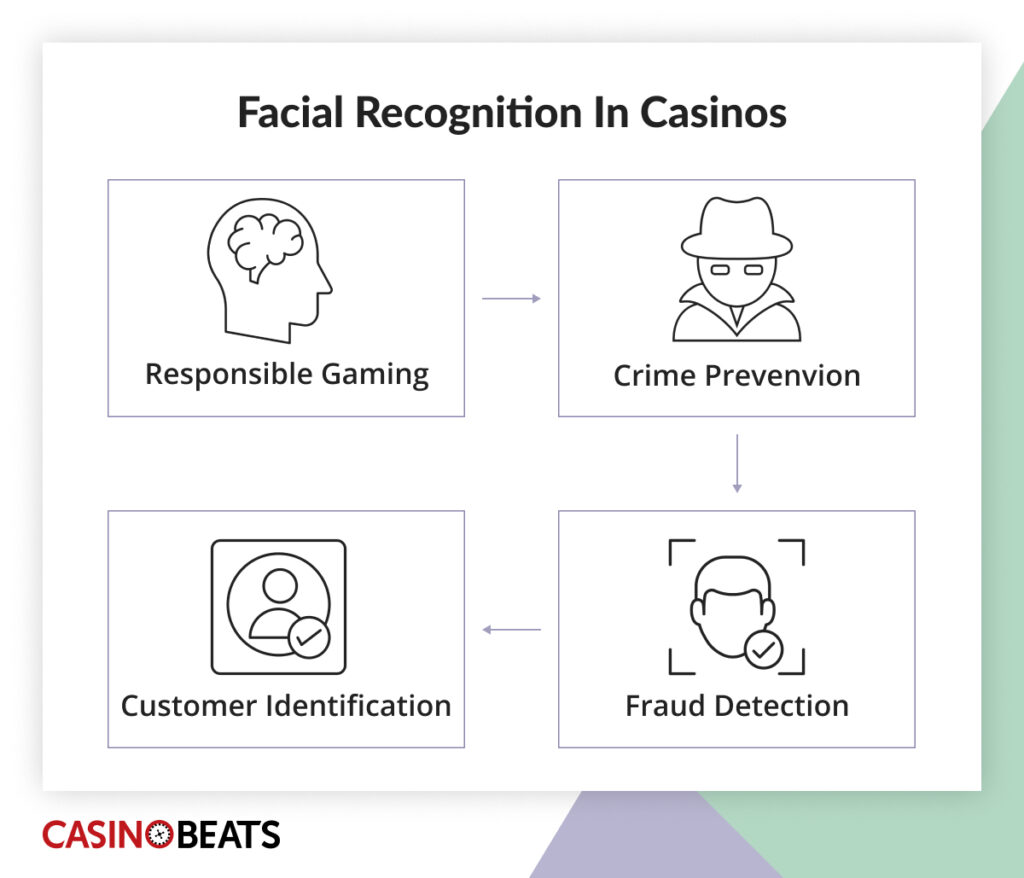
Casinos use it for a few key reasons:
- To identify players quickly, including VIPs, banned users, or self-excluded individuals.
- To prevent fraud and cheating, such as spotting known scammers or card counters.
- To support responsible gambling and ensure self-excluded players aren’t allowed to continue betting even in different locations.
With AI now powering facial recognition in casinos, more gambling venues are utilizing this tech to enhance security and protect vulnerable players. But alongside its benefits, it also raises big ethical questions.
Application in Responsible Gambling
Facial recognition is becoming one of the most proactive ways the best online casinos use to promote safer play. When used responsibly, a casino’s facial recognition system helps staff identify risks early, support vulnerable players, and ensure self-exclusion rules are actually enforced. Here’s how facial recognition promotes responsible gambling:
- Detects self-excluded players instantly: Cameras match faces against exclusion databases and alert staff the moment a banned or vulnerable player enters.
- Identifies problem gambling patterns: The system can flag behaviors like long playing hours, rapid deposits, or frequent visits, helping teams intervene sooner.
- Links behavior to intervention protocols: Once flagged, players can receive cooling-off suggestions, time-out options, or direct guidance from responsible gambling teams.
- Assesses bonus risk: By analyzing past behavior, the system can flag when specific bonuses might encourage excessive play and prevent them from being offered.
- Supports harm-minimization programs: Real-life studies from casinos in Australia, the UK, and parts of North America have demonstrated that facial recognition effectively prevents high-risk play by deterring excluded individuals from re-entering.
With high signs of gambling addiction affecting humans, facial recognition is able to strengthen player protection if used correctly.
Privacy, Consent, and Ethical Concerns
Facial recognition does help boost safe operations and responsible gambling, but it also raises significant questions about privacy. Players may feel that casino facial recognition technology is too intrusive for a place meant for fun and entertainment.
A major concern is consent. Should players have to opt in, or is it acceptable for casinos to scan faces automatically as people walk through the door or log in?
Data security is another worry. Facial scans are sensitive information, and storing them creates risks of data breaches by cybercriminals or misuse by third parties. There’s also the question of how long it is kept. And what happens if a third party, such as law enforcement or a marketing company, requests the data?
Public backlash is growing, especially from privacy advocates, who argue that the risks may outweigh the benefits.
This is why casinos must only use top-tier casino facial recognition software providers to ensure ethical surveillance is the priority, with strict rules on consent, transparency, and secure data handling.
Legal Frameworks and Global Adoption
Facial recognition in casinos is relatively new and doesn’t follow a single, universal rulebook. Different countries have their own laws, privacy standards, and attitudes toward biometric surveillance. Players who understand these differences know what to expect when they walk into or log in to a casino.
Here’s how major regions handle it:
- United Kingdom: There is no specific law guiding the usage of facial recognition. However, casinos must adhere to strict GDPR rules and the Data Protection Act (2018), which requires them to have clear justification for collecting biometric data and to store it securely.
- United States: Regulations vary by state. Some casinos in the USA use facial recognition technology voluntarily for security or responsible gambling purposes, while others avoid it due to legal uncertainty and privacy concerns. No nationwide rule exists.
- Australia: Adoption is growing rapidly in the region. In 2023, New South Wales mandated the use of facial recognition in specific locations. South Australia also mandates the use of facial recognition in venues authorised to operate 30 or more gaming machines.
- Macau: As the world’s biggest gambling hub, Macau uses advanced surveillance systems. Security concerns primarily drive usage, and casinos adhere to government guidelines for biometric monitoring.
Overall, transparency and compliance are the most critical factors, regardless of whether facial recognition is used for casino security or not.
Balancing the Future of Safety and Surveillance
The future of casino technology is heading toward more innovative and highly efficient services. There’s already the possibility of crypto casinos hastening the rise of AI dealers, and now, AI-powered systems that can personalise responsible gambling tools and spot risks earlier than ever.
But as these tools improve, so do concerns about over-surveillance and the normalisation of biometric tracking.
Some casinos may explore less intrusive alternatives, such as RFID chips or behavioral analytics, to achieve similar safety goals.
However, the big question remains: how do we protect players without crossing the line into excessive monitoring? Finding that balance will shape the next generation of responsible gambling initiatives.
Conclusion
Facial recognition is rapidly reshaping casino safety by enabling operators to identify risks, support vulnerable players, and reinforce responsible gaming systems. But while this technology can nudge the industry in a healthier direction, it isn’t a substitute for personal responsibility.
In the end, the tech can guide you, but maintaining your gambling health is always in your own hands.
FAQs
-
What is facial recognition technology in casinos?
It’s a system that scans and matches faces to a secure database, enabling casinos to identify players and monitor activity in real-time.
-
How does facial recognition improve casino security?
It helps staff instantly spot banned players, fraudulent attempts, and suspicious behaviour, allowing them to act quickly.
-
What are the benefits of using facial recognition in casinos?
Some benefits include enhanced security, streamlined player verification, improved responsible gambling tools, and more.
-
Can facial recognition prevent problem gambling?
It can help by identifying self-excluded players or detecting harmful patterns early, but it’s not a complete solution on its own.
-
What are the challenges of implementing facial recognition in casinos?
Some challenges include privacy concerns, data protection laws, and ensuring the technology stays accurate and ethical.
References
- Facial recognition technology in hotels and clubs (NSW Government)
- Facial recognition technology (Government of South Australia)