










Charlon Muscat iGaming Writer
Charlon Muscat is an iGaming writer active since 2019, with early experience at Paddy Power in Malta. He covers online casinos, sports betting, esports, sweepstakes and social casinos, creating player-focused content for leading platforms.
Read Full Bio
Nick Shepherd Contributor
Nick is an ex-casino manager turned PR specialist. He began his career as a croupier in the UK, and went on to work in Europe, Russia, Africa, Asia, and the USA. Previously he has worked...
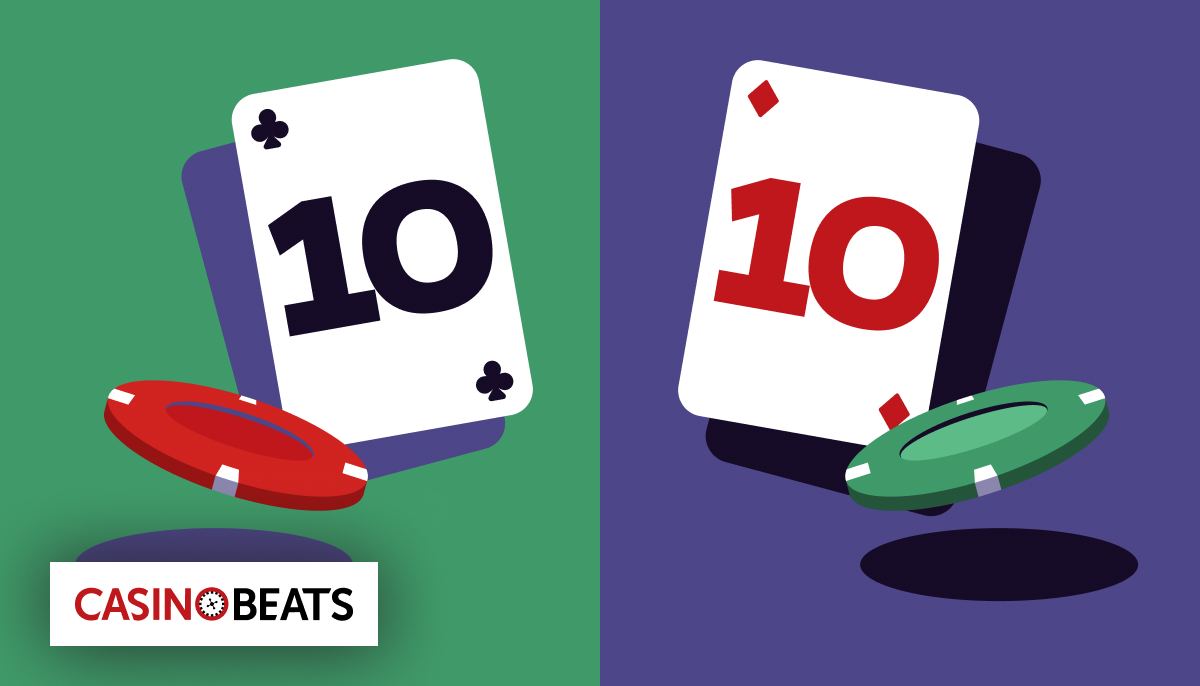
Read Full BioShould you split 10s in blackjack is about as common a debate as you’ll hear at the tables. Some view a count of twenty as practically over the line, while others like to chase the prospect of doubling up with two hands. Mathematically, the answer is clear; unless card counting changes the picture, here is when to split 10s in blackjack.
Key Beats
- Many players split 10s either to chase more action, for bigger wins, or to impress others.
- Basic strategy charts across all rulesets say – always stand on 20.
- EV for standing on 20 is about +0.70; splitting 10s drops to +0.20 to -0.25.
Why Players Consider Splitting 10s in Blackjack
More often than not, the leading reason players split 10s in blackjack is due to a mix of optimism and that urge to squeeze more out of the hand. A pair of 10s gives you 20, which is already one of the strongest blackjack hands you can hope to hold. But plenty look at it and think that by splitting, they have a chance to build two winning totals.
The truth is that any time a 10 drops first card of a hand, most of us feel the pulse rise without even realising it. The catch is that with blackjack splitting, you’re trading a near-lock 20 in exchange for two hands that look decent, but can just as easily go either way.
Here are some more reasons you might be tempted to split 10s in blackjack:
- You see the dealer showing a 5 or 6 and think it’s the perfect time to double up while they’re likely to bust.
- You’re chasing action and feel like standing on 20 doesn’t give you enough excitement for the bet you made.
- You’ve had a string of wins and feel bulletproof, so splitting looks like the next bold move.
- It’s been a while since you’ve seen an ace, and you fall into the gambler’s fallacy, of thinking one is due and will land on your split 10.
- You feel the table watching and let peer pressure push you into splitting, either to impress others or avoid looking timid when the dealer shows a weak card.
When to Split 10s in Blackjack – What the Math Says
To achieve a 99.5% RTP when playing at the online blackjack casinos stick to basic strategy. Every single chart, regardless of the ruleset, tells you the same thing about a pair of 10s – you stand!
The answer comes down to the maths behind the chart, which is based on expected value, or EV. That’s where you break down all the win, loss, and push probabilities, along with the average return for each play. For a pair of 10s, the EV works out like this (assuming a standard six-deck shoe with the dealer standing on soft 17):
| Play Decision | Expected Value (EV) | Notes |
|---|---|---|
| Stand on 20 | +0.70 | Long-term profit of approx. 70¢ per $1 bet |
| Split 10s | +0.20 to +0.25 | EV drops; depends on dealer upcard, usually lower than standing |
The only real exception you’ll hear about comes from card counters at physical tables, especially when talking about blackjack tournaments. Basic strategy works on the idea that every deal starts as if the shoe still has the same mix of cards.
Counters don’t see it that way. They’re tracking what’s already been played, so they know whether the shoe is heavier with small cards or big ones.
If loads of small cards have already been dealt, what’s left in the shoe is stacked with 10s and aces. That’s what players call a ‘high count.’ In that spot, splitting 10s can make sense because you’ve got a far better shot at turning both hands into 20 or 21, rather than just sitting on a single 20.
And there’s another edge too. A dealer holding a 6 is more likely to go bust, because those same big cards don’t do much to rescue a weak starting hand.
Should You Split 10s in Double Exposure Blackjack?
Double Exposure Blackjack is a twist on the classic game where the dealer’s two cards are both face up instead of one staying hidden. The trade-off is that ties pay the dealer, and most of the time, blackjacks only pay even money instead of the usual 3 to 2.
Blackjack splitting rules in Double Exposure are the same as you’d get on a standard table. The difference is you’re not making decisions against a face-down card. That changes the math on every single hand, including when to double down and what you’d do with a pair of 10s.
Basic strategy charts for Double Exposure Blackjack say that when the dealer is sitting on a weak total between 13 and 16, then splitting 10s in blackjack odds actually leans a bit more your way. Outside of that, it’s almost always a stand.
The one real exception is when the dealer has 20 showing. Here, you’re better off taking the bold option in the long term — hit it, and hope you pull an Ace.
Blackjack Splitting 10s Strategy – 5 Psychological Cues
Talking about rules and the best moves is one thing on paper, but it all feels different when you’re actually sitting at the table with others in a casino. Here are a few spots you might run into, and how to answer that voice in your head asking, ‘Should you split 10s in blackjack?’
Peer pressure at the table
When everyone eggs you on to split for more action, it’s easy to cave. Stick to your strategy, not the crowd.
The Gambler’s Fallacy
Feeling like an ace or face card is due can prompt you to split. Remember, though, that each hand is independent. Don’t chase imagined patterns.
Chasing bigger wins
Two hands look like double the profit opportunity. It’s the same pull you see with blackjack side bets. In reality, the math says your 20 is already the stronger play.
Overconfidence
After a streak of wins, you might feel untouchable and get reckless. The smart move is to bank some profit, then carry on with decisions rooted in the basic strategy chart. Keep in mind that gambling responsibly is what keeps you in control.
Table energy
Fast dealers, loud players, and lively chatter can lead you into mistakes. Take a breath, act on math, not atmosphere.
When (If Ever) Should You Split 10s in Blackjack?
For almost everyone, the answer is never. Holding 20 is already the kind of position that makes blackjack profitable in the first place — giving that away for the thrill of more action only chips away at your edge.
The exceptions might be where a blackjack splitting 10s strategy makes sense live in very narrow corners of the game. A skilled card counter working a shoe stacked with high cards might find the math flips for a hand or two, and tournament players chasing chip swings sometimes take the gamble for tactical reasons. But those are specialist plays that don’t carry over to your average casino session.
If you’re sitting down playing casually, the smart move is to stand on your 20 every single time. Let others talk themselves into trouble. You’re already holding the winner that most players are hoping for.
FAQs
Splitting in blackjack means separating two cards of the same rank into two new hands. You place an additional bet equal to the first, and each hand is played separately under the usual rules for hitting, standing, and doubling.
Most blackjack strategies say not to split 10s because a 20 is already one of the strongest hands possible. Splitting reduces your expected return by replacing one mighty hand with two weaker ones.
You should avoid splitting when the expected value of holding the pair is more substantial than creating two separate hands. Classic examples include 10s, face cards, and 5s.
Statistically, standing on 20 carries an expected value of about +0.70 per $1 bet in a six-deck game with the dealer standing on soft 17. That means you make about 70 cents profit for every dollar wagered in the long run. If you split 10s, the expected value drops to roughly +0.20 to +0.25, depending on the dealer’s upcard.
Yes, professional players may split 10s when card counting, knowing that the shoe is loaded with high cards, because it gives strong odds of forming 20 or 21 twice. Tournament players occasionally split tactically to chase chip swings.
Splitting in blackjack can turn a weak or risky pair into stronger opportunities. For example, breaking up two 8s moves your hand away from a hard 16 (which is one of the worst totals), and instead, you get two chances to hit 18 or better.