

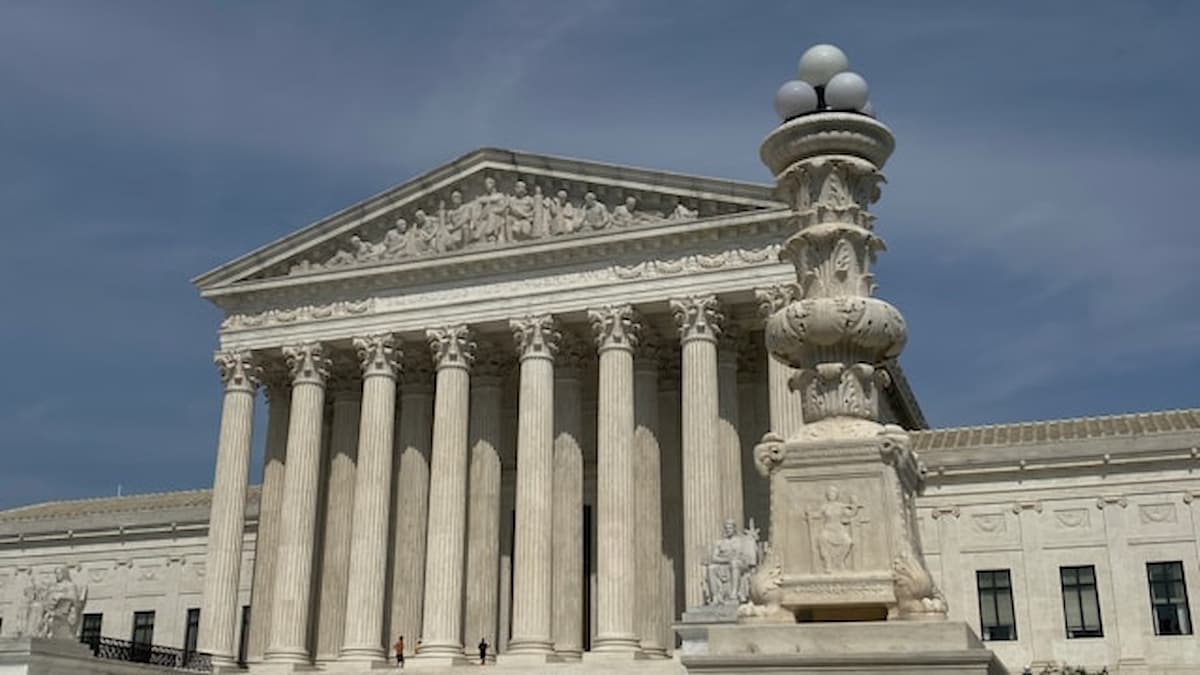
The federal government has asked the U.S. Supreme Court to turn down Maverick Gaming‘s challenge to Washington’s tribal-only sports betting model, even as it admits the lower courts misapplied the law.
In an August 2025 filing, the Department of Justice (DOJ) told the justices that the Ninth Circuit’s approach to dismissing the case was based on “an erroneous understanding of Rule 19” of the Federal Rules of Civil Procedure.
However, the government still urged the Court to dismiss Maverick’s petition, calling it “a decidedly imperfect vehicle.” The DOJ pointed to Maverick’s concessions in earlier filings, its recent Chapter 11 bankruptcy, and the unique contractual nature of tribal compacts, which courts usually require all parties to defend.
At the center of the case, Maverick Gaming v. United States (No. 24-1161), is a technical but consequential question: Can tribes effectively prevent challenges to federal approvals of gaming compacts by invoking sovereign immunity?
How the Case Reached the Supreme Court
Maverick owns 19 cardrooms in Washington. It pushed to offer sports betting after the 2018 Supreme Court decision struck down the federal ban. However, in 2020, Washington lawmakers amended laws to allow only tribes to seek compact amendments under the Indian Gaming Regulatory Act (IGRA).
Within a year, 20 tribes secured compact amendments and federal approval to offer sports betting on tribal lands. In 2022, Maverick sued the Department of the Interior. It challenged what it called an “erroneous application of the Indian Gaming Regulatory Act.”
Here’s where Rule 19 comes in. It’s a court rule that states that if someone’s rights or money are the subject of a lawsuit, they must be a party to it. If they can’t be included, the judge must decide whether the case can still proceed or must be dismissed. However, as Native American tribes are sovereign nations, they can’t be sued without their consent.
The Shoalwater Bay Tribe intervened in the Maverick lawsuit. It asserted that its sovereign interests were at stake and that it could not be joined without its consent.
A US District Court for the Western District of Washington dismissed the lawsuit in 2023. The Court of Appeals for the Ninth Circuit upheld the ruling. Both courts found the tribe “a necessary and indispensable party” under Rule 19.
That left Maverick without a path to challenge the federal approvals.
Federal Government’s Argument: Ninth Circuit Got It Wrong, But…
In its opposition brief, the DOJ argued that under the Administrative Procedure Act (APA), the relevant federal agency is usually the only necessary defendant.
As the brief put it: “the APA does not authorize relief against any party other than the agency.”
Allowing tribes to derail these cases, the DOJ warned, “undermines Congress’s judgment that a person aggrieved by final agency action should have access to judicial review.”
The department also pointed out that “no other court of appeals has endorsed” the Ninth Circuit’s approach. It cited D.C. and Tenth Circuit precedents that allowed APA suits to proceed without tribes as defendants.
Still, the DOJ urged the Court not to take Maverick’s case. Some of the reasons raised by DOJ include that Maverick “had conceded that the Tribe has a ‘legitimate interest in the legality of its gaming compact and sports betting amendment.'”
Also, Maverick has since entered “voluntary reorganization proceedings under Chapter 11 of the Bankruptcy Code”. It is challenging IGRA compacts that “resemble contracts—traditionally requiring all parties to be present in challenge.
California’s Tribal-Cardroom Battles Offer a Mirror
As Washington tribes defend their exclusivity in sports betting, California tribes are locked in parallel battles against cardrooms and other unregulated forms of gambling in the state.
Last month, California tribes suffered a setback as a judge tentatively dismissed their lawsuit, which claims that cardrooms are illegally offering house-banked games. The judge ruled that IGRA preempts those claims.
At the same time, Attorney General Rob Bonta has proposed reforms to cardroom rules. That includes a ban on third-party dealer providers (TPPPS) and a restriction on blackjack-style games. The changes have faced backlash as cardrooms say it would cost them $464 million annually.
Some local governments have also come out in support of cardrooms. They argue that the tax revenue is critical for their budgets. San Jose officials even took it a step further and reduced fees on cardrooms.
These developments demonstrate that, like in Washington, the California fights illustrate how tribes use IGRA to protect exclusivity. Meanwhile, cardrooms and commercial operators continue to press for a larger share of the gambling sector.
Shared Themes Across States
Both battles hinge on tribal sovereignty and exclusivity under IGRA:
- In Washington, Maverick argues tribes should not hold a monopoly on sports betting.
- In California, tribes argue that cardrooms are infringing on their exclusive rights to house-banked games.
In both cases, courts and lawmakers must navigate the tension between the sovereign’s rights to access judicial review and the economic interests of commercial gaming companies.
Looking Ahead
Even if the Supreme Court denies Maverick’s petition, the DOJ has acknowledged that the Ninth Circuit’s doctrine is flawed and that the Rule 19 question will persist.
California’s disputes make clear that the debate over tribal exclusivity versus cardroom expansion is not a Washington-only story. Whether through Washington’s sports betting compacts or California’s blackjack tables, the boundaries of IGRA’s protections are likely to reach the Supreme Court sooner rather than later.