

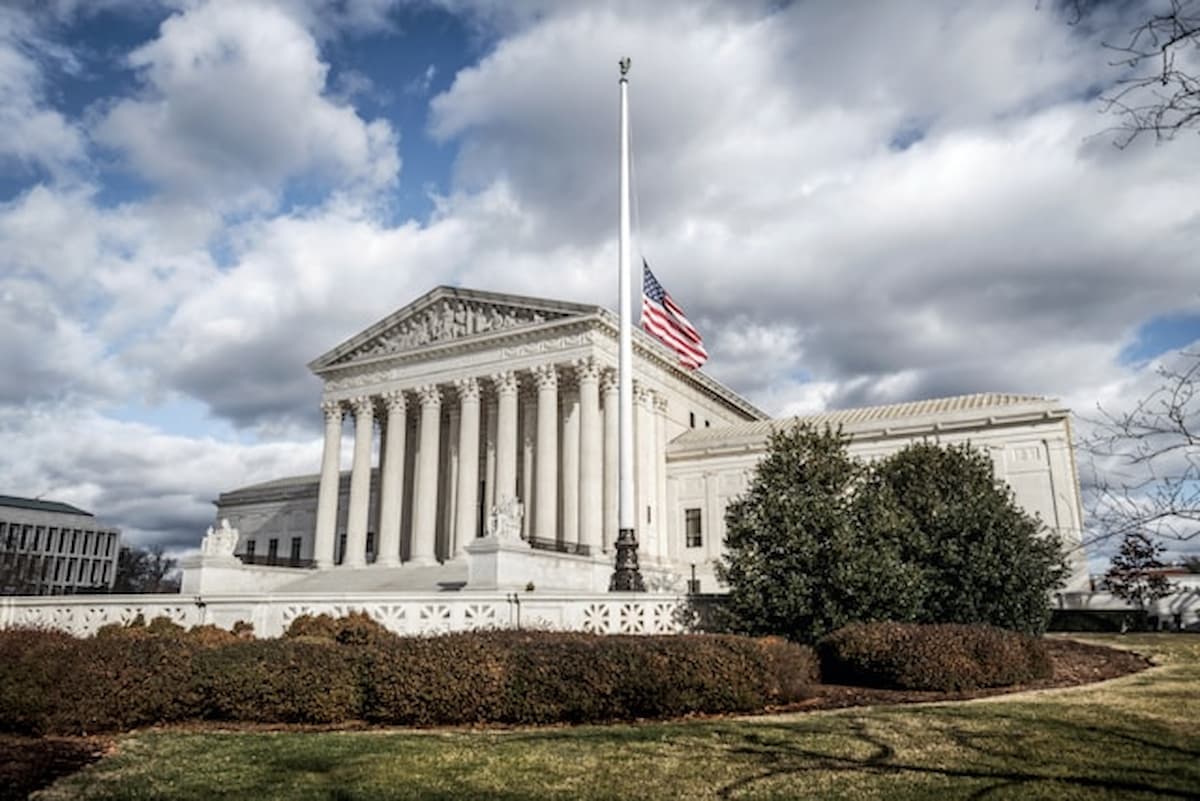
The US Supreme Court (SCOTUS) has denied Maverick Gaming‘s petition to review the lower courts’ dismissal of its challenge to the state of Washington’s tribal-exclusive sports betting model. The SCOTUS decision not to take the case leaves the state’s Indian Gaming Regulatory Act (IGRA) compacting framework in place.
Maverick, which operates card rooms in Washington, sued federal and state officials in 2022. It argued that the state’s tribal compact unlawfully gave tribes a monopoly over sports wagering. At the same time, it discriminates against non-tribal operators. The company claimed this framework violated both the Equal Protection Clause and the Tenth Amendment.
What the Denial Means
By declining review, the Supreme Court left intact the US District Court for the Western District of Washington‘s dismissal of the lawsuit in 2023 and the Court of Appeals for the Ninth Circuit‘s upholding of the ruling in 2024.
Both courts found the Shoalwater Bay Indian Tribe was a “required party” under Federal Rule of Civil Procedure 19. Still, it could not be joined due to tribal sovereign immunity. Rule 19 requires that certain parties with a strong interest in a dispute be included in a lawsuit. Because sovereign immunity shields tribes from having to appear in court, the case could not proceed.
As a result, Maverick’s claims under IGRA, the Equal Protection Clause, and the Tenth Amendment did not proceed to the merits.
The SCOTUS’s October 6 denial leaves Washington’s tribal-only sports wagering framework intact. The outcome is a significant victory for tribal sovereignty and the stability of the IGRA compact.
DOJ Urged SCOTUS Not to Take Case
About a month before the SCOTUS’s action, the US Department of Justice (DOJ) filed a brief in opposition. It asked the Court to deny review of the case, even as it acknowledged flaws in the Ninth Circuit’s reasoning.
In the filing, the DOJ wrote that the lower Court’s dismissal rested on “an erroneous understanding of Rule 19” of the Federal Rules of Civil Procedure. Still, it argued that the Maverick case is a “decidedly imperfect vehicle” for resolving the issue.
Among the DOJ’s concerns were:
- Maverick “had conceded that the Tribe has a legitimate interest in the legality of its gaming compact and sports betting amendment.”
- Maverick is currently in Chapter 11 bankruptcy, which could complicate the relief process.
- IGRA compacts resemble contracts. The DOJ noted that courts traditionally require all parties to be before the court in a dispute.
The DOJ also pointed out that “no other court of appeals has endorsed” the Ninth Circuit’s approach. It cited precedents from the D.C. and Tenth Circuits. There, the courts allowed APA (Administrative Procedure Act) suits to proceed without the presence of tribal defendants.
Separate Development: Maverick’s Bankruptcy
Separately from the lawsuit, Maverick filed for voluntary Chapter 11 bankruptcy protection on July 14 in the US Bankruptcy Court for the Southern District of Texas. Maverick said the goal of the bankruptcy was to “right-size” its operations and preserve value for all stakeholders.
Through the process, the company stated it intends to keep all properties open and continue normal operations. In August, Maverick secured debtor-in-possession financing. That is a special court-approved loan that allows bankrupt companies to access new funds to stay afloat while undergoing reorganization.
The Court also authorized Maverick to market and auction some of its properties. In late September, an entity managed by Maverick co-founder Eric Persson won an auction for several Washington card rooms.
Some observers have pointed out Maverick’s aggressive, debt-fueled expansion strategy over the past years as a key factor that pushed the company into bankruptcy.
Together, the Supreme Court defeat and the Chapter 11 filing mark a turning point for Maverick — once one of the state’s most aggressive expansionists — leaving its future role in Washington’s gaming market uncertain.