

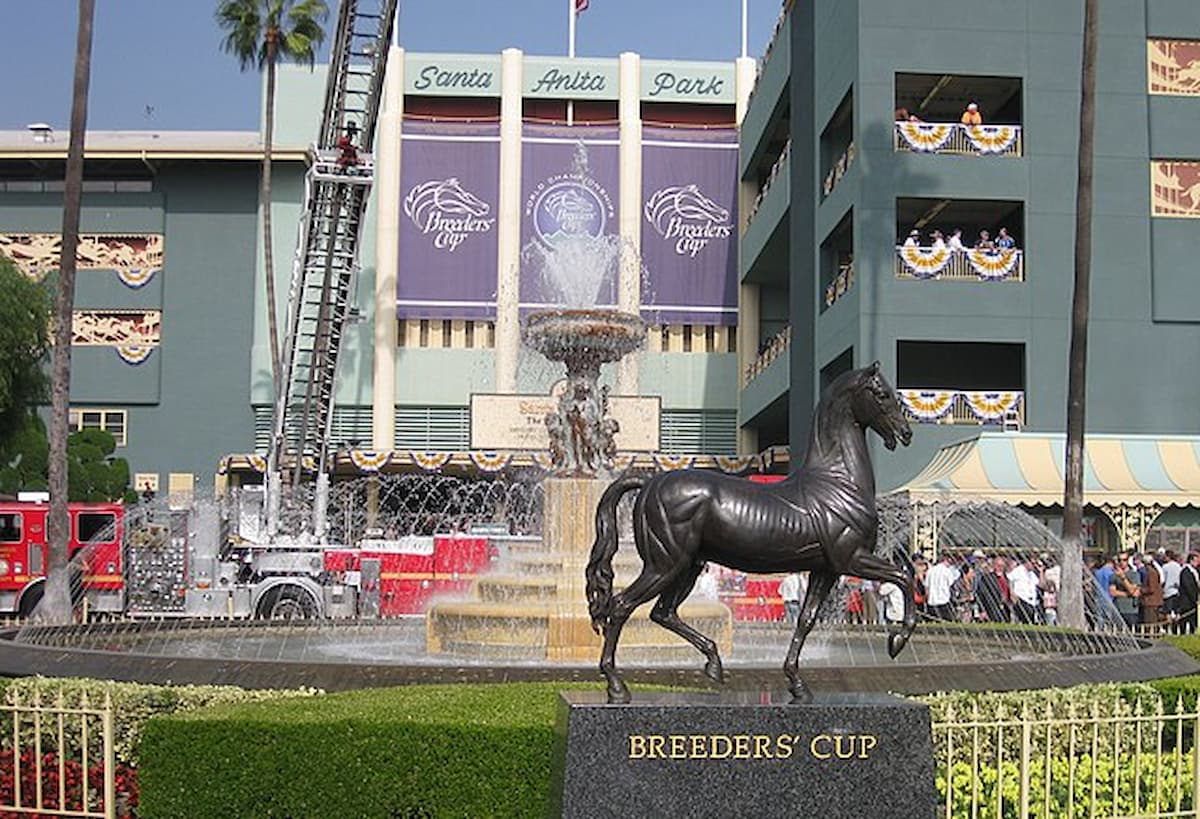
Santa Anita Park racecourse has filed a lawsuit against California Attorney General Rob Bonta and the Department of Justice (DOJ), contesting the seizure of gambling machines over the weekend.
The group behind the track, the Los Angeles Turf Club, filed the lawsuit, opposing a raid on the “historic Santa Anita Park, one of the world’s preeminent racetracks, without warning or a warrant on January 17, 2026.”
In the raid, 15 officers from the DOJ and Arcadia Police Department seized 26 machines deemed to violate California’s gambling laws. The Racing on Demand machines offer visitors to the track the chance to wager on concluded races, similar to Historical Horse Racing.
Primarily, the machines facilitate 3X3 wagering on past races, which involves picking the horses finishing first, second, and third in three different races. The bet type was approved by the California Horse Racing Board (CHRB) in 2024 for live races, rather than for concluded races.
Lawsuit Targets ‘Warrantless Seizure’
The lawsuit claims authorities have failed to “provide any legal basis or explanation for (the machines’) warrantless seizure.” It also says that the CHRB was well aware that the track planned to install the machines, but did not raise any objections.
It adds, “Neither the Attorney General’s office, nor the CHRB, ever disputed [the track’s] written legal analysis or stated that the [track] did not have the legal right to offer the 3X3 wager on concluded races.”
Scott Daruty, senior vice president of the Stronach Group, which owns Santa Anita, says he was in frequent communication with the CHRB and wrote a letter to Scott Chaney, the organization’s executive director, when the machines were installed.
In a statement, the CHRB says it was not aware in advance that the machines would be installed this weekend. It stated, “Like everyone else, we had heard rumors, but the CHRB was unaware of this actual move.”
Track: Machines Simulate Live Racing, Not Games of Chance
The lawsuit argues that the games are akin to normal horse racing bets. Patrons can analyze information to make informed selections or place wagers based on their favorite numbers or lucky horse names. As with live racing, it says, “The 3 X 3 wager is in no way an unlawful game of chance.”
The track claims that the machines pool bets and pay out selections in the same way as pari-mutuel wagering, which is legal. The completed races have their details removed, but patrons can still wager as if it were a live race.
There have been accusations that Historical Horse Racing is akin to playing a slot machine, with the results of past races determining the outcome of spins. Santa Anita disputes this claim, arguing that the Racing on Demand machines are the same as live racing.
The DOJ has said it will destroy the machines within 30 days, but the complaint aims to prevent this. A similar lawsuit has been filed in Colorado, arguing that state authorities are labelling games of skill as games of chance and unlawfully seizing machines.
Tribal Groups Happy About Racing Industry’s Struggle
Tribal groups have been vocal opponents of these kinds of machines, claiming they are slot machines in disguise and violate tribal exclusivity to offer casino-style games in California.
Santa Anita wants to expand the gambling options for visitors to boost a struggling industry. Compared to other states, California racing purses are lower, with no supplemental income from casino-style games.
The machines could therefore give the industry a much-needed boost, but Victor Rocha, the conference chair of the Indian Gaming Association, has no sympathy for the struggling industry.
He stated, “The whole argument that [Historical Horse Racing machines] will save horse racing is false. The only thing that can save horse racing is the second coming. Can anything save horse racing? The answer is no.”
Trade Unions Support Santa Anita
Meanwhile, California trade unions have come out in support of the racetrack. The LA Times reported that the Service Employees International Union, the Teamsters, California State Pipe Trades Council, and the State Association of Electrical Workers sent a letter to AG Bonta, criticizing the seizure of the machines as “not only misguided but reckless.”
The letter goes on to state, “By removing these terminals, your agency has introduced unnecessary uncertainty into an industry already confronting significant economic challenges. This decision undermines innovation, discourages investment and jeopardizes the more than $1.7 billion in annual economic impact that California horse racing generates for local communities, workers and the state as a whole.”
Bonta has been actively opposing alternative forms of gambling in California. He issued a formal opinion last year declaring DFS illegal in the state. The move was opposed by operators, who have reluctantly altered the games offered in the state.
Additionally, he proposed restrictions on cardrooms in California, which sparked demonstrations. Cardroom employees, customers, city officials, and union members gathered outside his Sacramento office, campaigning against the changes, which they claim will lead to thousands of lost jobs and devastate local economies.
Undeterred in his fight against non-tribal gambling, Bonta is also reportedly preparing action against prediction markets. As in the case with the Santa Anita dispute, Bonta has been called to action by tribal leaders, who see the platforms as a dangerous threat to tribal sovereignty.