









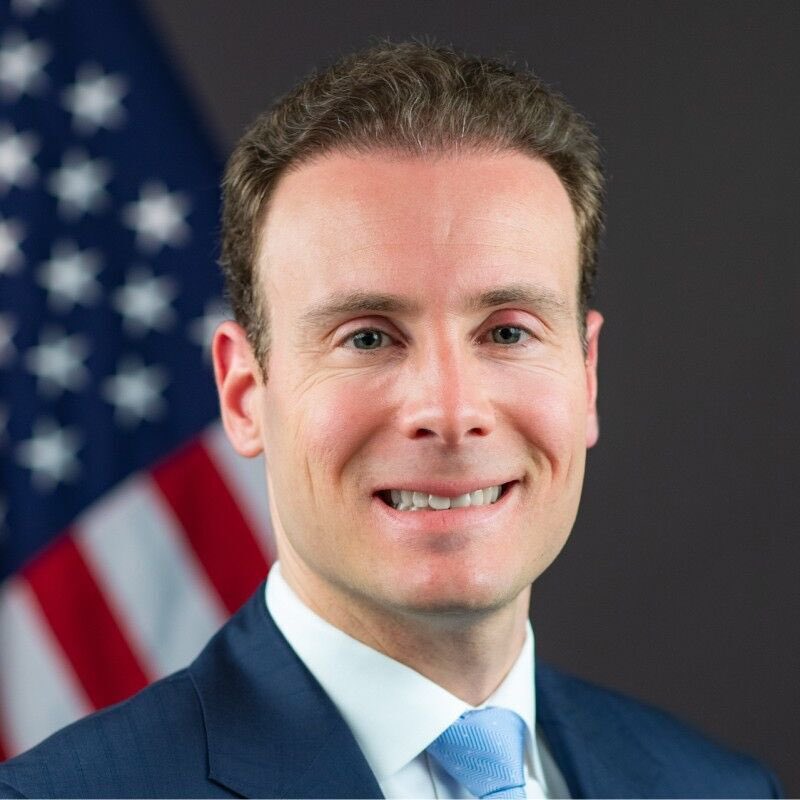

Lynnae Williams Journalist
Lynnae is a journalist covering the intersection of technology, culture, and gambling. She has more than five years of experience as a writer and editor, with bylines at SlashGear and MakeUseOf. On the iGaming side,...
Read Full BioCommodity Futures Trading Commission (CFTC) Chairman Michael Selig has dropped any pretenses of being a neutral party in the battle over the future of prediction markets and who gets to regulate them.
In an opinion piece in the Wall Street Journal on Monday, Selig defended prediction markets, arguing that state regulators are overstepping their authority by intervening in a market that Congress has placed under federal oversight.
Selig characterized recent state enforcement actions against prediction market platforms as an attack on the CFTC’s exclusive jurisdiction over commodity derivatives, including event contracts.
“The most common allegation is that these contracts are a form of gambling and therefore subject to state laws. The CFTC will no longer sit idly by while overzealous state governments undermine the agency’s exclusive jurisdiction over these markets by seeking to establish statewide prohibitions on these exciting products.”
In a post on X, sports betting and gaming attorney Daniel Wallach pointed out that Selig’s opinion piece avoids any direct reference to sports-related contracts, even though they’re the primary target of state regulators and lawmakers. Instead, Selig bases his argument on a broad “onions and movie box office” theory of jurisdiction.
As state challenges related to sports event contracts continue to work their way through the courts, the CFTC may be in for a wake-up call about the limits of its “exclusive” authority.
Selig’s op-ed is part of a recent media blitz by the chairman, who has increasingly taken a more public stance in favor of prediction markets after saying “I would look to the courts” on the question of whether sports event contracts constitute gambling during his confirmation hearing last November.
Selig Defends CFTC Authority in Bloomberg Interview
Selig previewed the arguments he made in the Wall Street Journal op-ed during an interview with Bloomberg on February 12, framing prediction markets as financial instruments rather than wagers and emphasizing the CFTC’s role as a market-integrity regulator.
“We don’t merit regulate,” Selig said. “We don’t tell people what they should trade. We create guardrails to ensure those markets have integrity.”
During his conversation with Bloomberg’s Joe Weisenthal and Tracy Alloway, Selig addressed criticism that sports event contracts are nothing more than gambling. He argued that there is a fundamental difference between sportsbooks and regulated exchanges.
“In our markets, you have an exchange and a clearinghouse where there is a buyer for every seller,” he said. “It’s a much more robust scheme with stringent requirements that casinos don’t have.”
Selig also rejected the idea that prediction markets fall outside the definition of a commodity, noting that the term has been interpreted broadly for decades. “The definition of a ‘commodity’ is extraordinarily broad,” he said, adding that most things qualify unless explicitly carved out by statute.
Shift From ‘Let The Courts Decide’ Draws Scrutiny
Selig’s increasingly assertive posture hasn’t gone unnoticed, especially because his most recent comments appear to conflict with statements he made under oath during his confirmation hearing when asked about betting on sports outcomes. Some lawmakers say Selig is backtracking on his earlier pledge to “look to the courts” on the issue.
A group of more than 20 Democratic senators took their concerns directly to Selig in a February 13 letter addressed to the Chairman. The senators, led by Adam Schiff (D-CA) and Catherine Cortez Masto (D-NV), urged the CFTC to stay out of battles over prediction markets. They described his recent actions as a “stark reversal of prior statements before Congress.”
The senators based their argument on the Commodity Exchange Act’s prohibition on contracts involving “gaming (including sports), war, terrorism, assassination, or other enumerated activities,” which they say “may not be listed, traded, or cleared.”