


Polymarket is preparing to launch parlays on its platform as it expands in the US. The multileg wagers have become increasingly popular at Kalshi, driving recent increases in trading volume.
The bets offer users the hope of large payouts, but in reality, they are a great money spinner for bookmakers. As much as 70% of all sportsbook profits come from parlays.
In its filing with the Commodity Futures Trading Commission (CFTC), Polymarket refrained from calling the contracts parlays, instead referring to them as Combinatoric Athletic Outcome Contracts.
Polymarket U.S. files with the CFTC about implementing parlays (which it calls "Combinatoric Athletic Outcome Contracts") pic.twitter.com/IwBFJjJyaZ
— Dan Bernstein (@dan_bernstein_) May 20, 2026
Parlays Driving Profits For Kalshi
Kalshi first self-certified parlays in September last year and has gradually expanded the markets it allows users to combine.
They are increasingly becoming a key driver of trading volume on the platform. Dustin Gouker reported that Kalshi’s volume grew to $14.8 billion in April, up from $13 billion in March. About $1.2 billion of the $1.8 billion difference from March to April was parlays.
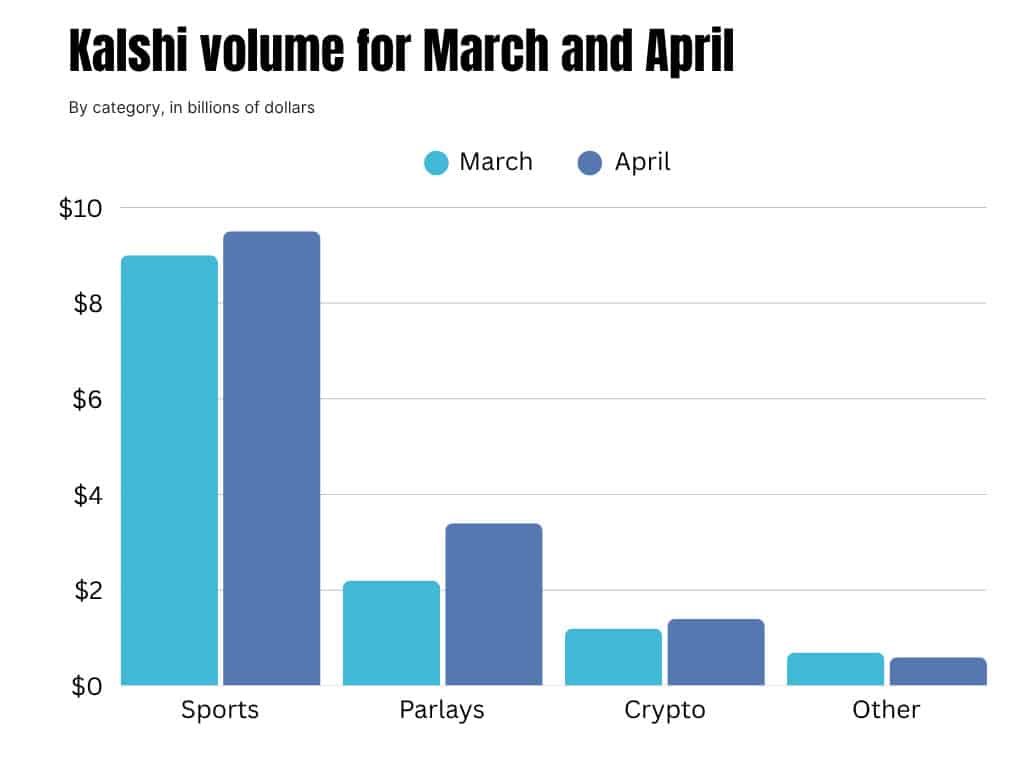
Sportico reported that Kalshi users have lost more than $117 million on parlays this year from $800 million wagered. Of this, Kalshi has retained $35 million in fees. In October, shortly after Kalshi introduced parlays, they accounted for only 1.8% of total volume. Last month, that rose to a high of 22%.
On the other side of the bets are market makers, such as Susquehanna, which respond to Request For Quotes (RFQs). In its API provided to these companies, which effectively act as the house in the same way as sportsbooks, Kalshi provides user identifying information.
DraftKings co-founder Matt Kalish said this enables Kalshi to effectively limit users in the same way as sportsbooks restrict winning bettors. Market makers would refrain from accepting requests from users who regularly profit.
Kalish claims the company is hypocritical, as it continues to claim it is not a betting platform while restricting users and relying on parlays to drive revenue. It has also signed up to the National Council on Problem Gambling (NCPG).
Polymarket Volume In US Spiking As App Goes Live
Polymarket has been slow to relaunch in the US following CFTC approval last year. The platform was expected to be available nationwide in November last year, but it continued to keep most users on a waiting list.
That is changing now, however. Its daily volume in sports markets from US residents increased to over $22 million this month, up from just a few million in March.
Kalshi remains dominant at around $134 million in daily sports trading, but the launch of parlays may help Polymarket bridge that gap.
DraftKings Also Launches Parlays On Prediction Market Platform
DraftKings also launched parlays on its prediction market platform earlier this month. CFO Alan Ellingson said he is confident the company will attract users due to its pricing and trading expertise.
“There’s a long way for predictions to go,” Ellingson said. “I’m optimistic. We think it’s going to be a fantastic growth story.”
DraftKings has also indicated that it would introduce microbets to prediction markets. Co-founder Paul Liberman said he expects further expansion of the range of markets on offer.
“I think that in sports, we’re gonna see faster, more dynamic micro markets appear that don’t exist yet. We’ve seen that already with RFQs and parlays,” Liberman stated. “I think you’re gonna continue to see innovation there in terms of how dynamic the prediction markets are gonna be able to be on sports.”
The wagers, such as on the next pitch in baseball or the next play in football, have been criticized as encouraging problem gambling.
DraftKings is facing a lawsuit from the Public Health Advocacy Institute (PHAI), which alleges the company “hijacks customers’ brains and causes catastrophic harm” by pushing microbets on users.