


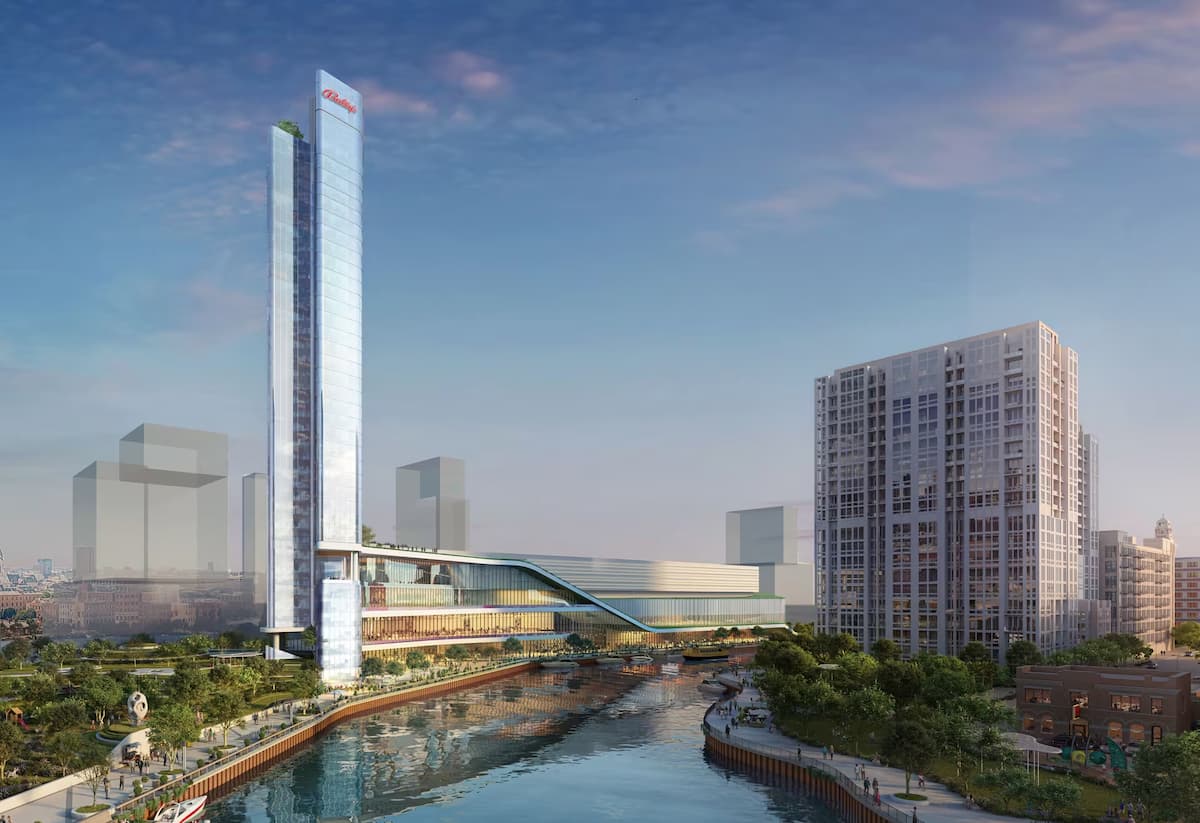
Bally’s is sounding the alarm over a City Council proposal to legalize video gaming terminals (VGTs) in Chicago, warning that the move would jeopardize its casino project, resulting in annual losses of $74 million and potentially up to 1,050 jobs.
Bally’s: ‘Critical Elements’ at Risk
Elizabeth Suever, vice president of government relations for Bally’s, warned that the proposal to lift the ban on VGTs would require the company and the city to renegotiate “critical elements” of its host-community agreement.
That includes the suspension of a guaranteed $4 million annual payment. As quoted by the Chicago Sun-Times, Suever said:
“We estimate that the legalization of VGTs in Chicago could result in a yearly total tax loss of $260 million from Bally’s Chicago Casino. Of that, the city of Chicago stands to lose roughly $70 million in tax revenue yearly — not including the $4 million [annual payment].”
The company emphasized that it’s “committed to creating and maintaining 3,000 jobs” at its permanent casino. However, it cited data from other cities that have legalized VGTs, which shows a 37% reduction in revenue for casinos there. Thus, legalizing VGTs in Chicago could potentially threaten 750 to 1,050 jobs at the $1.7 billion River West resort, which is currently under construction.
The warning comes just months after Bally’s closed a $250 million IPO tied to the Chicago casino, pitching it as a revenue lifeline for city pensions.
Council Pushback
Some aldermen were skeptical of Bally’s warning. Ald. Anthony Beale (9th Ward), sponsor of the ordinance, has framed Bally’s threat as overblown.
He claims that Chicago already has over 3,000 illegal machines. These machines provide no tax benefit to the city, which faces a $1.15 billion budget shortfall. Previously, Beale has provided estimates that legalizing VGTs could generate between $60 million and $100 million annually for Chicago.
“We have over 3,000 illegal machines in the city of Chicago that we’re not getting anything from — not a dime… We’re allowing these machines to operate illegally, and our great city is not doing anything to shut them down. … We can’t have it both ways,” said Beale during the October 9 council meeting.
Other aldermen echoed doubts about Bally’s numbers. Ald. Brendan Reilly (42nd), a longtime opponent of video gambling and a critic of Bally’s, said its projections lack credibility.
“After Bally’s rosy and overinflated revenue projections for their temporary casino in River North fell embarrassingly and predictably short by millions, it’s hard to take any of their projections seriously,” Reilly told the Sun-Times.
Meanwhile, Mayor Brandon Johnson has opposed the VGT ordinance. He argues the city must ensure any change “maximizes the full benefit” for Chicago and doesn’t cannibalize casino tax streams meant for pensions.
What’s Proposed
Illinois legalized VGTs with the passage of the Video Gaming Act of 2012. The Act allowed each municipality to decide whether to allow the machines, with Chicago being the notable holdout.
Beale’s ordinance would allow up to six VGTs in over 3,500 “public places of amusement” that serve alcohol. These include restaurants, hotels, theaters, and bowling alleys.
Last month, the License Committee advanced the measure 8–6. Since the vote, Beale has promised to add 700 bars and taverns via a floor amendment. He argues VGTs would give these businesses a lifeline.
The City Council did not vote on the matter during its October 9 meeting amid the pushback.
The mayor’s office has cautioned that VGTs could yield $10 million per year at best, citing a consulting study. It warns that the machines may even cost the city money due to casino cannibalization. That is because casino slots are taxed at a rate “nearly four times higher” than VGTs.
The Bigger Casino Picture
The fight over video gambling comes at a pivotal moment for Bally’s in Chicago. The company is building its permanent resort, which is mandated to open by September 2026. However, it’s facing doubts about whether it will meet that deadline.
Meanwhile, Bally’s opened a temporary casino at Medinah Temple in 2023. The temporary site has underperformed and failed to meet Bally’s and the city’s estimates for generating tax dollars.
Bally’s sold the $1.7 billion project to city leaders as a fiscal cornerstone. It promised thousands of jobs and hundreds of millions in tax revenue earmarked for pensions.
The VGT battle now threatens to reopen the terms of Bally’s agreement with the city, potentially rattling investors and casting new uncertainty over the long-awaited Chicago casino.
For Chicago, the debate boils down to a risky wager: expand gambling citywide for a potential quick infusion of cash, or protect the exclusivity of a flagship casino deal already in place.