

Mention Las Vegas to just about anyone, and images of the Strip with its bright lights, casinos, and unmatched energy likely come to mind. But beneath the shine, Las Vegas isn’t having its best moment. Although it might not be obvious to the average visitor, the city has been quietly battling a slowdown.
According to data from CoStar shared with CasinoBeats, Las Vegas has recorded seven straight months of year-over-year declines in hotel occupancy compared to 2024 and is on track for an eighth consecutive month, based on preliminary September figures. Average daily rates (in other words, how much a hotel earns per room) were also down during six of those months.
Earlier this month, MGM Resorts International CEO Bill Hornbuckle said Las Vegas is “not broken in any way, shape, or form” despite tourism declines, and while that may be true, the numbers have been cause for concern.
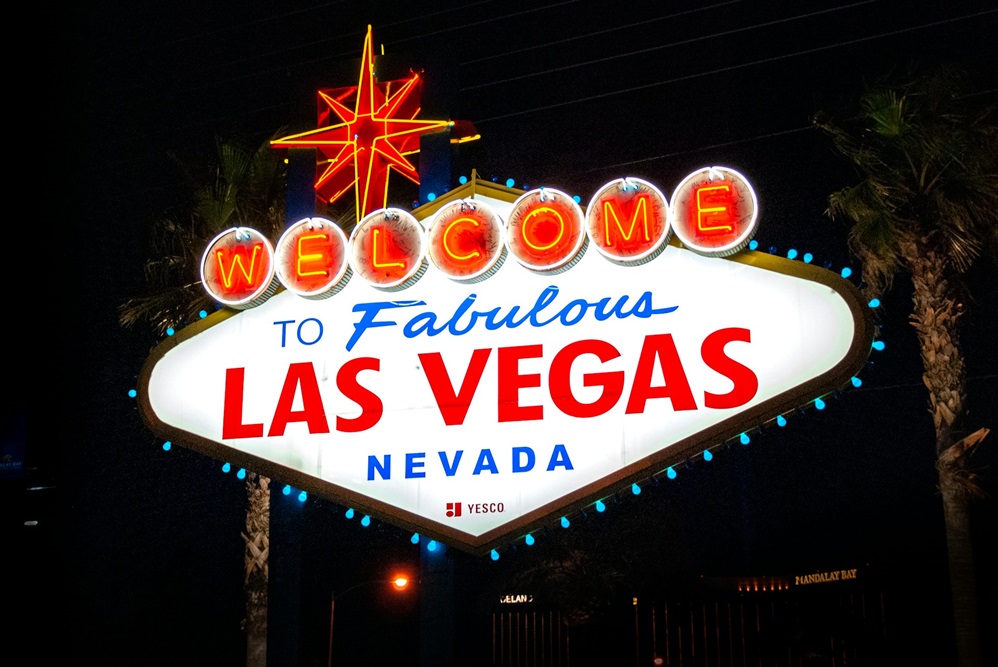
At this point, there’s no debating the fact that the market is cooling; the question has become what to do about it. Enter the “Welcome to Fabulous Las Vegas” campaign, which the city is pinning its hopes on to reignite the magic that once defined its brand.
With a big helping of nostalgia and a sprinkle of old-school showmanship, Vegas is betting that emotion can do what other strategies couldn’t: bring visitors back.
Behind the Neon Lights, Numbers are Cooling
Vegas wants to feel fabulous again, and the new campaign aims to remind us of what makes it so special. But if the latest data is any indication, the city has its work cut out for it.
CoStar’s figures show that declines in occupancy and room rates have persisted month after month since early 2025, trending below last year’s levels. June of this year saw the sharpest drop, when occupancy fell 14.5 % compared to the same month a year earlier. Preliminary data for September indicates the downward trend has continued. However, CoStar notes the timing of Rosh Hashanah may have affected those numbers.
Room rates haven’t provided much relief, as average daily rates have fallen six of the past eight months, with brief upticks in March (+3.1%) and April (+10.6%). For September, CoStar’s early numbers show average daily rates have gone down 5.3% year over year, while occupancy dipped 7.2%.
In contrast, national numbers look very different, suggesting these declines are primarily a Vegas phenomenon. The United States as a whole has posted seven straight months of average daily rates growth with stable occupancy, showing that Vegas’ slump isn’t part of a larger downturn.
We asked Andrew Woods, Director of the Center for Business and Economic Research at the University of Nevada, Las Vegas, whether the recent tourism slowdown reflects a broader economic cooling or if it’s more cyclical.
He told CasinoBeats that the slowdown appears to be driven by two factors: “One is outside forces beyond the control of the leisure and hospitality industry, such as the fallout of the rhetoric due to the trade war, which has depressed demand from Canadian tourists to the United States. In Las Vegas, roughly 12% of tourism is international, with the largest share from Canada, which was down 19.1% year-to-date in July, according to statistics from Harry Reid International Airport.”
Woods added that domestic spending habits are also changing: “The second factor driving the lower visitations to Las Vegas is the domestic traveler, especially the more budget-conscious type. We know they are still traveling, but they are more thrifty with their choice of where to travel and how they are spending their discretionary income. Las Vegas, maybe because of our own pricing strategies or how we’ve communicated our pricing strategies to consumers, is perceived to be less affordable compared to other popular tourist destinations like Orlando or Honolulu.”
Against this backdrop, Las Vegas’ new campaign feels less like nostalgia for nostalgia’s sake and more like a calculated attempt to reset the narrative. The entertainment capital is ready to get back to the basics, sell the public on what brought them to the desert city year after year, and remind them that Vegas is unlike any other place in the world. They’re hoping that being “fabulous” will do just that.
Las Vegas is Selling a Feeling
The “Welcome to Fabulous Las Vegas” campaign is at the center of Las Vegas’ drive to get tourists to return to the city. The campaign leans hard on emotion. The goal seems to be to get people to remember the city’s glory days, when Vegas was considered the ultimate escape.
This isn’t the city’s first attempt at rebranding itself. Back in 2003, the city launched the What Happens Here, Stays Here campaign. The slogan became better known as “What Happens in Vegas, Stays in Vegas” and, seemingly overnight, entered the pop culture lexicon, defining the city for a generation.
Now the city looks to “Welcome to Fabulous Las Vegas” to do the same thing. Instead of selling Vegas as a destination where anything goes, this campaign reminds us of the city’s golden age: when the lights were bright, the shows were grand, and the city’s name was synonymous with glamour, entertainment, and just enough mischief to earn it the name “Sin City.”
Whether the strategy will work remains to be seen, but experts say the emotional approach makes sense.
Amanda Belarmino, Ph.D., Associate Professor of Hospitality at the University of Nevada, Las Vegas, told CasinoBeats: “Nostalgia and personal connection are some of the most powerful lures in tourism. We find that consumers are less price-sensitive when purchasing travel that is related to nostalgia or personal interests. For example, this year England held two major literary tourism festivals related to the anniversaries of the births of Jane Austen and Agatha Christie. These festivals were very well attended, and many of the tourists commented that these were once-in-a-lifetime trips. Marketing for these events can be very effective; however, keep in mind that tourists who are inspired by nostalgia might not be repeat guests if the trip is aspirational, meaning that it is a long-haul flight and perhaps a once-in-a-lifetime excursion.”
The Las Vegas Convention and Visitors Authority (LVCVA) is banking on that very emotional pull to reconnect travelers with the city’s identity. As part of the broader push, the LVCVA spearheaded the “Fabulous 5-Day” sale in September, the first-ever event of its kind. The city-wide sale offered discounts on resorts, restaurants, and entertainment, all in an effort to remind visitors that Las Vegas still delivers unforgettable experiences at every price point.
Based on the numbers LVCVA shared with CasinoBeats, the sale was largely a success, with the campaign driving “7.5 times more booking interest than Black Friday and Cyber Monday combined, which are two of the biggest online shopping days of the year.”
In a statement to CasinoBeats, LVCVA Chief Marketing Officer Kate Wik said: “We are thrilled with the success of The Fabulous 5-Day Sale. Travelers didn’t just visit the webpage; they stayed and engaged, underscoring both the strong demand for deals and the unmatched allure of Las Vegas. Our goal was twofold: to highlight the extraordinary value that has always existed here and to generate immediate, meaningful leads for our partners. Our destination partners reaffirmed that commitment through the quality and depth of their offers, and together we achieved both objectives.”
By the Numbers: The Fabulous 5-Day Sale
– Website traffic on VisitLasVegas.com increased 4x the normal weekly average.
– Booking referrals were 120x higher than a typical week.
– Time spent on the site was up 5x.
– The campaign generated 7.5x more booking interest than Black Friday and Cyber
Monday combined.
Source: Las Vegas Convention and Visitors Authority (LVCVA)
If these results are any indication of what’s to come, emotion can drive action. However, it’s still too soon to know how much the campaign will move the needle in the long run. The LVCVA told CasinoBeats it plans to work with its property partners in the coming weeks to measure the impact the sale had on their businesses, saying: “They own the conversion; they own the customer. We’ll take feedback and insight from them on any potential future effort.”
As Belarmino explained, nostalgia-driven travel can be aspirational; people may visit once for the memory, but not necessarily to make it a tradition. The 5-day sale shows that Vegas can still stir emotion, but turning that into repeat visits will be an entirely different challenge.
How Tech is Redefining the Vegas Experience
While nostalgia is front and center in the “Welcome to Fabulous Las Vegas” campaign, hotels are increasingly turning to tech to level up the guest experience. It may not be the first thing visitors notice when they step onto the Strip, but behind the scenes, a quiet tech revolution is reshaping how the city delivers the experiences that made it famous.
These innovations aren’t about flash; they’re about making operations faster, safer, and more responsive to guests’ changing expectations and needs.
CasinoBeats spoke with Relay CEO Chris Chuang about the tech changes underway in Vegas and how his company’s AI-powered smart radio and cloud communications platform are helping casino staff coordinate guest service and safety alerts in real time.
Chuang likened the shift from old-school hospitality technology to modern systems to “moving from the flip phone experience to the iPhone. It’s an upgrade guests might not see, but they’ll definitely feel.” Relay’s platform is already being used at Vegas properties, including Fontainebleau and The Plaza, where it connects hotel teams instantly, allowing them to address guest requests and safety concerns.
Tech changes like these are happening across the city, with the integration of AI, automation, and data analytics picking up pace. When Resorts World Las Vegas rolled out RFID-enabled chips and digital wallet payments in 2021, it was considered an early adopter of cashless table gaming.
Fast forward four years, and electronic table games that operate without dealers were center stage at this year’s Global Gaming Expo (G2E), promising a future where the casino floor could run itself, making humans a supporting act in their own show.
Not to be outdone, the Otonomus Hotel, the world’s first AI-powered hotel, opened in July. The hotel is equipped with features like digital check-in and an AI concierge. Guests even get a digital avatar that’s meant to be their digital twin and anticipate their every need for the most personalized stay possible.
This technological creep has raised fears that longtime Vegas employees could one day be sidelined as automation makes parts of the city’s workforce obsolete. The hope, of course, is that these advances, from digital twins to dealerless tables, will help make Las Vegas feel “fabulous” again, especially to younger visitors who expect a tech-forward experience.
Can Las Vegas Reinvent Itself?
Even with the recent dip in tourism, it’s too soon to call what’s happening in Vegas a crisis. The city’s fundamentals are still solid, particularly when it comes to gaming, which is why, in August, Circa Resort & Casino CEO Derek Stevens said: “not everything is terrible” in the city.
According to the most recent numbers from the Nevada Gaming Control Board, casinos in Clark County, which includes Las Vegas, generated over $1.03 billion in gross gaming revenue in August 2025, a 5.3% increase from August 2024. This shows that, even as visitation softens, the city’s core economic engine appears strong.
Based on those figures, the trend over the past few months may reflect a shift in behavior, not necessarily a slump. As Woods explained: “Event-driven and convention travel is where the growth is and higher margins for companies. It’s been a good sign that those segments for Las Vegas appear to be holding up despite weaker headline numbers.”
Woods noted that investments made during and after the pandemic in live entertainment, professional sports, and new experiential concepts like the Sphere and Area15 are signs of where the city is heading. Traditional leisure travel is still part of the mix, “but it’s not where growth is coming from, at least for the physical properties,” he added.
He went on to say: “For example, gaming revenue for Clark County (which includes Las Vegas) in August was reported to have once again reached over a billion dollars for the 11th straight month. If you adjust for inflation in 2017 dollars (same as BEA), it’s roughly the same as it was prior to the pandemic ($848 vs $822 billion) and below where it was before the Great Recession ($1,028 billion).”
This might tell us that Vegas is doing what it has always done: finding a way to reinvent itself. From mob playground to family destination to entertainment capital, the city is now trying to balance the magic of memory with the expectations of modern travelers.
Ultimately, the outcome of the “Welcome to Fabulous Las Vegas” campaign will tell us if the city still knows how to sell a feeling. However, the months of declining hotel occupancy suggest that Vegas may need more than just nostalgia to bring visitors back for good.
Las Vegas has always been a city that bets on reinvention. Whether this nostalgic gamble pays off or whether travelers are ready for a new kind of Vegas altogether is an open question.