

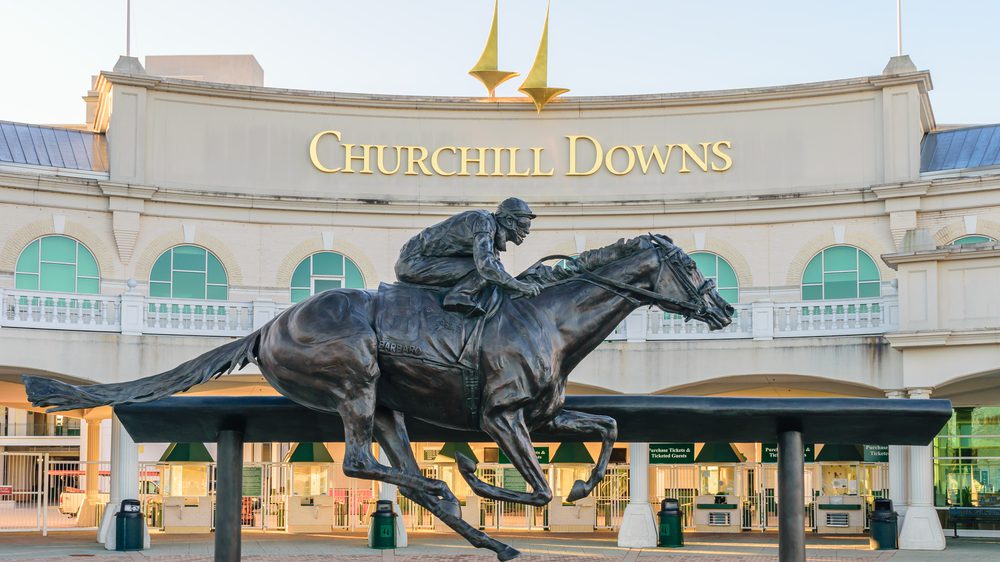
The 152nd running of the legendary Kentucky Derby is facing an unprecedented regulatory hurdle that risks cutting off the “Run for the Roses” from the global gambling market. That’s because a dispute is brewing between Churchill Downs Inc. and a federally overseen racing authority, which threatens to ripple beyond the track and into how and where fans can bet on the Kentucky Derby this year.
The conflict centers on a claim by the Horseracing Integrity and Safety Authority (HISA), which says Churchill Downs owes it $2.4 million in unpaid fees. If the two parties are unable to resolve the conflict, HISA could ask the Federal Trade Commission (FTC) to block the simulcast for Derby Day. It’s a move that could affect wagering on other races at Churchill Downs-owned tracks that week as well.
An FTC Block Would Be Unprecedented
If the FTC takes that step, it would be highly unusual for an event as commercially significant as the Kentucky Derby, which typically draws massive wagering volumes from online sportsbooks and out-of-state betting platforms. In fact, the Kentucky Derby attracts bettors who wouldn’t normally place a wager at a sportsbook.
As former DraftKings sportsbook manager Matthew Bakowicz told CasinoBeats, when comparing the Kentucky Derby to the Super Bowl, “I kind of say the Kentucky Derby is the one day of the year where America pays attention to horse racing, and you’ll have casual fans that just pick things like, ‘I like number eight, I like the name. I think that horse looks good.’ The Super Bowl is very similar.”
If the FTC were to act on HISA’s complaint, the “blackout” wouldn’t just darken TV screens for out-of-state fans; it would also stop sportsbooks and Advance Deposit Wagering apps from accepting bets on the Derby from anyone who isn’t physically present at a Kentucky track.
Blocking access to Derby wagering would deprive sportsbooks of one of the few racing events where they consistently generate revenue from both their core customers and casual, event-motivated bettors.
Unpaid Federal Racing Fees Behind Churchill Downs Dispute
HISA’s formal complaint alleges that Churchill Downs hasn’t paid the fees that fund the authority’s integrity and safety programs. The fees in question were established to standardize medication rules, track safety, and injury reporting across American horse racing.
The amount in dispute amounts to about one-tenth of one percent of Churchill Downs Inc.’s total revenue. The company, which operates multiple racetracks in Kentucky and Pennsylvania, has pushed back on how HISA calculates the fees and sees the disagreement as part of a broader conflict over regulatory authority and cost allocation. The high-stakes power struggle appears to be a fight over the future of racing oversight.
If Churchill Downs Inc. and HISA don’t reach an agreement, the impact will be felt well beyond the twin spires in Louisville. The proposed enforcement action would affect all Churchill Downs properties, including Ellis Park and Turfway Park in Kentucky, as well as Pennsylvania’s Presque Isle Downs.
Because the Interstate Horseracing Act requires tracks to be in good standing with regulators to transmit their simulcast signal across state lines, a noncompliance ruling would effectively turn Churchill Downs into a “betting island.” That means anyone wishing to wager on the race would have to place their bets in person at Kentucky tracks.
Thousands of bettors who would normally place Derby wagers through a licensed online sportsbook or at out-of-state racing facilities would be shut out. While fans watching the race at Churchill Downs and other Kentucky racetracks could still place bets, national and international wagering pools would be cut off.
The impact for sportsbooks would be huge, as the Kentucky Derby is consistently one of the most heavily wagered horse races in the world, and restrictions on betting access could materially reduce handle and tax revenue.
With less than three months until the starting gates open, the pressure is being turned up on HISA and Churchill Downs Inc. to find common ground. If they’re unable to do so, the FTC could step in and pull the signal, causing a disruption that would be one of the biggest since the legalization of mobile sports betting.