


Colorado and Arizona both reported declines in sports betting handle for March. Despite the drops, revenue remained strong as sportsbook hold increased.
Arizona saw residents wager a total of $836.9 million on sports in the month, down from $887 million last year, a 5.7% decrease, as reported by the state’s Division of Gaming.
Hold, however, was 9.27%, leading to revenue of $70.85 million. After free bet deductions, the state collected $4.8 million in tax revenue, almost double the $2.5 million collected in March 2025.
In Colorado, it was a similar story. The betting handle fell from $618 million to $560.9 million, a 9% decline. Yet, similarly, the state collected double the tax revenue, up from $2.16 million to $4.39 million.
March Madness Results Drive Hold Increase
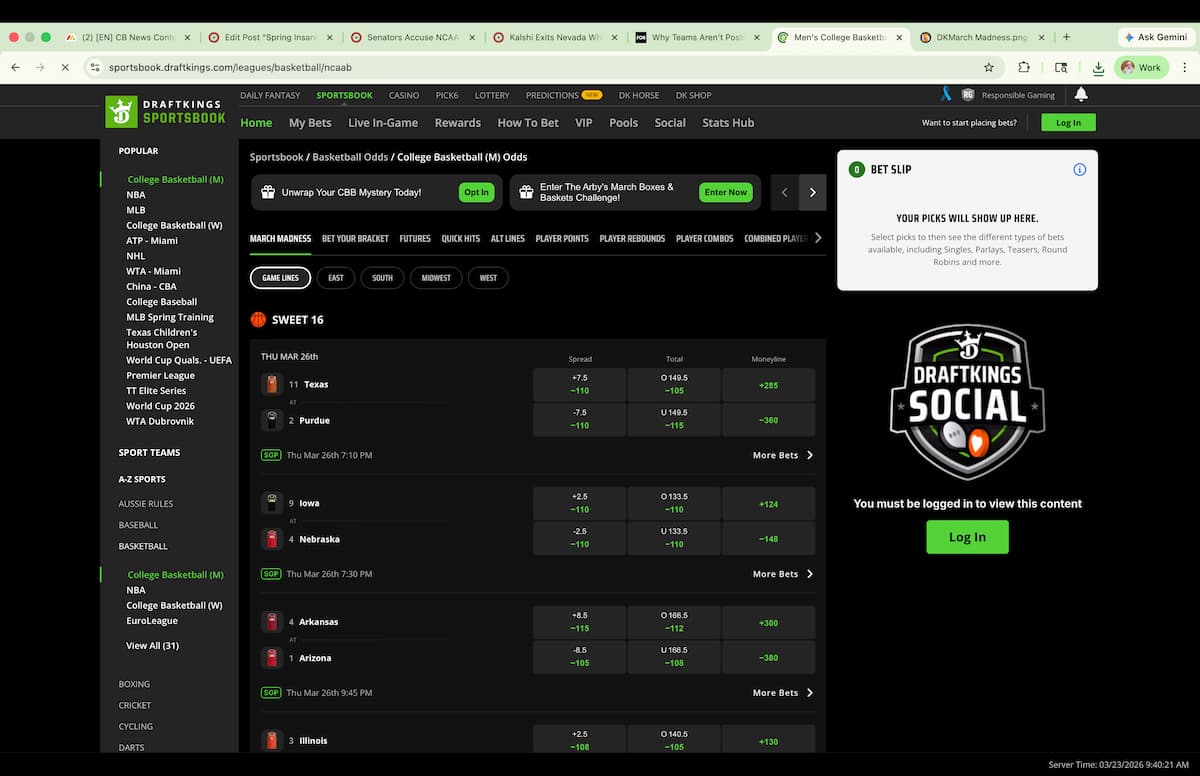
Last year, March Madness saw several top seeds advance deep into the tournament, which led to high payouts for bettors. The month had an unusually low hold across the board for sportsbooks of around 6%.
This year, however, results were more sportsbook-friendly with strongly fancied teams such as Florida, Wisconsin, and Kansas suffering upset defeats. These would have been parlay busters for many bettors.
In Arizona, the Wildcats would have been well-backed to go all the way, but disappointed Arizonans in the Final Four. The team also failed to cover some large point spreads as the tournament progressed, leading to losses for fans backing them to win big.
Sportsbooks across the industry have been trending toward 9-10% hold as they increasingly focus on parlays to drive revenue.
Is Handle Drop a Trend or Blip?
The concern for states such as Colorado and Arizona is that sports prediction markets are eating into their betting handles. Arizona has been particularly aggressive in pursuing operators, claiming they run illegal betting sites and fail to pay state taxes.
Kalshi saw almost $14 billion in volume in March, compared to just $1.2 billion last year. The company was just launching into sports in 2025 and has significantly expanded its market reach and advertising this year.
Sportsbooks continue to claim they are not seeing a significant impact from users shifting to prediction markets.
In both Colorado and Arizona, around 99% of all sports wagers were placed online. States with no legal online sports betting are likely to see the highest activity.
New Mexico tribes filed a lawsuit this week against Kalshi to protect sports betting in the state, which is legal only through in-person wagers at tribal casinos.
A spokesperson for Arizona’s Department of Gaming told CasinoBeats, “There are a number of factors that may result in a decline in monthly event wagering activity.”
The Department said it “does not attribute the decline in sports betting handle to any one factor.”
Additionally, it pointed to the total wagered between July 2025 and March 2026, which was $7.6 billion. This is an 8.2% increase on the same period in the corresponding period of the previous year.
Colorado Lawmakers Pass Bill Restricting Sportsbooks
While states with restrictive markets, such as New Mexico, are likely to see residents turn to prediction markets, lawmakers also want to control what many see as a predatory industry.
In Colorado, the legislature approved a bill that imposes a range of restrictions on sportsbooks. Bill S26-131 aims to offer users “protections against abusive practices in sports betting.”
The legislation would prohibit betting companies from:
- Accepting more than 6 separate deposits from an individual in a single day
- Initiating or sending push notifications or text messages to account holders soliciting bets or deposits
- Targeting or creating advertising content that is clearly meant for persons under 21 years old
- Accepting credit card deposits
Author of the book “Everybody Loses: The Tumultuous Rise of American Sports Gambling,” former Colorado resident Danny Funt told CasinoBeats that the state has made many mistakes in regulating sports betting. Initially, it was liberal in issuing licenses, but most companies went out of business or left the state.
It remains to be seen whether the changes included in this new bill will have a positive effect. It is also difficult to tell what a positive effect would be. For some, a higher betting handle suggests a thriving market; for others, it shows there are not enough checks and balances on betting companies.