









Paul started his career in newspaper journalism before exploring the emerging world of online gaming in 1998, joining Intertops in Antigua - the pioneering force behind the first online sportsbook. Since then, Cullen has enjoyed...
Read Full Bio
Nick Shepherd Contributor
Nick is an ex-casino manager turned PR specialist. He began his career as a croupier in the UK, and went on to work in Europe, Russia, Africa, Asia, and the USA. Previously he has worked...
Read Full BioAll bets are off as the UK gambling industry faces mounting anxiety ahead of Rachel Reeves’ autumn budget. The beleaguered Chancellor has a £30 billion hole to fill, and the betting business is an easy target. Huge hikes are on the horizon, despite warnings of job losses, budget miscalculation, and further high-street zombification.
Key Beats
- With the UK Budget looming, for once it’s not the punters sweating the odds – it’s the bookmakers!
- Chancellor Rachel Reeves has a £30 billion financial hole to fill, and the gambling sector is being given a shovel.
- Betting chiefs warn higher duties could cost 40,000 jobs, decimate the high street, and push billions of pounds into the black market.
Rachel Reeves’ Economic Vision
The UK betting industry is bracing itself for a budget bloodbath, as Chancellor Rachel Reeves considers a sharp increase in gambling taxes.
The Labour Party previously promised not to increase National Insurance, the basic or higher rates of Income Tax, or even VAT. However, thanks to a £30 billion shortfall in public finances, Rachel Reeves is now under pressure – and she has the gambling industry squarely in her sights.
- According to the Office for Budget Responsibility (OBR), the UK gambling industry is expected to generate nearly £4 billion in tax revenue for the 2025/26 financial year.
- The left-wing think tanks, the Social Market Foundation (SMF) and the Institute for Public Policy Research (IPPR), argue that the sector can — and should — pay more.
Proposed Tax Changes & Their Impact on Gambling
Speculation is rife that Reeves could raise taxes on sports betting from 15% to 30%, and more than double the duty on slots from 20% to 50%.
In August, former prime minister and chancellor Gordon Brown called on Reeves to hike gambling taxes, echoing a report from the IPPR that claims:
- Fairer gambling taxes could raise the £3.2 billion needed to fully fund scrapping the two-child limit and benefit cap – effectively lifting 500,000 children out of poverty.
- Tax changes would target high-stakes online gambling, slots, and major betting firms – especially those based offshore.
Henry Parkes, principal economist and head of quantitative research at IPPR:
“The gambling industry is highly profitable, yet is exempt from paying VAT and often pays no corporation tax, with many online firms based offshore. It is also inescapable that gambling causes serious harm, especially in its most high-stakes forms.
“Set against a context of stark and rising levels of child poverty, it only feels fair to ask this industry to contribute a little more.”
However, analysis from Ernst & Young, commissioned by the Betting and Gaming Council (BGC), indicates that the suggested reforms would have a counterproductive outcome.
The recent report on the impacts of changes to betting and gaming taxation was submitted to His Majesty’s Treasury ahead of the November Budget.
The research reveals that the tax changes would risk more than 40,000 jobs, channel more than £8.4 billion into the black market, and reduce the sector’s UK economic contribution by £ 3.1 billion.
Possible Effects of the UK Budget 2025 on Players and Public
While the initial tax hike would generate £3.2 billion in the short term, the loss of employment, reduced corporation tax, lower National Insurance contributions, and high street closures would reduce the net gain to less than £500 million.
Market Reactions
BGC chief executive Grainne Hurst said:
The figures speak for themselves: tens of thousands of jobs lost, billions diverted to the black market, and a potential £3 billion hit to the economy.
Tax raids like those proposed would mean fewer betting shops, casinos, and bingo halls, fewer jobs, and a huge boost to the growing, unsafe gambling black market, while not raising anywhere near the tax claimed.”
These sentiments were echoed by the bosses of the three leading UK high street betting chains: Betfred, Ladbrokes, and William Hill.
If the suggested gambling tax reforms were to go ahead, Betfred would be forced to close all 1,287 of its high-street betting shops. Billionaire chair and co-founder Fred Done had this to say:
“If [the tax rate] went up to anywhere like 40%, or even 35%, there is no profit in the business. We would have to close it down. I’m talking job losses. We’re talking probably 7,500.”
Evoke – the debt-laden owner of William Hill – has seen retail growth in Q3 2025 but fears that the upcoming tax measures will derail the recovery. A spokesperson for Evoke said:
“We are mindful of potential tax increases in the forthcoming budget, which would impact investment in the UK and drive more customers to the black market. We are assessing the potential impact of different overall tax scenarios on our UK operations. This includes the difficult but necessary consideration for shop closures.”
Stella David, the chief executive of Entain, owner of Ladbrokes and Coral, added:
“There’s no doubt that increases in taxes which affect the retail shops would make some of those shops marginal to unprofitable, and it would have a damaging effect on the high street. It’s a sliding scale: the further taxes go up, the greater the impact is. We would have to take actions accordingly, unfortunately, in that situation.”
Simplification or Devastation
The government claims it wants to simplify the various rates of duty applied to gambling. The sector fears that simplification will simply result in higher costs.
The Treasury insists the current consultation aims to simplify the duty system, rather than raise rates.
A Treasury spokesperson said:
“We are consulting on bringing online betting in line with other forms of online gambling to cut down bureaucracy. It is not about increasing or decreasing tax rates, and we welcome all views.”
Unfortunately, the gamblers in suits are no longer betting on UK gambling companies.
Share prices have been tumbling as the Treasury conducts its consultation. Evoke’s has fallen by 42%, the Rank Group by 21%, and Entain’s by 29% in the past three months.
Conclusion – All Bets Are Off
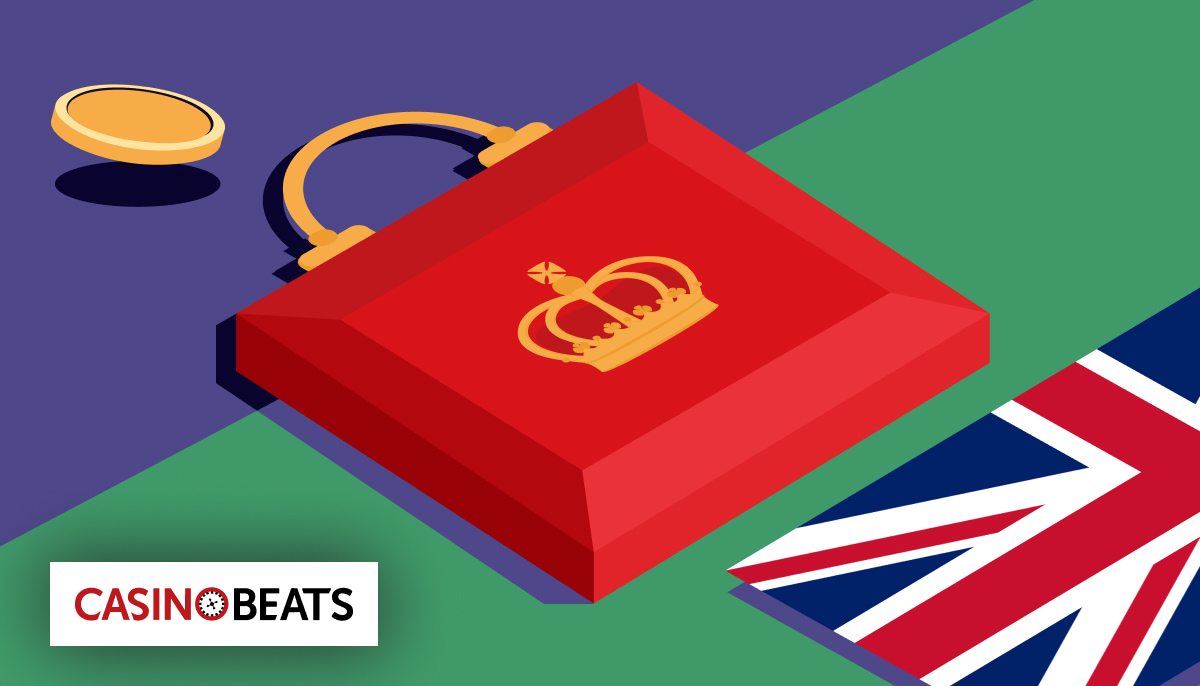
For now, all is speculation. Only Rachel Reeves knows what’s up her sleeve. All bets are off until the red briefcase appears in late November.
The UK betting business is one of the softest targets. To operate, it must comply.
Of course, the truth is that gamblers will always find a way to continue their behavior. Anyone can set up a VPN and connect to offshore casinos; it isn’t that hard.
Sensible taxation, sensible legislation, and sensible oversight are the way forward – not ill-advised political statements.
This could be seen as the UK government’s ultimate responsible gambling tool: Taxing the UK high street into desolation, hobbling a tax-revenue-generating industry, and throwing thousands of UK staff out of work.
Bonus – Taxes Paid by the UK Betting Industry
| Duty Type | Who Pays | Tax Rate |
|---|---|---|
| General Betting | Paid by bookmakers on their gross profits from fixed-odds bets, including sports betting, as well as pool bets on horse and dog races | Fixed-odds and horse/dog racing bets: 15%. Betting exchanges: 15% of the commission they charge UK customers. Non-financial spread bets: 10%. Financial spread bets: 3%. On-course betting: Bets made in person at a racetrack are exempt from GBD. |
| Remote Gaming | Charged to online gambling operators that offer remote gaming to UK customers, including online casino games, poker, and bingo. | Current rate: 21% of a gaming provider’s gross profits. Proposed reform: The government is considering replacing RGD, GBD, and PBD with a single Remote Betting and Gaming Duty (RBGD) to simplify the system. |
| Machine Games | Applied to takings from gaming machines that offer cash prizes, such as fixed-odds betting terminals, slot machines, and quiz machines. The rate depends on the maximum stake and prize. | Lower rate (for maximum £0.20 play and £10 prize): 5%. Standard rate (for maximum £5 play): 20%. Higher rate (for play over £5): 25%. |
| Pool Betting | Applies to pool betting profits (where winners share a pool of stakes) for activities other than horse or dog racing. | Current rate: 15% of the promoter’s net pool betting receipts. |
| Lottery | A tax on tickets sold in lotteries is promoted in the UK, including the National Lottery. | Current rate: 12% of the ticket price. |
| Gaming | A tiered tax on the gross gaming yield (stakes minus winnings) of land-based casinos. The rate increases based on the yield amount. | The tax bands and rates range from 15% to 50%. |
| Bingo | Applied to profits from bingo promotions in bingo halls. | Current rate: 10% of gross profits. |
FAQs
Unlikely. Lottery duty is currently at 12% of the ticket sale price and ring-fenced to support good causes. It’s also a popular tax and political anathema for Reeves.
Smaller, independent bookmakers are likely to feel the strain first. Profit margins will be slashed with a hefty tax hike, making high street operations increasingly unsustainable. Bigger operators will be able to absorb costs.
Not yet. It’s fairly clear that the government is still in uncharted waters when it comes to crypto. How do you regulate currency built on confidentiality?
Yes. If higher taxes squeeze marketing budgets, bookmakers may scale back sponsorship deals with football clubs, horse racing, and other major sports.
The potential dangers of gambling make the sector a low-risk target for politicians. Governments can use this sentiment to justify tax rises.
References
- Betting and gaming duties (Office for Budget Responsibility)
- The Duty to Differentiate: How gambling tax reform can raise revenue for the Government, reduce harm to the public and save British horse racing (Social Market Foundation)
- Taxing choices: Taking the public’s temperature ahead of the budget (IPPR)
- REFORMING GAMBLING TAXATION (Institute for Public Policy Research)
- Brown’s gambling tax raid would cause untold damage to Reeves, says BGC CEO Grainne Hurst (Betting & Gaming Council)
- Impacts of Changes to Betting and Gaming Taxation report (Betting & Gaming Council)
- Gambling stocks keep tumbling on Budget speculation (Investors’ Chronicle)