


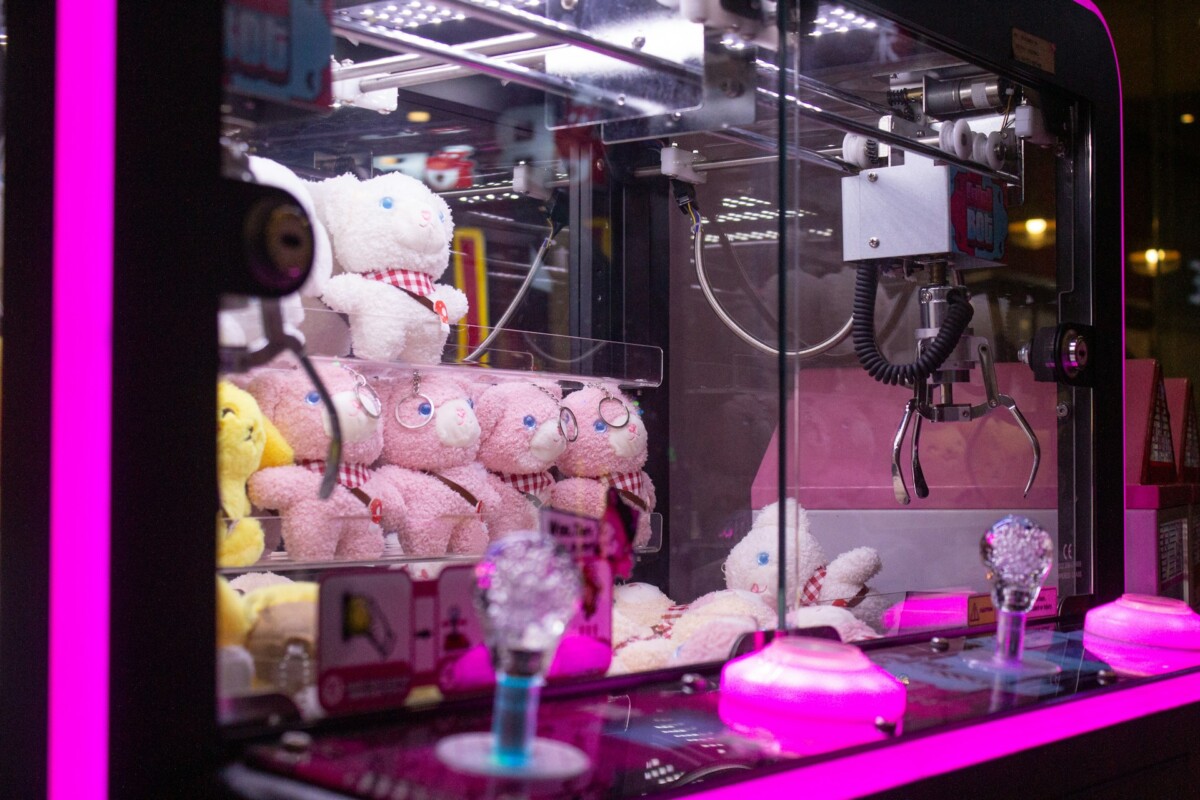
South Korean claw machine centers are under fire from anti-gambling groups and government regulators, as critics accuse them of driving youth gambling addiction.
Per a report from the South Korean broadcaster MBC Gangwon Youngdong, as of August 2025, approximately 5,900 unstaffed claw machine centers were operating in the country. That represents a rise of over 15% in the past two years.
Experts say the centers, which require no age verification checks and often do not impose any sort of spending limit, “are encouraging teenagers to become addicted to gambling-like behavior.”
Under South Korean law, minors are prohibited from entering claw machine centers after 10 p.m. However, as these centers are, by definition, unstaffed, enforcement of this law is effectively voluntary.
South Korean Claw Machine Centers: Under Threat?
MBC showed video footage of teenagers in school uniforms using the centers after 10 p.m. in an effort to win toys and other prizes.
This comes amid a wider rise in youth gambling addiction in South Korea. Several elementary school students have already received gambling addiction treatment, lawmakers revealed last year. And thousands of school children nationwide say they have developed gambling addictions.
In November last year, the South Korean Game Rating & Administration Committee (GRAC) noted that 244 arcade and claw machine centers had been registered as “youth game providers” in Gangwon Province in the space of a year. This, like the nationwide figure, marked a year-on-year increase of over 15%.
The GRAC has suggested it could respond with measures to prevent younger citizens from using the centers during night hours. Some critics argue that the regulator may eventually consider banning teenagers from entry.
Officials in the city of Wonju said the authorities are “considering a comprehensive crackdown” following a sharp increase in claw machine centers.
A high schooler told the broadcaster: “After school, I hang out with my friends, and, before I go home, I like to spend a little time in claw machine centers. I don’t think they are dangerous. So I think there is no need to stop young people from coming to places like these.”
But another high school student equated claw machines to “gambling,” and admitted to losing 150,000 won (almost $105) in the space of just 30 minutes.
The broadcaster noted that five unstaffed claw machine centers now operate within 700 meters of the main entrance to Chuncheon’s busiest central commercial district.
Academic’s Warning
Kwon Il-nam, a professor in the Department of Youth Education and Leadership at Myongji University, said that “continuous education” and “fostering awareness” among center owners were “urgently” required. But Kwon suggested that “legal support” was preferable to “unconditional regulation.”
Last year, authorities in Thailand announced that claw machines are now classified as gambling equipment. This means that only venues holding special permits can install them. Violators have been threatened with fines. Parents in some regions say their children “are spending most or all their pocket money” on the devices.
In Brunei, meanwhile, claw devices are subject to a nationwide ban after religious leaders classified them as a form of gambling in March 2024.