










Adam Roarty Editor
Adam Roarty is a journalist covering sports betting, regulation, and industry innovation for CasinoBeats. His coverage includes tax increases in the UK, covering breaking stories in the ever-evolving landscape of US betting such as the...
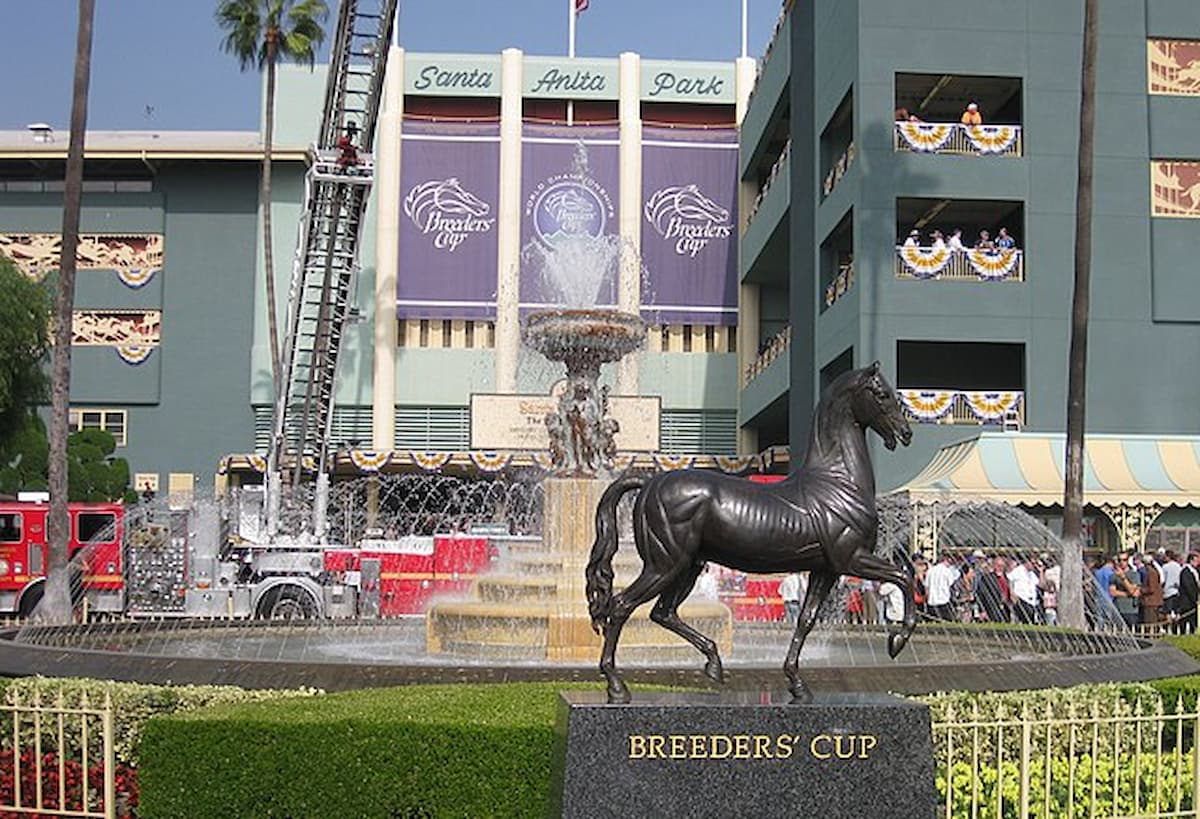
Read Full BioGaming machines installed at Santa Anita racecourse were removed by law enforcement just two days after appearing at the venue. The machines, similar to Historical Horse Racing, offered slots-like gambling and were deemed to violate the state’s gaming laws.
The Racing on Demand machines appeared at the race track on Thursday, before state Department of Justice representatives removed them on Saturday.
The LA Times reported that 15 officers with badges that read, “California Department of Justice Attorney General” confiscated the machines, including all the cash in them. The officers were accompanied by members of the Arcadia Police Department.
The group told staff to clear the area before unplugging the machines, placing them on handcarts, and removing them from the building. The machines, which allow people to bet on past horse races in a slot-machine-type format, were installed in the grandstand area of Santa Anita.
The track did not advertise the launch of the machines or promote them explicitly on site. They also did not notify the California Horse Racing Board that they would be installed. Over the short time they were present at the track, the machines took a total of $26,600 in wagers.
Santa Anita Claims Machines are Fair & Legal
Scott Daruty, senior vice president of the Stronach Group, which owns Santa Anita, protested the seizure of the machines. He said the machines are legal under California law and that no issues had previously been raised by the state’s Attorney General, Rob Bonta.
Daruty stated, “We stand firmly behind our legal analysis. Racing On Demand operates under California’s long-standing pari-mutuel wagering laws using a wager that regulators already approved. Attorney General Bonta received our comprehensive legal analysis nearly a year ago.”
“His office had ample time to raise concerns. They did not. We proceeded on solid legal ground, and since the state is choosing to challenge that now, we’re fully prepared to defend ourselves. We’re confident the law is clear.”
Recently, the Seminole Tribe of Florida came under scrutiny for launching similar games online. The tribe introduced “Games powered by Past Motor Races,” which uses the outcomes of real historical races to determine spins on what looks like a slot machine.
Tribes Oppose Machines
California has taken strong action against gambling outside of tribal compacts, however. The state banned sweepstakes casinos and declared DFS illegal last year. AG Bonta is also reportedly ready to take action against prediction market platforms.
Victor Rocha, conference chair of the Indian Gaming Association, said Santa Anita should have known the machines would be subject to legal action. He stated, “There was always only one outcome out of this. They know it. I know it. Especially after what happened with sweepstakes and what’s currently happening with prediction markets.”
He previously said believing they could use Historical Horse Racing to bolster the decline of racing in the state was a “fool’s errand,” and a “desperate act by a desperate company.”
Rocha said there is nothing that can save the “dying” industry of horse racing in California, adding, “The whole argument that [Historical Horse Racing machines] will save horse racing is false. The only thing that can save horse racing is the second coming. Can anything save horse racing? The answer is no.”
Legal Fight Could Follow
Daruty did not confirm the course of action Santa Anita will now take, but indicated he would challenge the seizure of the machines. In Colorado, gaming operator Trey Franzoy filed a lawsuit over the seizure of slot-like machines, arguing that they have been wrongly labeled as games of chance.
Franzoy railed against the “looks like a slot” argument to confiscate machines, stating, “In today’s day and age, looks like a duck, quacks like a duck, it is a duck, doesn’t work anymore.“
He added, “These clearly don’t function like a slot machine.”
In California, with the tribes’ power, that argument is more difficult to make, as Santa Anita found out on Saturday. A legal battle could now be on the horizon as California racetracks fight to stay alive.