

The proposed casino resort project in Coney Island is facing intense criticism after its environmental study revealed severe traffic and parking insufficiencies, which could make daily life even more difficult in a neighborhood with a divided opinion on the project.
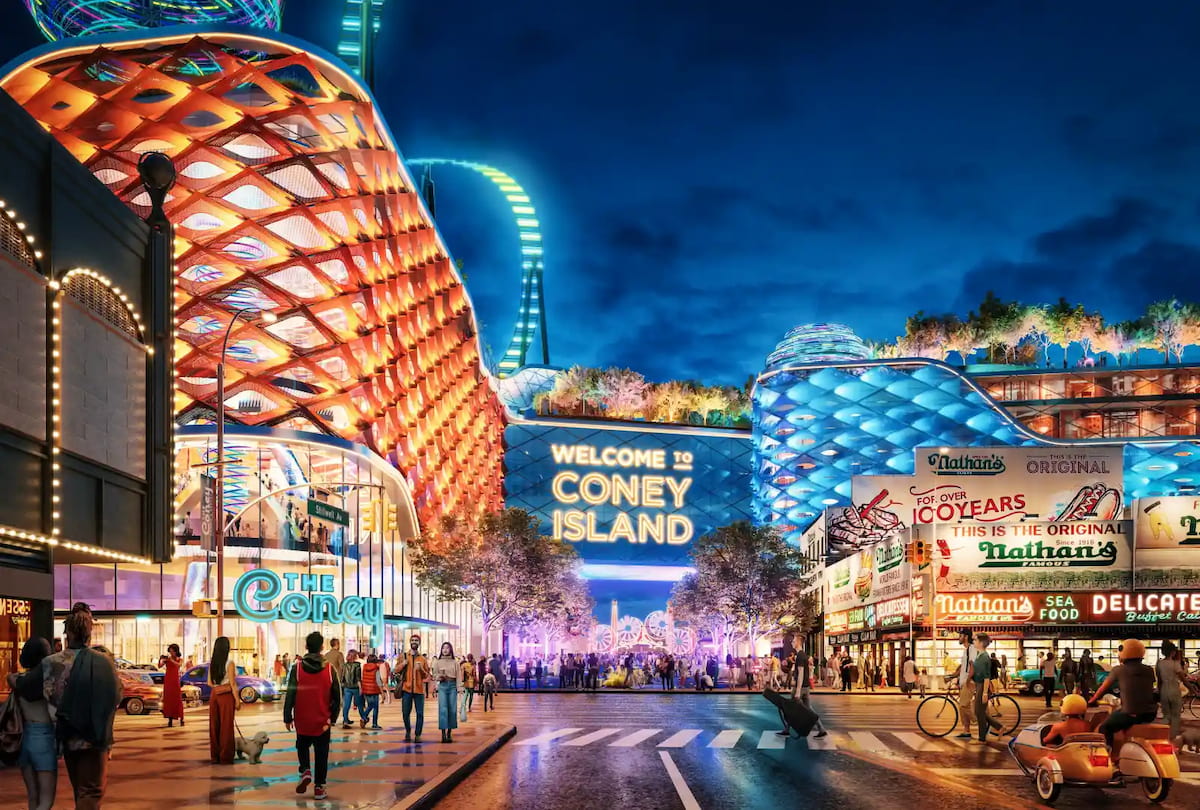
The proposal, called The Coney, backed by Thor Equities, Saratoga Casino Holdings, Chickasaw Nation, and Legends Hospitality, is one of eight casino hopefuls vying for three available casino licenses in the New York City area.
During the proposal’s July 30 Community Advisory Committee (CAC) meeting, CAC member Marissa Solomon raised several concerns, including the accuracy of the hiring projections and past diversity gaps.
Solomon also read an excerpt from the application’s Final Environmental Impact Statement (FEIS), which revealed “significant adverse impacts at multiple intersections” and other potential issues related to traffic and parking.
Traffic Analysis: ‘Gridlock in the Making’
According to FEIS data, The Coney would generate over 27,000 trips across all transit models (auto, taxi, truck, transit, and pedestrian) on a typical weekday. On Saturdays, that number increases to nearly 30,000.
Peak-hour vehicle projections include:
- Weekday PM Peak (5–6 p.m.): 1,573 additional vehicle trips (autos, taxis, and trucks).
- Saturday PM Peak (4–5 p.m.): 1,893 trips — the highest volume analyzed.
- Weekday AM Peak: 922 trips.
- Saturday Midday: 1,364 visits.
- Weekday Evening: 1,653 trips.
FEIS also provides reviews of 47 intersections and 24 highway elements. The data points out multiple bottlenecks and sections degraded to Level of Service (LOS) F, the lowest rating, meaning a gridlock:
- Belt Parkway eastbound between Colby Court and West Street — LOS F in weekday midday and PM peaks. That’s a downgrade from LOS C (moderate flow).
- Belt Parkway westbound east of Coney Island Avenue — LOS F in weekday PM and Saturday peaks.
- Westbound off-ramp between Coney Island Avenue and East 7th Street — LOS F in weekday PM and Saturday peaks.
- Surf Avenue & Stillwell Avenue — LOS F in multiple peaks, with pedestrian delays over six minutes per signal cycle.
The data also highlights that the Stillwell Avenue Station MTA station will experience load factors on some subway lines exceeding crowd thresholds during weekend peaks.
Parking Shortfall: Off-Site Demand Exceeds Supply
The Coney will provide 1,500 on-site parking spots. That’s significantly less than some other projects, such as Resorts World New York’s 7,000 spots.
FEIS projections show peak demand of:
- Weekday: 2,346 vehicles (846-space shortfall)
- Saturday: 2,412 vehicles (912-space shortfall)
Surveys of parking within a half-mile radius show that, during non-summer, utilization would rise to 93% on weekday evenings. That number increases to 109% during Saturday overnights. In summer, demand would hit 97–98% during daytime peaks and 108% on Saturday overnights.
The FEIS concludes that The Coney would cause a parking shortfall in the evenings and overnight on Saturdays.
Critics note that some of the identified off-site lots are slated for development, and the DMV controls one of them. They note that the parking shortfalls would lead to parking on residential streets.
Mitigation Efforts Criticized as Insufficient
The developers are promising mitigation measures, including new traffic signals, street re-striping, added stop signs, hiring traffic officers, upgrading the Stillwell Avenue subway station, and offering discounted or free round-trip MetroCards.
Other proposals include shuttle buses from Manhattan and area airports, and even advocate for the long-discussed Coney Island ferry route.
Still, the FEIS acknowledges that even after proposed fixes, several Belt Parkway segments and intersections, such as Surf Avenue and Stillwell Avenue, will continue to operate at LOS F during peak hours.
The Coney does not plan for any physical expansion for the Belt Parkway. Road improvements are a selling point that a few other projects have promised.
For example, the Metropolitan Park bid in Queens plans to build a pedestrian bridge and make improvements to the highway ramps next to the project.