


First the NBA, then MLB, and finally the NCAA: over the past year, the United States has seen a steady stream of sports betting scandals make headlines. At this point, for most fans and industry observers, the question isn’t if there will be another scandal, but when, as they wait for the next shoe to drop.
When betting scandals hit the news cycle, they raise uncomfortable questions among the public, who are left wondering just how widespread the problem is and just how many of the games they’ve watched have been compromised by fixing, inside information, or someone gaming a prop market.
During an hour-long interview, CasinoBeats put those questions and more to sports integrity expert Rodrigo Arias Grillo.
Arias Grillo doesn’t dismiss those concerns as fan paranoia; instead, he sees them as a symptom of a larger problem: whether the sports world has systems in place to detect risk early, investigate it credibly, and prove misconduct when it occurs.
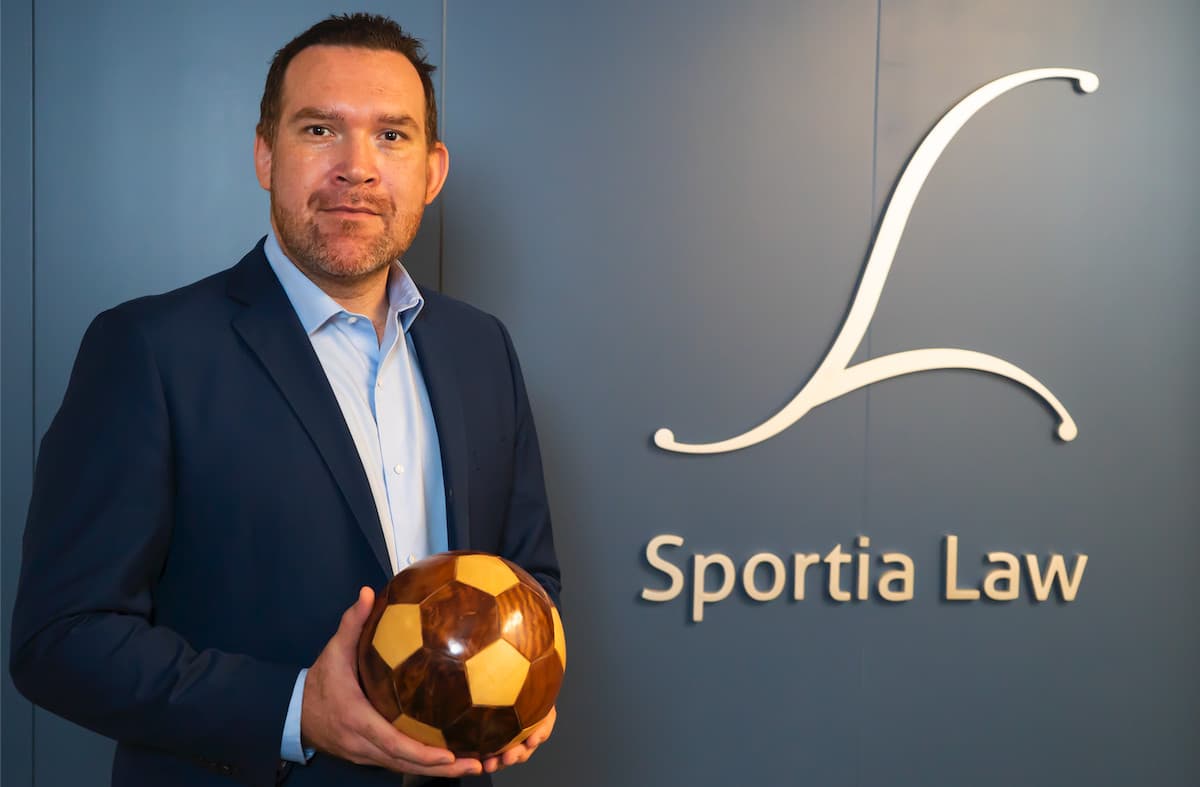
An arbitrator at the Court of Arbitration for Sport (CAS), the Switzerland-based tribunal often described as the “Supreme Court” of international sport, he’s also managing partner of Madrid-based Sportia Law and has spent years within soccer’s integrity apparatus, including a long stint at LaLiga and multiple integrity roles at FIFA.
Betting integrity monitoring systems can be “very useful,” he said. But they’re also “not magical solutions for discovering misconduct.”
It’s that gap between flagging suspicious behavior and ultimately proving intent where integrity programs, investigations, and arbitration cases often break down. That’s also where the modern sports betting boom we’re living through has created a governance test: whether sports organizations can build integrity systems that hold up under pressure.
“A true integrity system is one that will actually reveal your own situation to you,” Arias Grillo said. “And if that doesn’t do it, scandals will do it.”
More Than Match-Fixing
When public conversations turn to the integrity of sports, they often begin and end with the idea of fixing. Arias Grillo prefers to expand that definition, which is important because doing so shifts the conversation to what a “real” integrity program is supposed to protect.
For him, sports integrity encompasses many different types of misconduct, all of which “affect how sport is perceived and whether it’s respected or not.”
The mainstream view tends to associate integrity with the manipulation of sporting events. But Arias Grillo takes a big-picture view of integrity that goes well beyond match-fixing.
“Sports integrity is a multidisciplinary concept that addresses different types of misconduct and core issues in the protection of sport,” he said. “Aside from competition manipulation, I would also include anti-corruption, athlete safeguarding, harassment, and discrimination.”
He pointed out that part of the problem is structural.
“There is no uniformity in how this is done, and there’s no common standard for how sports integrity should be understood.”
That’s because large sports federations are often fragmented, with separate departments for ethics, athlete safeguarding, anti-discrimination, and integrity enforcement. And smaller sports bodies don’t have the resources to put those structures in place.
When responsibilities are spread out across departments in this way and lack a clear point of accountability, Arias Grillo argues that integrity risks become more difficult to manage.
“Fragmentation is devastating for sport,” he said, because departments can end up “looking out for their own interests” instead of working together as a unified system.
From his perspective, integrity should be about more than just punishing those who’ve engaged in wrongdoing. It’s also about whether sports institutions are actively working to protect the credibility of their competitions.
He pointed to tennis as one sport where integrity enforcement is visible and constant. In his view, the International Tennis Integrity Agency is “doing a great job,” but cases keep cropping up, including players from South America, Europe, and Asia getting banned for using the sport to commit “fraud… and corruption.”
That example, he said, reflects a reality the public often misses. Many fans assume “people in sport have a lot of money,” but that’s “a misconception.” In many places, he said, the reality is ordinary: “economic responsibilities,” “mortgages,” “kids,” and the feeling that you’re not getting what you need “at the end of the month.”
And that ordinary reality can create temptation, leading some athletes to make “the mistake” of thinking they can “abuse the system and get away with it.” Some do, he added, but many don’t.
A Quick Field Guide to Manipulation
Sports integrity has its own unique vocabulary, with many terms used interchangeably, making it difficult to understand exactly what’s being alleged and what isn’t. That’s why we asked Arias Grillo to clarify a few key terms before getting into the details.
We often hear the term “match fixing” in the aftermath of a major sports betting scandal. However, Arias Grillo says he prefers “match manipulation” because it’s more widely used in international sports governance and covers a wider range of conduct.
Match manipulation is the umbrella term for deliberately influencing a match or competition for an improper advantage. It can involve manipulating the final result (match-fixing) or targeting a specific incident within the contest (spot-fixing).
In the wake of recent scandals involving the NBA, MLB, and NCAA, spot-fixing has emerged as a major integrity risk. Spot-fixing targets a specific market or event during a competition. It’s exactly the type of behavior that’s tied to prop betting markets.
“Spot-fixing is…manipulating a specific aspect or incident within a match or competition,” Arias Grillo explained. That could mean the number of corner kicks in a soccer match, points scored during a basketball quarter, or whether a penalty is awarded.
Betting corruption is the use of betting markets to profit from manipulation. And the manipulation isn’t always about gambling. Sports manipulation can also occur when teams collude to gain a competitive advantage. While it’s rare in the U.S., even politics can enter the mix, where teams backed by a local government official are directed to win or lose.
All these forms of match manipulation, whether motivated by gambling or not, lead to a similar outcome: the compromise of a sporting event’s fairness and independence. That’s why sports integrity can’t be treated as a betting-only problem.
What Real Integrity Systems Include
When Arias Grillo talks about integrity, he doesn’t limit the discussion to a set of values. Instead, he describes it as something that must be built, staffed, tested, and improved.
He explained that at a global level, integrity initiatives aim to “set minimum standards” of integrity measures and policies across members of an international federation.
There are three components to these standards: “the legal side, the development side, and the institutional coordination side.”
Rules matter, but they can’t just be “provisions on paper,” he said. The development piece is “crucial,” because not every association “is in the same shape or has the same capacity,” and stronger organizations should help weaker ones.
On the operational side, he discussed the need for reporting and whistleblowing mechanisms, as well as monitoring and intelligence with triage built in. “You cannot monitor everything,” he said, arguing that sports bodies should focus first on the competitions that are most exposed to betting markets.
He acknowledged the important role of law enforcement, while rejecting the notion that sports bodies must wait for them to act.
“Sport cannot do it all,” he said, but even without outside support, sports bodies can “run their own investigations…compliance checks…[and] ethics inquiries,” and “come up with conclusions to make sports safer.”
He laid out the stakes for failing to act in blunt terms: “If you have a Swimming Federation, your swimming competitions are your product. You have to defend it.” If stakeholders start to believe competitions are corrupted, he warned, it “crushes the soul of any sports association.”
And once that happens, “You lose the fans,” he said. “You [lose] the economic support.”
Why Systems Fail Under Pressure
It’s tempting to believe that betting-monitoring systems can detect and prove corruption, but Arias Grillo says they can’t do it on their own.
Monitoring systems detect anomalies in betting markets. “These are red flags,” he said. “It’s not enough to have a betting report about a match being at risk for manipulation. You have to have additional elements of proof.”
In other words, a betting report can’t tell you whether a game was fixed unless it’s corroborated by communications, witness testimony, or performance analysis.
The popularity of live betting has made things even more complicated. A “very, very high percentage” of wagering now happens in-game, he said, creating more opportunities to exploit real-time events while investigations often begin only after a match is flagged.
Even when investigators build a case, procedural errors can undermine enforcement.
“A key weakness in these cases is the over-reliance on betting reports without sufficiently strong supporting evidence,” he said. “Given the seriousness of match-manipulation allegations, the evidentiary record must be built on high-quality corroborating material, including robust circumstantial evidence capable of meeting the applicable standard of proof.”
When a case finally reaches the Court of Arbitration for Sport, the panels carefully examine both the evidence and the process.
“The standard of proof in these cases is comfortable satisfaction,” he said, and “the higher the sanction, the higher the standard should be.”
In the CAS framework, “comfortable satisfaction” is often described as a middle-ground standard, more demanding than the U.S. civil “preponderance of the evidence,” but less than the criminal “beyond a reasonable doubt.”
U.S. Faces Governance Stress Test
As the U.S. sports betting market rapidly expands, Arias Grillo believes it’s facing a governance stress test. Since the Supreme Court overturned the Professional and Amateur Sports Protection Act in 2018, most states have legalized sports betting in some form.
However, regulation is handled state by state, creating uneven rules and enforcement mechanisms. That fragmentation can produce uncertainty about exactly who’s actually responsible for investigating and enforcing integrity issues.
Regulators may expect leagues to oversee integrity. Leagues may expect sportsbooks to detect suspicious activity. Sportsbooks may defer to law enforcement.
“At the end of the day,” he said, “they’re passing this hot potato, and nobody really takes responsibility.”
The question that’s left unanswered, he said, is the “scale and hierarchy of responsibility,” who’s in charge and how that responsibility is divided among leagues, sportsbooks, regulators, and law enforcement.
He describes legalization as opening “Pandora’s box.” Betting activity that once occurred offshore now interacts directly with domestic competitions. That proximity means manipulation risks show up at every level: professional leagues, lower divisions, and amateur sports.
And while it may seem counterintuitive that a professional athlete with a high salary would get involved in a sports betting scheme, Arias Grillo told us that high salaries don’t eliminate temptation.
“You even see it in professional leagues,” he said, “where you think…why are these guys fixing when they earn so much money?”
His answer is simple: incentives.
“You can make 100 grand more,” he said. “If an athlete does not have integrity at the core of his or her values, even if you’re earning a lot of money, you’ll take it because it’s 100 grand more.”
College Sports Represent a Soft Target
In the context of American sports, Arias Grillo believes college athletics present some of the greatest integrity risks.
College competitions attract massive fan engagement and betting interest. However, even with Name, Image, and Likeness (NIL) deals, most student-athletes aren’t making much money, leaving them more susceptible to pressure, approaches, or bribery. On top of that, they receive limited training about integrity threats.
Social media is another vulnerability, where student-athletes may receive direct messages from bettors, syndicates, or intermediaries offering money or other things of value.
At the same time, integrity programs for college athletes are often lacking and inconsistent.
“There’s a lot of immaturity [among younger athletes] about the seriousness of these offenses,” he said.
Arias Grillo believes more comprehensive education programs and oversight structures are needed to help protect student-athletes from these threats.
He pointed out that many college athletes are still minors or barely adults who may not fully understand the risks associated with manipulation and inside information. For an integrity program to be effective, it should provide continuous training, reporting platforms, and support mechanisms.
“This shouldn’t be just one session a year and hope for the best,” he said. “Integrity initiatives and programs should accompany teams and athletes throughout competitions, ensuring they know how to respond if they’re approached.”
Italy’s Warning for U.S. Sports
When we asked Arias Grillo what would happen if the American public completely lost confidence in the fairness of a sport, and what the consequences could be based on what he’s seen in Europe, he didn’t give us a theoretical answer.
Instead, he explained that European soccer has already experienced the consequences of systemic integrity failures.
He pointed to the Calciopoli scandal in Italy, which came to light in 2006, exposing manipulation involving club officials and referees during the 2004-05 and 2005-06 seasons. The fallout severely damaged Italian soccer’s reputation.
Fans lost trust. Sponsors withdrew. The league’s global brand suffered. “Italy’s soccer brand took a significant hit,” he said. “It was a total failure of the system.”
Even years later, Italian soccer is still working to recover from the reputational damage.
From his point of view, the lesson is simple: integrity failures don’t just produce short-term scandals that fade away with time. Depending on the scope of the failure, they can undermine the economic and cultural foundations of an entire sport.
Once suspicion becomes widespread among fans and stakeholders, it’s hard to contain, which makes rebuilding credibility that much more difficult.
The Future is Training, Not Just Enforcement
In the long term, Arias Grillo believes that one part of the solution lies in training a new generation of professionals to recognize and manage integrity risk.
He’s the co-founder and managing director of the O REI Sports Law Institute, where governance, ethics, and leadership form the core of the curriculum.
He explained that while legal doctrine is an important part of the institute’s curriculum, students are also trained to understand the ethical reasoning behind sports regulations and to recognize governance risks before they become scandals.
The program also emphasizes practical learning. Instead of traditional lectures, students analyze real cases, debate ethical dilemmas, and simulate investigative scenarios.
“We distance ourselves from the typical PowerPoint presentation,” he said. The goal is to prepare lawyers and administrators who have the skills to protect sports competitions in the real world.
And that mission is part of the same principle he repeated throughout our conversation. Integrity, he argues, is not an administrative function added after problems arise. It is the operating logic of sport itself.
“Integrity is not a department,” he said. “It is a governance function of sport and of competition itself.”