

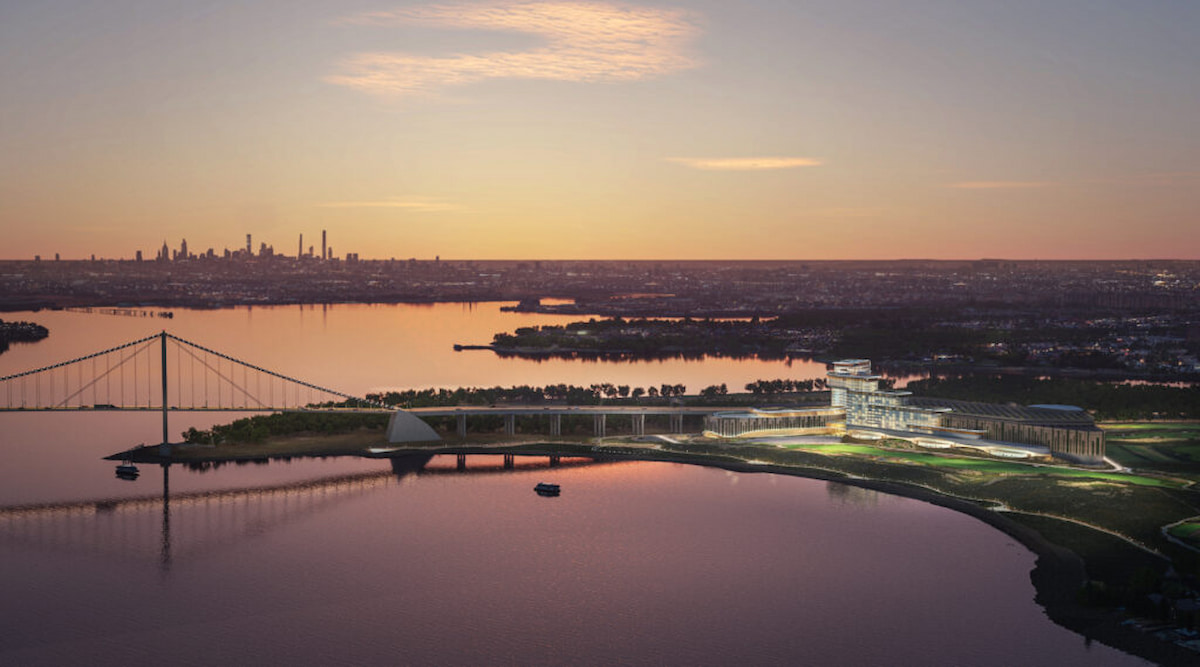
Bally’s Bronx Casino received its first Community Advisory Committee (CAC) public hearing on August 19, drawing a crowd of residents, union leaders, environmental advocates, and community organizers. The testimonies highlighted a deep division, with some showing strong enthusiasm while others showing deep skepticism.
The hearing was the first of at least two public hearings before the CAC votes on whether to advance Bally’s application in the casino process.
It revealed how sharply divided Bronx voices are over the $4 billion project, which promises a $625M community benefit package to transform the community.
Supporters Call Project ‘Transformational’
Unlike Caesars Palace Times Square‘s first CAC public hearing, which lasted over six hours, Bally’s event lasted less than two.
Still, that gave the public plenty of time to voice their opinion, with many union leaders turning in support. Ray West, representing the International Brotherhood of Electrical Workers (IBEW) Local 3, told the committee:
“As a labor person, as someone who cares about jobs and people working, I’m very excited about the project… There’s maintenance work for the future. That’s really good jobs.”
Many speakers framed Bally’s as an opportunity to finally bring large-scale investment to a borough that had been too often overlooked. Martin Dalgo, a lifelong resident, said:
“I see this proposal for what it truly is, a transformational investment in the Bronx. It will bring thousands of good-paying jobs, support small businesses, and generate the kind of development that lifts entire neighborhoods.”
For others, it was about safety and community services. Angel Colado highlighted Bally’s promise to fund a police substation:
“That means faster response times and a great sense of safety not just around the development but the surrounding neighborhoods as well.”
The casino also won praise for its support of Preston High School, which faced closure. Thirteen-year-old Michelle Christopher testified:
“When I found out that Preston might close, I was devastated… But then we heard the incredible news. Preston High School would stay open. Thanks to the efforts of the community and the critical support of the Bally’s Foundation, our school was saved.”
Local nonprofits stressed the importance of youth programs and grassroots benefits. Marcus Davilla of Legacy Volleyball Club said Bally’s investment would bring “better athletic facilities, safer spaces, and long-term investments into the park’s infrastructure [that] will directly benefit organizations like ours, and more importantly, the kids we serve.”
Opponents Raise Concerns Over Parkland & Exploitation
Opponents painted a starkly different picture, warning of environmental harm, traffic gridlock, and social costs.
Robert Press, a Bronx resident for over 40 years, warned against losing green space:
“Any alienation of parkland for whatever reason is not good for the surrounding community. How many trees are going to be cut down? How many tree credits are they going to [count]? Where will the replacement trees be planted?”
Press also accused political insiders, including Mayor Eric Adams, who saved the bid twice, of pushing the deal. Press alleged:
“I smell not only a fix but collusion among the mayor, the Bronx Democratic Party, the state assemblyman, [and] the state senator. That needs to be investigated, and it needs to be investigated now.”
Environmental advocates echoed concerns about lost green space. David Brun of Save the Sound warned of damage to water quality and air pollution:
“I’m here this evening to reiterate our concerns with the additional wastewater and storm water expected to be generated by a project of this size, the air quality impacts of the five million additional cars Bally’s hopes to draw, and the loss of irreplaceable public waterfront parkland.”
Turning parkland into a casino was a significant concern for many. Al Quaddlebomb called the casino “a betrayal of the community” and added:
“Ferry Point Park is one of the few green spaces in the Bronx. Replacing it with a casino threatens the environment and takes away recreational space we all need.”
Several speakers tied the casino directly to social harm for working-class families. Thomas Shepard of Throgs Neck said:
“Casinos make their money by exploiting the Throgs Neck Houses community where I live. They exploit the desperation of poor people, and I have always been opposed to that.”
A Community Divided
The testimony often veered into moral territory. Quaddlebomb told the committee:
“Casinos don’t build wealth in the community. They extract it — gambling addictions, financial hardships, and a crime rise around the casino. This is not what the Bronx needs.”
But for supporters like community leader Lauren Patterson, the project was about creating hope:
“Any opportunity that provides a positive opportunity for the people of the Bronx is a good opportunity. They make promises, hold them accountable. But it can only be a positive thing if you’re creating more opportunities for the people of the Bronx.”
The CAC will schedule at least one additional hearing and review public comments before making its final vote, which is mandated to be completed before September 30.
For Bally’s to continue in the licensing process, it will need to receive at least two-thirds approval (four out of six CAC members). If it does, its application will be advanced for review by the New York Gaming Facility Location Board.
The board will review all the approved bids from the eight applications and make a final decision to award three downstate New York casino licenses by the end of 2025.