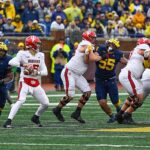


The unprecedented decision of a judge to overrule the NCAA and reinstate Brendan Sorsby for the upcoming college football season has sparked widespread debate. The reaction has been mostly disbelief, but I asked Melinda Roth, a professor specializing in sports law at Washington & Lee Law School, for her legal opinion on what the judgment means, and she had a different view.
“There has been a huge backlash against the decision,” admitted Roth. Athletic department leaders at Georgia and Nebraska have already instructed coaches and sport administrators not to schedule Texas Tech in any future athletic competition.
Big 12 leadership also convened on Tuesday to discuss the matter, with Commissioner Brett Yormark stating they “will continue to have open and honest dialogue amongst the group, and until there is something to report, these conversations will remain within the conference.”
Backlash Forgets About Troubled Young Man
“I have a slightly more balanced reaction,” Roth continued. “Many commenters have accused the judge of bias, despite the fact that he is not affiliated with Texas Tech or from Lubbock.”
In the ruling, Judge Ken Curry said he issued the injunction on the condition that Sorsby continues a range of treatments for his gambling problem and anxiety, which he says contributed to the betting.
“I was surprised at first, but then I read the decision,” Roth said. “I was glad to see mandated treatment and focus on this young man’s problem with gambling and his mental health. Everyone seems to forget that Sorsby clearly has/had a problem and an addiction.”
Does Ruling Set a Precedent?
In other cases, athletes, both college and professional, who have broken gambling rules have faced lengthy suspensions, plus mandated treatment for gambling disorders.
“What worries me is the precedent this may set,” Roth said. “Last year, the NCAA quietly approved allowing student athletes to bet on professional sports, but then the day before it was going to be allowed, 2/3 of Division I schools rescinded their approval in November 2025.”
Texas Tech was one of the schools that voted against relaxing betting rules for student athletes and other college staff members. Yet, it has been vocal in its support for Sorsby, emphasizing that gambling is now pervasive in society and we should not punish young men for engaging in it.
The school’s lack of consistency has frustrated many who think Sorsby deserves a stronger punishment to prevent other athletes from believing they can get away with breaking the rules.
The punishments for sports betting for college athletes have also been inconsistent, Roth says.
Can Betting on One’s Own Team Ever Be Forgiven?
One of the main sticking points against Sorsby is that he wagered on games involving his own team. He has admitted to betting on at least 40 Indiana Hoosiers games while on the roster.
“I think that’s the unpardonable sin,” Florida athletic director Scott Stricklin said. “And I think everyone in America grew up knowing that was the unpardonable sin when it comes to sports and gambling.”
Sorsby’s defense is that he bet on Indiana to win to feel closer to the team. Unlike in other recent NCAA betting scandals, where players have been found deliberately underperforming, he wanted the team to succeed.
“There is a difference between manipulating and fixing games and betting on them,” Roth said. “I believe when athletes are involved in any integrity of the game issues, there needs to be swift and decisive punishment, typically lifetime bans.”
The NCAA permanently banned four former Alabama State basketball players this week as part of the ongoing scandal engulfing college basketball and the NBA. Nobody is arguing for leniency in these cases.
Students Taking Power (and Money) From NCAA
Roth says the ruling, which overrides the NCAA’s refusal to reinstate Sorsby, adds to the “continued decline of the organization’s authority.” She notes that they “have lost so many court cases.”
Notably, the Ninth Circuit ruled that the NCAA’s rules barring athletes from profiting from their own Name, Image, and Likeness (NIL) violated federal antitrust laws.
Students are now able to agree to deals to monetize the huge commercial industry around college sports. The NCAA also had to agree to pay back thousands of athletes as part of a $2.57 billion settlement.
Sorsby has benefited greatly from those rulings. He signed a reported $6 million year-long deal with Texas Tech in January, which is believed to be the biggest in college history.
Backed with the money from this contract, he was able to hire a legal team to fight his case in what Roth refers to as “the increasing litigious nature of college athletes who seek ‘justice’ through the courts.”
NCAA Needs Clearer Rules, But Could Win Appeal
Part of the problem, Roth says, is that the NCAA’s rules are not as clear as those of professional sports organizations.
“There is a question about sports betting, and while the CBAs (Collective Bargaining Agreements) of the major professional sports specify what athletes can and cannot do, perhaps the NCAA needs to address and revisit in more detail policies for student athletes,” she said.
The NCAA, however, believes its rules are clear, and as a result of violating them, Sorsby must receive a harsher punishment.
In a statement on X, the organization said it “strongly disagrees with the court’s ruling in Sorsby’s case and is deeply concerned about the damaging, far-reaching and broadly destabilizing ramifications of this outcome — which undermines and corrupts the integrity of sports.”
Roth admits the organization has a strong case in its appeal. The NCAA is requesting an accelerated appeal to the Court of Appeals for the Seventh District of Texas
“I do see the NCAA having a good chance of overturning this,” Roth said. “The fact that he bet on his own team and his own sport is a problem that is not easily overcome.”