


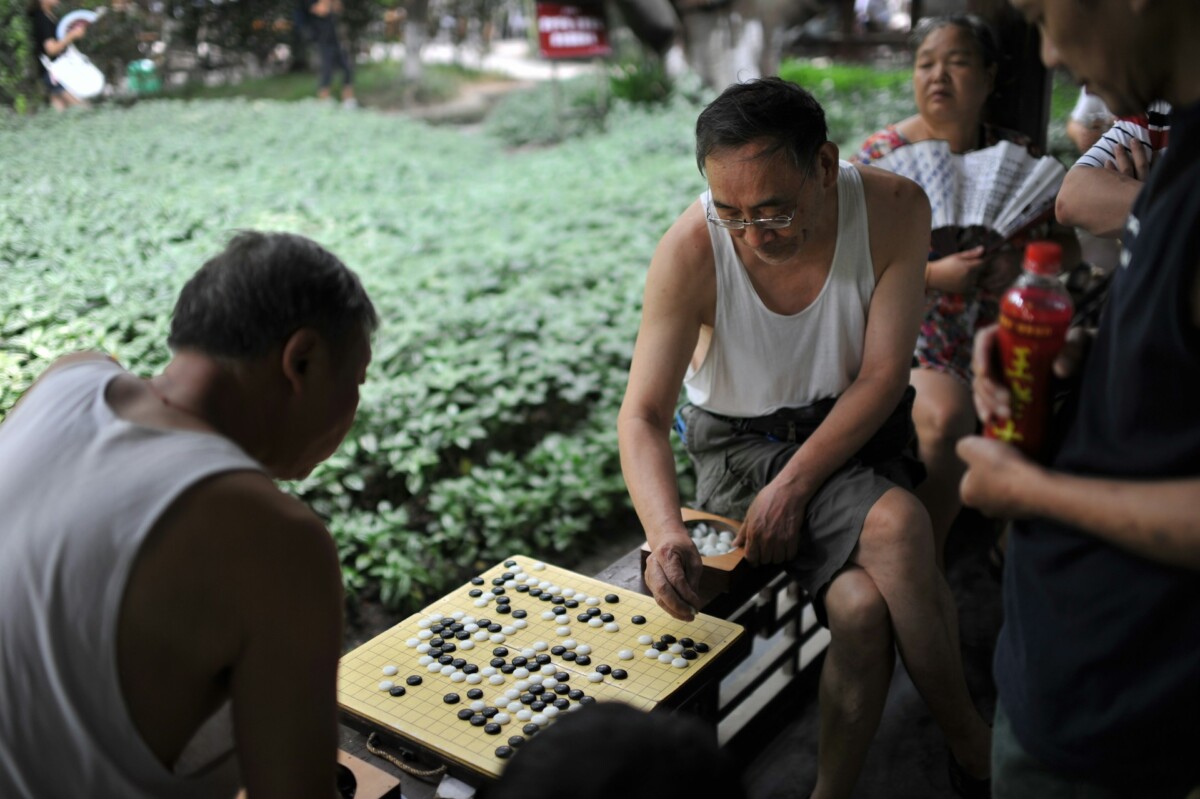
A Chinese court has warned citizens they could face lengthy jail sentences and heavy fines if they are found gambling on the board game Go.
The game, known as wei qi in China, originated in the country and remains extremely popular. Experts believe that up to 40 million Chinese people play Go. The country is also home to several hundred professional players.
However, allegations of gambling among amateur and professional players have continued to circulate in China over the past few years.
While the tile-based mahjong remains the betting game of choice for most Chinese gamblers, small and informal cash bets on games of Go are not uncommon.
The Linxia Intermediate People’s Court has warned that some organized groups are systematically “turning Go into a gambling game.”
Go Gambling Club: Court Issues Warning
The court gave an example of a recent case involving a Go club in Gansu Province. The court explained that the club was launched by an individual surnamed Deng in October 2023.
Deng initially let players visit the club to play on his tables on the condition that they bought beverages like tea.
But the following year, Deng created a dedicated WeChat group for the club. This group soon grew to include approximately 200 people.
This was when Deng and his accomplice began to offer players the chance to play for money. Players were told to stake cash on each game. Winners, the duo told players, would scoop 100 yuan (around $15), minus 10% in “commission fees” for the club.

Police eventually grew aware of the club, raiding the address and arresting Deng and his accomplice, Zhou.
Prosecutors later presented the court with evidence that the club had processed 394,900 yuan (over $58,000) in bets.
Court Rejects Defendant’s Claim
During the subsequent court trial, Deng’s legal team argued that he did not organize gambling for profit, with the commission fees only covering his overheads.
However, the court rejected these claims. It ruled that the mere intention to profit through gambling is sufficient to prove guilt.
It also ruled that Deng had organized the gambling tournament to “increase the club’s popularity and thus boost its operating revenue.” This, the presiding judge explained, “also falls under the category of a profit-making motive.”
The partnership between Deng and Zhou, prosecutors argued, constituted an organized group, adding to the severity of the crime. Each person had a specific role, prosecutors said.
The court found both defendants, Deng and Zhou, guilty of organized gambling, sentencing them to undisclosed jail terms and fines.
Judiciary: Go Gambling on the Rise
The Linxia judiciary warned of a recent uptick in illegal gambling activities in “teahouse and other similar venues.”

These places “have gradually become hotspots for gambling activities,” said the court.
Operators have begun charging patrons “commissions or service fees” if cash changes hands during games.
The court warned that the judiciary considers there to be a big difference between “small-scale bets agreed upon by relatives and friends or fellow Go players to enhance the enjoyment of the game” and operations like Deng’s.
Deng’s club “went beyond the scope of ‘entertainment’ and constituted a criminal offense,” the court said.
“Operators must operate legally,” said the court. “They must not cross legal boundaries to attract customers. The public should also stay away from any form of gambling activity. Do not let short-term greed ruin your personal or family’s happiness.”
Under Chinese law, courts can send high-stakes gamblers to prison for up to three years.
Scores of people continue to play Go, mahjong, and games like Chinese chess in public parks throughout Asia.
However, citizens in cities like Seoul, South Korea, have complained that groups of players have turned many public parks into informal open-air “gambling dens.”
Some say they are now afraid to visit these parks or let their children play in them.