


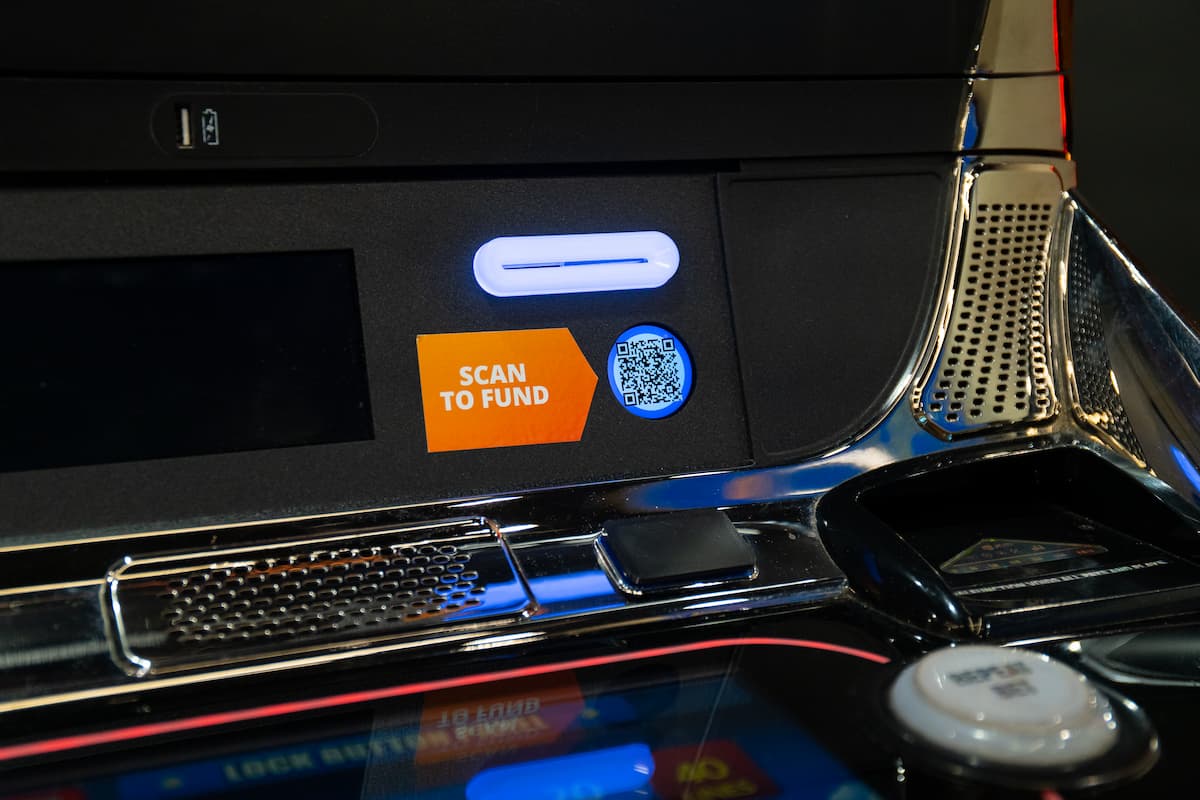
Trustly and Acres Manufacturing have partnered to bring instant cashless funding to casino floors, a move that could accelerate the industry’s move away from cash.
The companies will integrate Trustly’s Scan & Pay with Acres’ Universal Payment Adapter, allowing players to fund slot machines and table games in seconds via QR code scan. The partners state that no app download, registration, or e-wallet is required.
“The Universal Payment Adapter gives casinos a true plug-and-play cashless interface that requires no additional technology integration and boasts widespread regulatory approvals throughout the United States. By linking it to Trustly Scan & Pay, casinos can offer their players a way to fund games electronically that’s quicker and easier than cash,” said Darren White, Director of Sales at Trustly.
Trustly claims that Scan & Pay saves casinos roughly six percent of their revenue by removing cash handling costs. The company also cites early data that shows cashless players increase their “coin-in” by 38 percent compared to those who play with cash.
The partners say Scan & Pay can be rolled out quickly across casino floors, as the Universal Payment Adapter is already compatible with existing slot machines and casino management systems across many states.
Cashless Options Already on Casino Floors
Cashless gaming is not a new concept in the casino industry. It has been gradually gaining traction across US casino floors.
In California, IGT rolled out its Resort Wallet and IGTPay at Graton Resort & Casino in 2023. The digital solution allows patrons to transfer funds directly from their mobile devices to slot machines.
The system enables players to log in, securely transfer funds, and utilize their phone as a digital key for wagering accounts. IGT’s cashless system has expanded to numerous casinos, including some in California, Nevada, and Oklahoma.
That same year, Acres expanded its Cashless Casino solution at Rolling Hills Casino, another California casino. That marked the 10th state where Cashless Casino was live.
At Resorts World Las Vegas, cashless gaming has gone beyond funding player accounts. In 2022, the property and technology partner Sightline introduced a “second generation” update. It allows for remote identity verification, biometric authentication, and a unified digital wallet experience.
Still, adoption has been uneven as many gamblers remain accustomed to cash.
Benefits & Opportunities
The shift toward digital payments could help casino operators with several long-standing issues. They include cost savings, player convenience, and enhanced loyalty and marketing opportunities.
Aligning with Trustly’s claims, handling cash raises expenses, including armored transport, cage operations, cash counting, insurance, and staffing. Player convenience and revenue growth also play a role. If players don’t need to leave the gaming floor to withdraw cash from an ATM, they will likely play longer.
Additionally, cashless systems allow operators to integrate promotions and rewards programs into a single, seamless ecosystem. For example, a casino could offer a bonus credit when a player tops up or push targeted offers based on spending behavior.
From a safety perspective, reducing the amount of cash circulating on a casino floor reduces the risk of robberies and theft. There have been countless stories of casino winners being robbed or even killed after they leave the casino floor.
Cashless technology may also help casinos appeal to younger demographics who are already accustomed to using mobile payments and digital wallets in their everyday lives.
Challenges & Concerns
Despite the benefits, cashless gaming could also bring some challenges for the industry.
One is responsible gambling concerns. Cashless systems could make it easier for players to spend beyond their limits. For some, the physical act of withdrawing cash or feeding bills into a machine creates a natural pause. That disappears when they can deposit funds via QR code, for example.
Cybersecurity risks are also possible. Digital wallets and QR-based payments introduce new attack surfaces, from phishing scams to account takeovers. A breach could expose sensitive financial data and undermine player trust.
Other challenges may include regulatory oversight to ensure new systems comply with requirements such as anti-money laundering laws, as well as integration challenges, including training staff and upgrading infrastructure.
Player resistance remains another obstacle. Early deployments have shown that adoption rates are often low, with many guests preferring the tangibility of cash or chips.